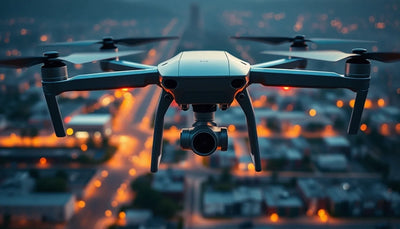
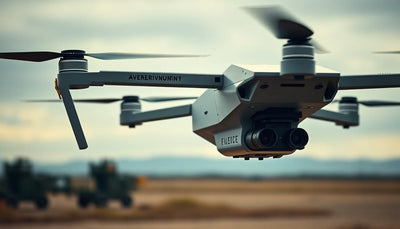
Honeywell SAMURAI software unifies counter-drone sensor data
Honeywell Aerospace's SAMURAI system is designed to bring information from disparate counter-drone sensors into a single interface. The development matters for security operators and commercial drone buyers watching how defense-grade detection tools evolve.

Quick answer
Honeywell Aerospace has introduced SAMURAI, a counter-drone software system designed to bring information from multiple sensors into a single interface, according to Defense News.
- SAMURAI consolidates data from disparate counter-drone sensors into one interface
- The system was reported by Defense News on October 15, 2026
- The development signals continued investment in counter-UAS software integration
- Commercial operators should watch how defense-grade detection tools influence civil airspace security
Evidence: Defense News · AeroVironment unmanned systems solutions · FAA UAS official guidance · DIU Blue UAS
Fleet readiness
Keep DJI hardware available without overbuying new units.
Use defense and fleet news as a planning signal for repair support, inspected pre-owned aircraft, and replacement timing.

Honeywell Aerospace is working on a counter-drone software platform called SAMURAI, and the core idea is straightforward: bring information from multiple sensors into one interface. The reporting comes from Defense News, which published the details on October 15, 2026, describing a system designed to address a persistent problem in counter-UAS operations, where radar, radio frequency, optical, and other detection feeds often sit in separate windows and require manual interpretation.
The announcement matters beyond defense circles. Counter-drone technology has been moving steadily toward commercial adoption, and software that simplifies sensor fusion could shape how airports, stadiums, logistics hubs, and critical infrastructure sites think about drone detection. For commercial drone operators and buyers, the evolution of counter-UAS tools also influences where and how drones can fly, what compliance looks like, and how security teams respond to unauthorized flights.
What Defense News reported about SAMURAI
According to Defense News, Honeywell Aerospace's SAMURAI system is designed to bring information from disparate sources into a single interface. The reporting frames SAMURAI as a software layer that addresses the fragmentation problem in counter-drone operations, where operators often juggle multiple sensor feeds that do not talk to each other. The source does not provide detailed technical specifications, compatibility lists, or deployment timelines, so the operational picture remains limited.
What is clear from the report is that Honeywell is positioning SAMURAI around integration rather than a single new sensor. That distinction is commercially significant. Many counter-UAS efforts have focused on hardware, such as radars, jammers, or optical trackers. A software-first approach suggests Honeywell sees value in making existing sensor investments work together, which is a different kind of procurement conversation for security buyers.
Defense News is the primary reporting source for this development. Reboot Hub has not independently verified additional operational details, and no official Honeywell specification sheet or agency confirmation is available in the source data. Readers should treat the SAMURAI announcement as an early-stage industry signal rather than a finished product with confirmed capabilities.
Why sensor fusion is the hard part of counter-UAS
Counter-drone operations generate noisy data. A radar might detect a small object moving slowly, while a radio frequency sensor picks up a control signal, and an optical camera captures a blurry silhouette. Each feed tells part of the story, but stitching those parts together in real time is technically demanding. False positives are common, and operators often have seconds to decide whether an object is a bird, a hobby drone, or something more concerning.
Honeywell's SAMURAI concept, as reported by Defense News, targets that exact friction point: uniting data from multiple sensors into one interface. If the software works as described, it could reduce the cognitive load on security operators and speed up response decisions. For commercial sites that deploy counter-UAS systems, that kind of integration could lower training costs and make detection more practical for teams that are not full-time drone hunters.
The source does not confirm how SAMURAI handles sensor prioritization, data latency, or false alarm filtering. Those details will determine whether the system is genuinely useful or simply another dashboard. Still, the direction is consistent with broader industry movement toward software-defined security tools, where the interface and analytics layer becomes the product rather than the sensor hardware itself.
What this means for drone owners and the market
Reboot Hub analysis: For commercial drone operators, better counter-UAS software is a double-edged signal. On one side, improved detection and sensor fusion could lead to more predictable enforcement around sensitive sites, which is generally good for operators who want clear rules and consistent responses. On the other side, more capable counter-drone systems could tighten restrictions in areas where security teams previously had limited visibility into low-altitude airspace.
Fleet managers and enterprise buyers should watch how defense-grade counter-UAS tools influence civil infrastructure procurement. If Honeywell or competitors bring sensor fusion software into airports, ports, or energy facilities, those sites may adopt detection systems that change local flight policies. Operators flying near such locations should expect more structured reporting and faster identification of unauthorized flights, which raises the stakes for geofencing compliance and flight authorization workflows.
For owners of pre-owned DJI drones and repair customers, the counter-UAS trend has an indirect but real effect. As security teams deploy more sophisticated detection tools, the pressure on drone identification and Remote ID compliance grows. Buyers considering a pre-owned DJI platform should factor in whether the model supports current identification requirements and whether repair decisions keep the aircraft in a compliant, airworthy state. A well-maintained, properly registered drone is easier to operate in an environment where detection systems are becoming more common. If you are evaluating a used DJI airframe or planning a repair, the Drone Wiki can help clarify model-specific considerations before you commit. For owners evaluating service and lifecycle risk, Drone Wiki explains the relevant repair, parts, resale, or operational path.
The pre-owned market may also see subtle shifts if counter-UAS enforcement becomes more visible. Operators who fly in urban or infrastructure-adjacent areas may prioritize drones with strong geofencing behavior and reliable identification broadcasting. That preference could support demand for newer DJI models with mature compliance features, while older airframes without those capabilities may face softer resale interest in security-sensitive regions.
What buyers and operators should watch next
The SAMURAI report is an early signal, not a market-moving event. Defense News did not publish pricing, availability, or confirmed government contracts, so procurement teams should not treat this as a finished commercial offering. The practical takeaway is to monitor Honeywell's counter-UAS software trajectory and watch whether it moves from defense demonstration into civil or commercial deployment.
Operators and fleet managers should also track how sensor fusion software affects counter-drone vendors more broadly. If integration becomes the differentiator, security buyers may favor platforms that work with existing hardware rather than proprietary sensor bundles. That could reshape procurement patterns at airports, utilities, and logistics operators, which in turn affects where commercial drone flights face scrutiny.
For now, the responsible reading is cautious. Honeywell has a credible aerospace pedigree, and the SAMURAI concept addresses a genuine operational pain point. But without verified specifications, deployment evidence, or customer confirmation, the announcement remains a directional indicator rather than a proven capability. Commercial drone stakeholders should use it as a prompt to review their own compliance posture and stay alert to how counter-UAS software evolves over the next several quarters.
FAQ
Frequently asked questions
What is Honeywell SAMURAI?
SAMURAI is a counter-drone software system from Honeywell Aerospace designed to bring information from multiple sensors into a single interface, according to Defense News reporting published on October 15, 2026.
Is SAMURAI available for commercial buyers?
The source does not confirm pricing, availability, or commercial deployment. The report describes the system concept and its integration goal, but no verified procurement or rollout details are available.
How does counter-drone software affect commercial drone operators?
Reboot Hub analysis: More capable detection and sensor fusion tools could lead to more consistent enforcement around sensitive sites, while also tightening flight restrictions in areas where security teams gain better low-altitude visibility. Operators should monitor how these tools influence local flight policies.
Which sources support this update?
The visible evidence links identify Defense News and AeroVironment unmanned systems solutions and FAA UAS official guidance and DIU Blue UAS; each source is used only for the claim it directly supports.
What remains subject to change?
Retail pricing, availability, product bundles and regulatory timelines can change. Readers should verify the latest terms with the named retailer, manufacturer or regulator before acting.
How should buyers or operators use this analysis?
Use the verified facts as a starting point, then compare mission fit, lifecycle support, maintenance needs and current procurement terms before making a purchase or fleet decision.
Sources consulted
- Defense News - primary source
- AeroVironment unmanned systems solutions - official company source
- FAA UAS official guidance - official regulator source
- DIU Blue UAS - official government source
Reboot Hub Editorial adds buyer, repair, resale, and operational analysis for drone owners. If you spot an error, contact us for correction review through our editorial policy.