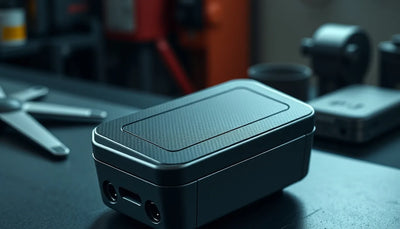
DJI Mic Mini 2S: Verified Specs, Internal Recording and Compatibility Limits
Verified DJI Mic Mini 2S storage, recording duration, transmitter compatibility, range conditions and monitoring limits, plus Reboot Hub's six-step field audio redundancy checklist for drone-production workflows.

Sources and method
Primary sources checked: Reboot Hub reviewed the Notebookcheck report on Mic Mini 2S launch details, the Gizmochina launch/spec summary, and DJI support guidance on internal 32-bit float recording.
Reboot Hub analysis added: We focus on what onboard recording changes for drone creators, second-hand DJI audio pricing, repair risk, and fleet upgrade timing.
Limitations: Final DJI price, bundles, and regional availability should be rechecked after the July 2 launch.
Reboot Hub Industry Analysis
Verified Recording Specs and a Field Audio Reliability Checklist
Quick answer: DJI Mic Mini 2S adds approximately 14.5GB of transmitter storage, up to 28 hours of 24-bit internal recording or about 22 hours of 32-bit float recording, and a receiver that can work with as many as four supported Mini-series transmitters. These features improve audio redundancy. They do not create a direct audio link to a drone, guarantee the advertised range at a worksite, remove the need for monitoring, or make wind and propeller noise recoverable in post.
Evidence boundary: Reboot Hub has not independently bench-tested this specific microphone. Product facts below are attributed to DJI's current documentation. The field checklist is Reboot Hub's workflow analysis and should be validated with the exact receiver, camera, phone, firmware and recording environment used by the operator. Reboot Hub is independent and is not affiliated with DJI.
DJI buying context
Match product news to hardware you can actually deploy.
Check inspected DJI aircraft, repair support, and trade-in timing before deciding whether to upgrade, repair, or wait.

Article update: This URL originally covered the announced July 2 launch window. It has been rebuilt after release so readers can separate current published specifications from pre-launch assumptions.
What DJI currently publishes
What those specifications do not establish
No direct drone connection
DJI's reviewed compatibility material lists cameras, smartphones, computers and selected Osmo devices. It does not describe the Mic Mini 2S as a direct accessory for an aircraft, flight controller or drone video link.
No guaranteed field range
The 400m figure is a controlled open-area reference. People, buildings, RF congestion, body placement, receiver orientation and local regulations can reduce the usable link distance.
No cure for bad microphone placement
32-bit float increases recording headroom; it cannot reconstruct speech masked by wind, clothing noise, propeller noise or an incorrectly positioned microphone.
No monitoring replacement
Internal recording protects against a wireless-link failure, but it does not confirm in real time that the microphone is positioned correctly or that the recorded track is clean.
Reboot Hub Field Audio Redundancy Gate
A reliable drone-production audio chain should be judged by the number of independent failure points it controls, not by one headline specification. For interviews, site narration and ground-camera audio recorded alongside aerial footage, Reboot Hub recommends the following six checks.
- Define the source and placement. Decide who or what is being recorded and place the microphone for that source. Do not treat an airborne microphone beside propellers as a substitute for a properly placed ground track.
- Enable the local backup deliberately. Confirm internal recording is on, choose 24-bit or 32-bit float, verify available storage, and record the setting in the production checklist.
- Build a separate primary path. Send audio to the camera, phone or recorder through a supported receiver or direct connection while retaining the transmitter file as an independent backup.
- Monitor where the hardware permits it. Use a compatible camera or mobile-receiver monitoring path and perform a spoken test. If live monitoring is unavailable, increase the frequency of short recorded spot checks.
- Test the actual RF environment. Walk the required operating area before the take, check body blocking and interference, and set a working limit based on observed stability rather than the maximum published distance.
- Close the data loop. After each critical take, confirm that the local and receiver files exist, spot-check playback, label the tracks for synchronization, and copy them to the production storage plan.
Who should consider the Mini 2S?
The strongest use case is a compact multi-person production workflow that needs transmitter-side backup recording without moving to a larger microphone system. It can also be attractive to an existing Mic Mini or Mic Mini 2 owner who can verify cross-generation compatibility and wants to reuse supported transmitters.
An upgrade is less compelling when the current system already records reliably, the operator requires built-in receiver headphone monitoring, or the production depends on features that are not documented for the Mini 2S. The correct decision comes from the audio chain and failure modes, not from transmitter storage alone.
Frequently asked questions
Does DJI Mic Mini 2S record without its receiver?
Its transmitter supports internal recording. The operator must enable the intended recording mode and verify the file after the take; a receiver is still needed for receiver-based camera workflows.
How long can it record internally?
DJI states approximately 28 hours in 24-bit mode and approximately 22 hours in 32-bit float mode on the transmitter's roughly 14.5GB of storage.
Does 32-bit float prevent clipping and bad audio?
It provides more post-production headroom, but the effective result still depends on the microphone capsule, placement, wind protection and source-to-noise ratio. It cannot remove every recording failure.
Is it directly compatible with DJI drones?
No direct aircraft connection is documented in the official compatibility material reviewed for this article. Drone creators can use it for people, narration and ground-camera audio that is synchronized with aerial footage.
Sources and methodology
This article uses DJI's current product and help documentation for product facts. Reboot Hub compared the published recording, compatibility and monitoring limits against a field-production failure checklist. It does not present manufacturer claims as independent test results.