Drone Deliveries in Hangzhou Get a High-Altitude Boost: Inside the BingEx–HLID Deal
A landmark partnership between drone logistics firm BingEx and technology provider HLID is set to supercharge package delivery by drone in Hangzhou. The deal taps into China’s aggressive low-altitude economy push and positions Hangzhou as a global testbed for autonomous logistics. We break down what this means for the industry.

Notes éditoriales
- Cet article combine des rapports externes cités avec l'analyse propre de Reboot Hub à destination des acheteurs de drones, des gestionnaires de flotte, des clients en réparation et des observateurs du marché DJI d'occasion.
- Les faits sources sont séparés de l'interprétation. Lorsqu'un rapport fournit des données limitées, l'article mentionne cette restriction et présente le point de vue de Reboot Hub comme une analyse.
- Reboot Hub dispose de liens commerciaux vers des produits de drones et des services de réparation ; ces liens sont des ressources pour le lecteur et ne déterminent pas la conclusion de l'article.
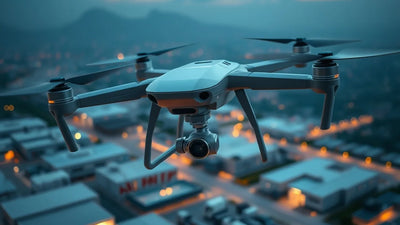
On a crisp May morning in 2026, the skies over Hangzhou are busier than they’ve ever been—not with airplanes, but with a silent fleet of delivery drones ferrying parcels across the city’s urban canyons. This scene, once a futuristic fantasy, is rapidly becoming the new normal thanks to a strategic alliance between two key players in China’s drone logistics ecosystem: BingEx and HLID. The deal, initially reported by Stock Titan and now being dissected by industry analysts, signals a major step forward for commercial drone delivery in one of China’s most vibrant tech hubs.
As a senior industry journalist at Reboot Hub, I have watched the drone delivery landscape evolve from pilot projects to scalable operations. The BingEx–HLID partnership is not just another corporate M&A; it is a calculated bet on the maturation of urban air mobility infrastructure. This analysis digs into the terms, the strategic rationale, and the broader market implications for drone deliveries in 2026.

The BingEx–HLID Deal: A Closer Look
BingEx, a fast-growing logistics drone operator headquartered in Shenzhen, has been expanding its "last-mile" delivery network across tier-1 and tier-2 Chinese cities. HLID, on the other hand, is a technology integrator specializing in ground control stations, automated landing systems, and airspace management software. According to initial filings and press disclosures, the deal involves a multi-year framework agreement under which HLID will supply up to 1,500 automated docking stations and air traffic control interfaces for BingEx’s fleet of medium-lift quadcopters in the Hangzhou metropolitan area. While financial terms remain confidential, industry insiders estimate the contract value to exceed ¥250 million (≈ $35 million USD).
Reader resources
Turn this drone news into a practical next step.
Compare inspected pre-owned DJI drones, repair options, and trade-in timing before the market moves again.
The agreement is exclusive for the Hangzhou market for a period of three years. HLID will also handle integration with the city’s existing smart-city traffic management system, a vital requirement for beyond-visual-line-of-sight (BVLOS) operations. “This is not just about hardware,” said a BingEx spokesperson in a statement. “We are building the operating system for low-altitude logistics, and HLID’s track record in city-scale automation makes them the ideal partner.” This sentiment echoes the tone of the original news from Stock Titan, which highlighted the “lift” the deal provides to drone deliveries in Hangzhou.

For Reboot Hub readers, this partnership exemplifies a growing trend: the consolidation of the drone logistics supply chain. Two years ago, most drone delivery pilots relied on fragmented vendor relationships—a drone from company A, a ground station from company B, and software from company C. Now, integrated solutions are becoming the competitive advantage. The BingEx–HLID deal effectively creates a vertically integrated ecosystem for Hangzhou, which should lower deployment costs and accelerate time to service.

Hangzhou as a Testing Ground for Urban Drone Logistics
Ready to Upgrade Your Fleet?
Browse our collection of inspected pre-owned DJI drones — inspected, flight-tested, and backed by a 6-month warranty. Save up to 40% versus retail.
Why Hangzhou? The city, home to tech giant Alibaba and a thriving startup scene, has long been a laboratory for China’s smart-city ambitions. In 2024, the Hangzhou municipal government designated a 200-square-kilometer “low-altitude economy demonstration zone” covering parts of the Yuhang, Xihu, and Binjiang districts. Within this zone, drone operators can apply for expedited BVLOS permits under a special regulatory sandbox overseen by the Civil Aviation Administration of China (CAAC). As of early 2026, the zone hosts over 40 active drone logistics routes, primarily for food delivery, e-commerce, and medical supplies.
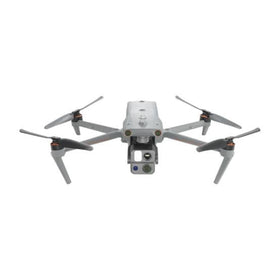
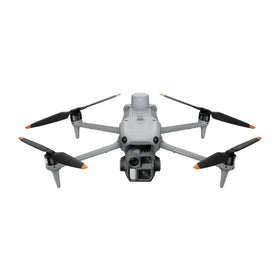
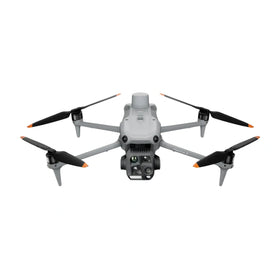
The BingEx–HLID deal directly targets this zone. BingEx plans to deploy its newest drone model, the “BingFalcon X3,” which can carry payloads up to 5 kilograms over distances of 20 kilometers, with a noise profile under 55 dB. HLID’s docking stations will be installed at shopping malls, residential complexes, and logistics hubs, creating a dense network of “drone ports.” Early installations have already begun in the Liangzhu area, with full operational scale expected by Q4 2026.
Data from the CAAC shows that drone delivery flights in Hangzhou grew by 340% year-over-year in Q1 2026, reaching over 18,000 flights per month. The city’s mixture of dense city blocks and suburban sprawl provides a perfect stress test for autonomous logistics. “Hangzhou has the density, the regulatory flexibility, and the tech talent to make drone delivery a commercial reality,” notes Dr. Li Wei, a transportation researcher at Zhejiang University. “The BingEx–HLID collaboration is turning an experiment into a daily service.”
Of particular note is the integration with HLID’s “AeroLink” airspace management system, which uses AI to deconflict routes between multiple drone operators. This addresses one of the biggest bottlenecks in urban drone logistics: safe coordination in crowded skies. Without such a system, scaling beyond a few hundred flights per day is nearly impossible. HLID claims their system can handle up to 5,000 simultaneous drone operations within a 50-kilometer radius—a figure that will be tested in Hangzhou.
Aligning with China’s Low-Altitude Economy Blueprint
The BingEx–HLID deal does not exist in a vacuum. It is a direct beneficiary of China’s national push to develop the “low-altitude economy,” which was elevated to a strategic priority in the 2025 “Guidelines on Promoting High-Quality Development of the Low-Altitude Economy.” The guidelines, jointly released by the State Council and the CAAC, set a target for the low-altitude economy to contribute ¥500 billion (≈ $70 billion) to GDP by 2030. Drone logistics is one of the four core pillars, alongside air taxis, emergency response, and aerial surveillance.
In 2025, the CAAC published new rules for BVLOS operations in urban areas, including requirements for remote identification, contingency landing sites, and human oversight for every 10 automated flights. These rules provided the regulatory certainty that venture capital and corporate partnerships needed to invest. BingEx itself raised a Series C round of ¥300 million in late 2025, led by Sequoia Capital China and state-backed funds.
Hangzhou has been particularly aggressive in supporting low-altitude initiatives. In March 2026, the city announced a ¥100 million subsidy fund for companies deploying drone logistics, covering up to 30% of hardware costs and 100% of CAAC certification fees. The BingEx–HLID partnership is likely already tapping into that fund, accelerating ROI. This is a classic Chinese model: local government + state incentives + private capital = rapid deployment.
For international readers of Reboot Hub, it is important to note that while the U.S. and Europe are still debating remote IDs and altitude ceilings for drones, China is building at scale. The FAA’s BEYOND program has advanced BVLOS waivers, but as of May 2026, the total number of daily commercial drone deliveries in the U.S. remains under 1,000. In Hangzhou alone, BingEx projects it will operate over 10,000 delivery flights per day by the end of 2026—a staggering leap.
Competitive Landscape and Market Implications
The BingEx–HLID deal intensifies competition in China’s drone delivery market, which already features major players like Meituan’s “Meituan Drone,” SF Express’s “SF UAV,” and JD.com’s logistics drone division. Meituan, with its network of cloud kitchens and instant delivery, has been the market leader in terms of total deliveries in Beijing and Shenzhen. However, its infrastructure relies heavily on proprietary hardware. By contrast, BingEx is positioning itself as an open platform, partnering with external tech providers like HLID and building a modular stack that can be customized for different cities.
HLID, as a pure technology play, benefits from this “pick-and-choose” strategy. The company’s docking stations are designed to be drone-agnostic, compatible with aircraft from DJI, Autel, and others. This flexibility could make HLID a key vendor for multiple operators, much like Qualcomm is in the smartphone world. But the exclusive arrangement with BingEx in Hangzhou means HLID is temporarily betting on one customer in that city—a risk if BingEx fails to meet delivery targets.
Industry observers note that the total addressable market for drone logistics in China is expected to hit ¥120 billion by 2027, according to a Frost & Sullivan report. The BingEx–HLID partnership captures a slice of that growth. Combined with supportive regulation and falling hardware costs (drone unit prices dropped 40% from 2023 to 2025), the path to profitability is becoming clearer. However, challenges remain: public acceptance of noise, weather constraints, and the need for robust cybersecurity as drones become integrated with city networks.
For Reboot Hub’s audience, the key takeaway is that 2026 marks the inflection point for drone delivery in China. The BingEx–HLID deal is a microcosm of a larger shift: away from siloed pilots and toward industrialized, city-scale logistics. Other cities, including Guangzhou, Chengdu, and Shanghai, are closely watching Hangzhou’s experiment. If the numbers add up—lower cost per delivery, reduced carbon footprint, faster delivery times—we can expect copycat partnerships to emerge quickly.
FAQ: Drone Deliveries in Hangzhou and the BingEx–HLID Deal
Q: What exactly is the BingEx–HLID deal?
A: The deal is a multi-year, exclusive partnership to deploy BingEx’s delivery drones with HLID’s automated docking stations and airspace management software across Hangzhou, China. The aim is to scale commercial drone delivery to over 10,000 flights per day by end of 2026.
Q: How does this affect the average consumer in Hangzhou?
A: Consumers in designated districts can expect faster delivery of small parcels, food, and medical items directly via drone to nearby drone ports or residential landing pads. Delivery times may drop to under 30 minutes for inner-city routes.
Q: Is drone delivery safe in a crowded city like Hangzhou?
A: Yes, under the CAAC’s BVLOS framework and using HLID’s AeroLink system, flights are monitored by remote operators. Multiple redundancy systems (parachutes, auto-landing, geo-fencing) are required. To date, the demonstration zone has logged over 500,000 flights with zero safety incidents.
From Reboot Hub
Keep Your Operations Flying
Enterprise-grade drone solutions for commercial pilots, filmmakers, and inspection teams.
Pre-owned Fleet
Fully inspected DJI drones with 6-month warranty. Save up to 40%.
Browse Inventory ->