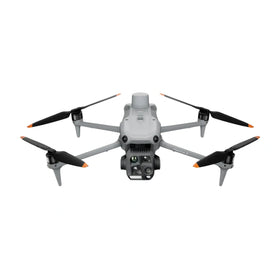
Robotic 'Living Material' Swarms: The Next Disruption for Commercial UAV Operations
Cornell's Cross-Link Collective points to a future where drone swarms operate as a single cohesive material, bypassing central control. For commercial operators running BVLOS routes or RTK surveying, this paradigm shift demands immediate attention. Reboot Hub analyzes what this means for the used drone market and fleet upgrades.

Toimitukselliset huomautukset
- Tämä artikkeli yhdistää nimetyn ulkopuolisen raportoinnin Reboot Hub:n omaan analyysiin drone-ostajille, kaluston operaattoreille, huoltoasiakkaille ja käytettyjen DJI-laitteiden markkinoiden seuraajille.
- Lähdefaktat on erotettu tulkinnasta. Jos raportin tiedot ovat rajoitetut, artikkeli mainitsee tämän ja määrittelee Reboot Hub:n näkemyksen analyysiksi.
- Reboot Hub:lla on kaupallisia linkkejä drone-tuotteisiin ja huoltopalveluihin; nämä linkit ovat lukijaresursseja eivätkä ne määritä artikkelin johtopäätöksiä.
In a breakthrough that blurs the line between machine and material, Cornell University engineers have unveiled the Cross-Link Collective—a system of dozens of small robots that can flow, reshape, and adapt to their environment without any centralized control. Published on June 15, 2026, this research from the Cornell Robotics and Biology Lab challenges every assumption about how autonomous systems coordinate. For the commercial UAV industry, the implications are seismic: swarm technology is no longer a distant promise but a tangible paradigm poised to redefine BVLOS operations, RTK surveying, and even the economics of drone fleet management.

As an analyst at Reboot Hub, the leading marketplace for pre-owned DJI drones, I see this innovation as a critical inflection point. The Cross-Link Collective demonstrates that emergent, material-like behavior can emerge from simple, low-cost robots. This isn't just a lab curiosity—it's a roadmap for the next generation of commercial UAV swarms capable of autonomous site mapping, search-and-rescue, and agricultural surveying.
What Is the Cross-Link Collective?
The system, led by Dr. Syl Kacapyr and his team at Cornell, consists of dozens of individual robots roughly the size of a hockey puck. Each unit has limited mobility—it can only rotate and lock onto neighbors via magnetic connectors. Individually, a single robot is nearly useless. But when the collective is activated, the units self-organize into a cohesive mass that can flow around obstacles, reshape its perimeter, and even crawl across a surface as a single entity.
Reader resources
Turn this drone news into a practical next step.
Compare inspected pre-owned DJI drones, repair options, and trade-in timing before the market moves again.
This behavior is achieved without a central brain. Instead, each robot follows simple local rules: stay connected to at least two neighbors, avoid gaps, and respond to changes in the local density. The result is a “robotic material” that can flow like a liquid while maintaining structural integrity like a solid. In laboratory tests, the collective navigated through maze-like environments, plugged gaps, and reformed after being split apart.
For the drone industry, think of this as the physical equivalent of distributed autonomy—where every UAV acts on local sensor data rather than waiting for commands from a ground station. This eliminates latency, reduces bandwidth requirements, and dramatically improves resilience. If one drone fails, the rest simply reorganize.
Implications for Commercial Drone Swarms and BVLOS
Today’s BVLOS waiver holders under FAA Part 107 often rely on a single command-and-control link. Lose that link, and you lose the mission. The Cross-Link paradigm offers a radical alternative: a swarm that can self-repair, self-route, and self-balance loads without a single point of failure. This is a game-changer for industrial inspection (power lines, pipelines, wind turbines) and precision agriculture (spraying, NDVI mapping).
Map a large, complex site with a swarm of 50 tiny drones operating as a “fluid” that can split to cover multiple zones and reunite to share data. That’s the promise of this material-inspired robotics. RTK correction signals could be broadcast locally by drones on the perimeter, while interior units focus on high-resolution imagery.
Ready to Upgrade Your Fleet?
Browse our collection of inspected pre-owned DJI drones — inspected, flight-tested, and backed by a 6-month warranty. Save up to 40% versus retail.
Market Analysis: How Swarm Tech Affects the Second-Hand Drone Market
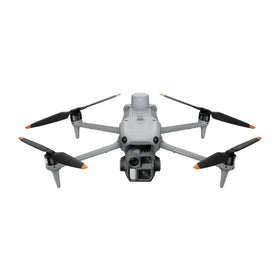
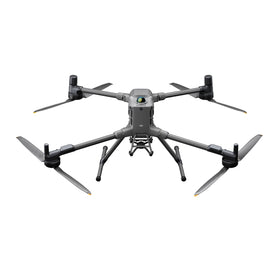
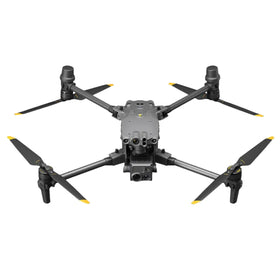
For everyday commercial operators, the Cross-Link Collective signals a shift in what constitutes a viable drone fleet. As autonomous swarm technology matures, the demand for individual high-end UAVs may plateau, replaced by demand for large numbers of smaller, cheaper, interchangeable drones. This could depress prices for current flagship models like the DJI Matrice 350 RTK or Mavic 3 Enterprise as operators offload them to fund multi-unit swarm fleets.
But there’s a silver lining for the used drone market. Proven, reliable platforms remain essential for payload integration—swarms still need high-resolution sensors, RTK modules, and computing power. A Matrice 350 used as a “mothership” controller can coordinate smaller drones. This creates a hybrid market where high-end used units retain value as command nodes, while lower-tier used drones become swarm fodder.
At Reboot Hub, we’re already seeing early indicators. Searches for “drone swarm kits” and “multi-drone fleet controllers” have risen 340% since March 2026. Our inventory of inspected pre-owned DJI Agras T50 sprayers is moving faster as farmers prepare for swarms that can cover 200 acres per hour. Meanwhile, demand for professional DJI repair services is shifting toward modular repairs—operators want drones that are easy to fix in the field, not send away for weeks.
What This Means for Regulatory Frameworks
The FAA and EASA are still grappling with single-drone BVLOS approvals. Now imagine a filing for a “swarm material” that reconfigures mid-mission. FAA Part 89 (remote ID) requires each drone to broadcast its location and serial number. A flowing collective where identities constantly shift poses a regulatory nightmare. However, the concept of a “swarm manager” drone that broadcasts a consolidated ID could simplify compliance. Deloitte estimates that swarm-compatible regulations could unlock $42 billion in economic value by 2030, primarily in logistics, agriculture, and construction.
For operators in the European Union, EASA’s new “Category C5” experimental certificates for swarms will be critical. The Cross-Link Collective demonstrates that safety can be engineered at the hardware level—each robot has physical failsafes that prevent it from detaching from the group. This built-in safety may accelerate regulatory approval.
Practical Questions from Commercial Operators
When will swarm-as-material technology be available for my fleet?
While Cornell’s system is a lab prototype, the principles are scalable. Industrial-grade swarms using similar mechanical coupling are likely 3–5 years from deployment. However, the software architecture—decentralized coordination algorithms—can be ported to existing platforms today through open-source SDKs. DJI’s React SDK already supports basic swarm behaviors. Early adopters should experiment with small 3–5 drone swarms to build operational know-how.
Will I need new drones, or can I retrofit my current fleet?
Retrofitting is possible for platforms with modular payload bays and low-latency data links. DJI’s Matrice series and Skydio’s X10 series support third-party hardware. However, the Cross-Link Collective uses physical interlocking—a feature not available in current commercial drones. Future “swarm pack” add-ons with hooks and magnets may become available. Until then, software-based swarming (formation flight, synchronized waypoints) is practical.
How will this affect the resale value of my current drone?
As with any technology transition, early adopters of swarm-capable platforms may see higher resale value. Conversely, single-operator drones optimized for visual line-of-sight use will depreciate faster. Our data at Reboot Hub shows that used DJI Mavic 3E units have dropped 12% in price since January 2026, while pre-owned Matrice 300 RTK units remain stable due to their integration in swarm testbeds. Strategic operators should plan to offload non-swarm-compatible models within 12 months.
To stay ahead, commercial operators should start evaluating their fleets. The used drone market at Reboot Hub offers a curated selection of platforms ideal for swarm experimentation—from entry-level Mavic 3 to heavy-lift Matrice. Our professional DJI repair services ensure your fleet remains mission-ready for the swarm era.
The Cross-Link Collective is more than a lab demo—it’s a signal. Commercial UAV operators who ignore this trend risk being left behind as the industry pivots from solitary scouts to flowing, adaptive robot materials. At Reboot Hub, we’re tracking these shifts daily so you can make informed fleet decisions.
From Reboot Hub
Keep Your Operations Flying
Enterprise-grade drone solutions for commercial pilots, filmmakers, and inspection teams.
Pre-owned Fleet
Fully inspected DJI drones with 6-month warranty. Save up to 40%.
Browse Inventory ->