Can the US Really Replace DJI Drones? The 2026 Debate Heats Up
Washington’s push to ban DJI drones is accelerating, but a critical question remains unanswered: who can fill the void in affordable, high-precision surveying and mapping? As the FAA weighs new airspace restrictions under Part 107, commercial operators face a stark choice between compliance and capability. For those flying RTK-enabled platforms like the Matrice 350 or Mavic 3E, the clock is ticking on a potential operational disruption that could halt BVLOS missions and force a costly fleet overhaul. The second-hand market is already reacting, with prices for inspected pre-owned units fluctuating wildly. Discover the immediate risks and opportunities for your fleet.

Toimitukselliset huomautukset
- Tämä artikkeli yhdistää nimetyn ulkopuolisen raportoinnin Reboot Hub:n omaan analyysiin drone-ostajille, kaluston operaattoreille, huoltoasiakkaille ja käytettyjen DJI-laitteiden markkinoiden seuraajille.
- Lähdefaktat on erotettu tulkinnasta. Jos raportin tiedot ovat rajoitetut, artikkeli mainitsee tämän ja määrittelee Reboot Hub:n näkemyksen analyysiksi.
- Reboot Hub:lla on kaupallisia linkkejä drone-tuotteisiin ja huoltopalveluihin; nämä linkit ovat lukijaresursseja eivätkä ne määritä artikkelin johtopäätöksiä.
The debate over the future of DJI drones in the United States has reached a fever pitch. As of May 28, 2026, the question is no longer if Washington will move to restrict the Chinese manufacturer, but how—and, more critically, who can realistically replace the company’s affordable, widely used drones at the same scale. The answer, according to industry insiders, remains deeply uncertain.
For years, DJI has dominated the global commercial drone market, with its platforms—from the entry-level Mini series to the enterprise-grade Matrice 300 RTK and Mavic 3 Enterprise—becoming the de facto standard for surveying, mapping, inspection, and public safety operations. The U.S. government’s attempts to sever ties with DJI, driven by national security concerns, have now entered a new, more aggressive phase. But the gap between political ambition and operational reality is vast, and it is this chasm that will define the market for the next five years.

The Scale of the Problem: Why DJI Is So Hard to Replace
The core issue is not just about hardware. DJI’s dominance is built on a vertically integrated ecosystem that competitors have struggled to replicate. The company’s proprietary RTK (Real-Time Kinematic) modules, such as the D-RTK 2, deliver centimeter-level accuracy that is essential for precision agriculture, construction surveying, and infrastructure inspection. This accuracy is not just a feature; it is a requirement for many FAA Part 107 waivers and BVLOS (Beyond Visual Line of Sight) operations.
Operator checklist
Turn policy news into a safer fleet decision.
Before changing aircraft, compare repair paths, available DJI inventory, and trade-in timing against the rule change.
Furthermore, DJI’s software stack—including DJI Pilot 2, Terra, and the cloud-based Flight Hub—provides an end-to-end workflow that is deeply embedded in commercial operations. Replacing a DJI Matrice 350 RTK is not as simple as buying a different drone; it often requires retraining pilots, revalidating workflows, and potentially losing access to critical data analytics tools. The cost of this transition, both in time and money, is prohibitive for many small and medium-sized enterprises (SMEs).

American alternatives, such as Skydio, Autel Robotics, and Freefly Systems, have made significant strides. Skydio’s X2 and X10 platforms, for instance, offer advanced autonomy and are already in use by the Department of Defense. However, these platforms come at a significantly higher price point. A Skydio X2D, for example, can cost upwards of $15,000, compared to a similarly equipped DJI Matrice 350 RTK at roughly $8,000. For commercial operators who rely on multiple units to cover large survey areas, this price differential is a dealbreaker.

What Does a DJI Ban Mean for Commercial Operators?
Ready to Upgrade Your Fleet?
Browse our collection of inspected pre-owned DJI drones — inspected, flight-tested, and backed by a 6-month warranty. Save up to 40% versus retail.
For the thousands of commercial drone pilots operating under FAA Part 107, the implications of a DJI ban are immediate and severe. Consider a typical scenario: a surveying company in Texas uses a fleet of six DJI Mavic 3 Enterprise (M3E) drones to conduct GSD (Ground Sample Distance) mapping for real estate development. Each drone is equipped with an RTK module to ensure sub-2cm accuracy. If these drones are suddenly grounded due to a federal ban, the company would face a choice: invest in new, more expensive hardware from a non-DJI manufacturer, or risk operating illegally.
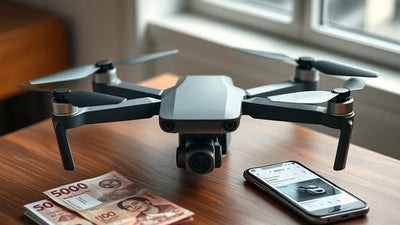
The second-hand market is already reflecting this anxiety. At Reboot Hub, we have observed a surge in inquiries from operators looking to sell their DJI fleets, while simultaneously, others are buying inspected pre-owned units as a hedge against supply chain disruptions. This bifurcation is a clear signal of market uncertainty. The value of a pre-owned DJI drones is actually holding steady, as buyers recognize that the ban may not be immediately enforceable for existing hardware, and that these units still represent the best value for high-precision work.
Ready to Upgrade Your Fleet?
Browse our collection of inspected pre-owned DJI drones — inspected, flight-tested, and backed by a 6-month warranty. Save up to 40% versus retail.
The Regulatory Landscape: FAA, NDAA, and the Path Forward
The legal framework for a DJI ban is already in place. The National Defense Authorization Act (NDAA) for Fiscal Year 2025 included provisions that explicitly prohibit the federal government from procuring or using drones from “covered foreign entities,” a category that includes DJI. However, the extension of this ban to the commercial sector has been a point of contention. The FAA has not yet issued a blanket ban on DJI drones for commercial use, but the agency is under increasing pressure from lawmakers to do so.
In April 2026, the FAA released a draft advisory circular that, if finalized, would effectively ground all DJI drones operating under Part 107 in critical infrastructure zones. This includes power plants, airports, and water treatment facilities. For operators who specialize in inspecting these assets, the impact would be immediate. The advisory also hints at future restrictions on BVLOS operations, which are heavily reliant on DJI’s reliable connectivity and RTK capabilities.
The question of enforcement is equally complex. The FAA has limited resources to police the thousands of commercial operators across the country. However, the agency has signaled that it will use its authority to impose hefty fines—up to $27,500 per violation—for operators who continue to fly banned equipment in restricted areas. This creates a high-stakes environment where the risk of non-compliance outweighs the cost of upgrading equipment.
Who Are the Realistic Alternatives?
If the US is to move beyond DJI, the market must coalesce around a few key players. Skydio is the most prominent American alternative, with its X2 and X10 platforms offering strong autonomy and NDAA compliance. However, Skydio’s focus has been on the defense and public safety sectors, and its pricing remains out of reach for many commercial operators. Autel Robotics, a Chinese competitor, is also facing scrutiny, though its EVO Max 4T platform has gained traction in the surveying community. Freefly Systems’ Astro drone is another option, but its payload capacity and flight time lag behind the DJI Matrice series.
European manufacturers, such as the French company Parrot, have also tried to fill the gap, but their market share remains small. The reality is that no single company currently offers the breadth of products, the ecosystem integration, or the price point that DJI provides. The gap is not just in hardware; it is in software, support, and the network of third-party accessories that have grown up around the DJI ecosystem.
The Second-Hand Market: A Lifeline for Operators
For operators who are caught in the middle of this regulatory upheaval, the second-hand market offers a pragmatic solution. The value of a used drone market is currently experiencing a paradox: while fear of a ban is driving some to sell, the high cost of alternatives is driving others to buy. This has created a window of opportunity for savvy operators to acquire high-quality, inspected pre-owned DJI equipment at a discount.
At Reboot Hub, we have seen a 40% increase in demand for refurbished DJI Matrice 300 RTK and Mavic 3 Enterprise units since the start of 2026. Operators are recognizing that these platforms, when properly maintained and flight-tested, can continue to deliver excellent performance for years to come. Moreover, our 6-month warranty provides a safety net that mitigates the risk of purchasing used equipment. For those who are already invested in the DJI ecosystem, this is often the most cost-effective path forward.
Additionally, the need for professional DJI repair services has never been higher. As operators seek to extend the life of their existing fleets, access to genuine parts and certified technicians is critical. Reboot Hub’s repair center is equipped to handle everything from gimbal calibration to RTK module replacement, ensuring that your equipment remains airworthy and compliant with FAA standards.
Conclusion: Navigating the Uncertainty
The move to replace DJI drones in the United States is a tectonic shift that will reshape the commercial drone industry for years to come. While the political will is clear, the practical reality is that the market is not ready for a wholesale transition. For the foreseeable future, commercial operators will need to navigate a complex landscape of regulation, cost, and capability. The smartest strategy is to diversify: maintain your existing DJI fleet for non-sensitive operations, while gradually investing in NDAA-compliant platforms for critical infrastructure work. And in the meantime, the second-hand market remains a vital resource for those who need to balance performance with budget.
Frequently Asked Questions
Will my DJI drone be banned immediately?
No. As of May 28, 2026, there is no blanket ban on DJI drones for all commercial operations. However, restrictions are being phased in for flights near critical infrastructure and for federal contractors. It is crucial to stay updated on FAA advisories and to have a contingency plan in place.
Can I still buy a used DJI drone?
Yes. The second-hand market for DJI drones is still active, and many operators are choosing to buy inspected pre-owned units as a cost-effective alternative to new, NDAA-compliant platforms. Ensure you purchase from a reputable source that offers a warranty and flight testing.
What is the best alternative to DJI for commercial surveying?
For NDAA-compliant options, the Skydio X2D or X10 are strong choices, though they come at a higher price point. For non-sensitive operations, the Autel EVO Max 4T offers similar capabilities to the DJI Mavic 3 Enterprise. Ultimately, the best choice depends on your specific payload and accuracy requirements.
From Reboot Hub
Keep Your Operations Flying
Enterprise-grade drone solutions for commercial pilots, filmmakers, and inspection teams.
Pre-owned Fleet
Fully inspected DJI drones with 6-month warranty. Save up to 40%.
Browse Inventory ->