8 Hours to 16 Minutes: How DJI Drones Just Rewrote the Rulebook for Oil Terminal Inspections
ConocoPhillips just proved that BVLOS drone inspections can slash industrial site surveys from eight hours to 16 minutes. Using a DJI Matrice drone-in-a-box at a 375-acre Teesside crude terminal, the trial completed without incident—and it signals a seismic shift for commercial drone operators. Discover what this means for Part 107 waivers, RTK survey workflows, and the exploding demand for inspected pre-owned enterprise drones. The era of walking oil fields is over.

Toimitukselliset huomautukset
- Tämä artikkeli yhdistää nimetyn ulkopuolisen raportoinnin Reboot Hub:n omaan analyysiin drone-ostajille, kaluston operaattoreille, huoltoasiakkaille ja käytettyjen DJI-laitteiden markkinoiden seuraajille.
- Lähdefaktat on erotettu tulkinnasta. Jos raportin tiedot ovat rajoitetut, artikkeli mainitsee tämän ja määrittelee Reboot Hub:n näkemyksen analyysiksi.
- Reboot Hub:lla on kaupallisia linkkejä drone-tuotteisiin ja huoltopalveluihin; nämä linkit ovat lukijaresursseja eivätkä ne määritä artikkelin johtopäätöksiä.
The industrial inspection landscape just experienced a paradigm shift. On May 28, 2026, ConocoPhillips released the results of a trial that has sent shockwaves through the commercial drone and oil and gas sectors. At a 375-acre crude terminal in Teesside, United Kingdom, what previously required eight hours of walking and driving was completed in just 16 minutes-from the air, using a DJI drone-in-a-box system operating beyond visual line of sight (BVLOS).
The trial, which finished without a single incident, represents more than just a technological achievement. It is a proof-of-concept that validates the business case for autonomous drone operations at industrial scale. For commercial drone operators, oil and gas asset managers, and the broader used drone market, this event marks a definitive turning point. The question is no longer whether drones can replace ground-based inspections, but how quickly the industry can scale this capability.

The Teesside Trial: A Technical Breakdown
ConocoPhillips, one of the world's largest independent exploration and production companies, conducted the trial at one of the U.K.'s larger crude oil terminals. The site spans 375 acres-roughly the size of 285 football pitches-and contains a dense network of storage tanks, pipelines, valves, and processing equipment. Traditionally, inspecting this infrastructure required teams of engineers to walk the perimeter, drive between asset clusters, and manually document conditions using handheld cameras and paper checklists.
Reader resources
Turn this drone news into a practical next step.
Compare inspected pre-owned DJI drones, repair options, and trade-in timing before the market moves again.
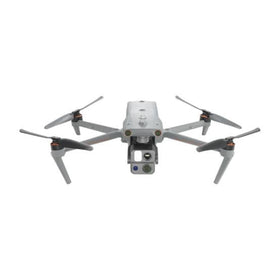
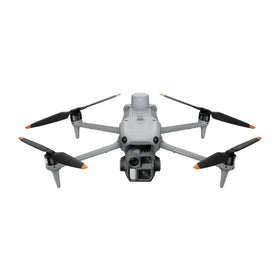
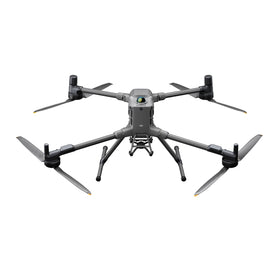
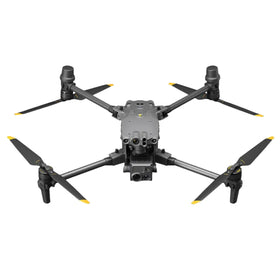
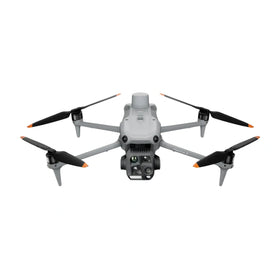
The drone-in-a-box solution deployed at Teesside represents the cutting edge of autonomous aerial inspection. The system consists of a weatherproof docking station that houses a DJI Matrice-series drone, likely a Matrice 350 RTK or a Matrice 300 RTK variant. The docking station provides automated battery charging, data transfer, and environmental protection, allowing the drone to operate with minimal human intervention. The entire BVLOS flight-covering the full 375-acre site-was completed in 16 minutes, representing a 96.7% reduction in inspection time compared to manual methods.

Key technical specifications that made this possible include the drone's RTK (Real-Time Kinematic) positioning module, which delivers centimeter-level GPS accuracy essential for repeatable inspection flights. The BVLOS waiver, granted by the U.K. Civil Aviation Authority (CAA), allowed the drone to fly beyond the visual line of sight of its operator, a critical regulatory milestone that unlocks true autonomous operations. The drone was equipped with a high-resolution payload-likely a Zenmuse H20 series or similar-capable of capturing thermal, zoom, and wide-angle imagery simultaneously.

Market Implications: What This Means for Commercial Operators
Ready to Upgrade Your Fleet?
Browse our collection of inspected pre-owned DJI drones - inspected, flight-tested, and backed by a 6-month warranty. Save up to 40% versus retail.
For everyday drone pilots and commercial operators, the Teesside trial is a clear signal that the industry is entering a new phase. The days of manual, labor-intensive inspections are numbered. Oil and gas companies, utilities, and infrastructure operators are now armed with hard data proving that autonomous drone inspections are not just viable but dramatically superior to ground-based methods. This creates both opportunity and urgency.
For operators who have invested in DJI enterprise hardware-particularly the Matrice 300 and 350 series-the value of their equipment has just increased. The Teesside trial validates the platform's capability to perform mission-critical industrial work. For those considering entering the industrial inspection market, the barrier to entry is now clearly defined: operators need BVLOS-capable drones, RTK modules, and the regulatory approvals to fly beyond visual line of sight. Those who already possess these capabilities are positioned to capture significant market share.
Ready to Upgrade Your Fleet?
Browse our collection of inspected pre-owned DJI drones - inspected, flight-tested, and backed by a 6-month warranty. Save up to 40% versus retail.
What Does This Mean for the Second-Hand Drone Market?
The Teesside trial has immediate and significant implications for the second-hand and refurbished drone market. As industrial operators rush to adopt autonomous inspection workflows, demand for DJI Matrice-series drones-particularly the Matrice 300 RTK and Matrice 350 RTK-is expected to surge. These platforms are the workhorses of the enterprise drone world, and their proven performance in BVLOS industrial inspections makes them highly sought-after assets.
For operators looking to enter the industrial inspection market without paying full retail price, the pre-owned DJI drones available at Reboot Hub represent a cost-effective entry point. A refurbished Matrice 300 RTK, for example, can provide the same RTK positioning, payload compatibility, and flight performance as a new unit, but at a fraction of the cost. This is particularly important for small to mid-sized operators who need to build a fleet of inspection-capable drones without the capital expenditure of purchasing new equipment.
Furthermore, as major oil and gas companies like ConocoPhillips upgrade their fleets to the latest drone-in-a-box systems, a wave of high-quality used enterprise drones is entering the secondary market. These units are typically well-maintained, have low flight hours, and come from commercial fleets with rigorous maintenance schedules. For savvy buyers, this creates an unprecedented opportunity to acquire premium industrial drones at significantly reduced prices. The used drone market is experiencing a supply influx that benefits operators who know where to look.
Regulatory and Operational Lessons from Teesside
The success of the ConocoPhillips trial hinges on regulatory approval. The U.K. CAA granted a BVLOS waiver for the operation, a process that requires demonstrating robust safety cases, including detect-and-avoid capabilities, redundant communication links, and contingency procedures for system failures. For operators in the United States, the equivalent would be an FAA Part 107 waiver for BVLOS operations, which remains one of the most challenging regulatory hurdles in the industry.
The Teesside trial provides a template for how operators can successfully navigate these regulatory challenges. Key elements include: deploying a drone-in-a-box system with automated return-to-home and landing capabilities; using RTK positioning for precise flight paths; maintaining continuous communication via 4G/5G networks; and implementing geofencing to ensure the drone stays within approved airspace. For operators seeking similar approvals, documenting these capabilities is essential.
The trial also highlights the importance of payload selection. The drone used at Teesside was equipped with sensors capable of capturing high-resolution visual and thermal data. For industrial inspections, this dual-sensor capability is critical. Thermal imaging can detect leaks, insulation failures, and overheating components that would be invisible to the naked eye. High-resolution visual cameras can identify corrosion, structural damage, and unauthorized access points. The combination of these sensors in a single flight reduces inspection time while increasing data quality.
The Economic Case: ROI That Demands Attention
The numbers from the Teesside trial are compelling. An eight-hour manual inspection requires multiple personnel, vehicles, and significant logistical coordination. Assuming a team of four engineers at an average hourly rate of - 50 (approximately $63 USD), the labor cost alone for a single inspection exceeds - 1,600. Add vehicle costs, fuel, and equipment, and the total cost easily exceeds - 2,000 per inspection. Over a year with monthly inspections, that's - 24,000 in direct costs.
In contrast, a 16-minute autonomous drone inspection requires one operator (or, in a fully autonomous scenario, zero operators) and negligible consumable costs. The drone's battery and data transfer are handled automatically by the docking station. Assuming the drone-in-a-box system costs - 40,000 to - 60,000 to deploy (including the drone, dock, and installation), the payback period is approximately two to three years. After that, the inspection cost drops to near zero. For a company like ConocoPhillips, which operates dozens of terminals globally, the potential savings run into the millions of pounds annually.
This economic logic is driving rapid adoption across the oil and gas sector. BP, Shell, ExxonMobil, and other major operators have all announced drone inspection programs in recent years. The Teesside trial provides the most dramatic proof-of-concept yet, demonstrating that autonomous BVLOS inspections are not just marginally better than manual methods but are orders of magnitude more efficient.
What This Means for Your Drone Business
For commercial drone operators, the message is clear: the window to enter the industrial inspection market is narrowing. As more companies adopt autonomous drone-in-a-box solutions, the demand for manual piloting services will decline. However, the demand for skilled operators who can deploy, maintain, and manage these autonomous systems is rising. Operators who invest in understanding BVLOS operations, RTK workflows, and enterprise-grade drone platforms will be well-positioned for the next phase of the industry.
If your current fleet consists of consumer-grade drones, now is the time to upgrade. The DJI Matrice 350 RTK, for example, is the industry standard for industrial inspections. Purchasing a refurbishment-labeled DJI drone from Reboot Hub allows you to acquire this capability without the full retail price tag. Additionally, ensuring your equipment is properly maintained through professional DJI repair services is critical for maintaining the reliability required for industrial contracts.
Frequently Asked Questions
What specific DJI drone model was used in the ConocoPhillips trial?
While ConocoPhillips has not officially confirmed the exact model, the trial's specifications-BVLOS capability, RTK positioning, drone-in-a-box deployment, and 16-minute flight time over 375 acres-strongly suggest the use of a DJI Matrice 350 RTK or Matrice 300 RTK. Both models support the required payloads and autonomous operations. The docking station is likely a DJI Dock or a third-party equivalent compatible with the Matrice series.
How can commercial operators obtain BVLOS waivers for similar operations?
In the United Kingdom, operators must apply to the CAA for a BVLOS permission. The application requires demonstrating a comprehensive safety case, including risk assessments, contingency procedures, and evidence of detect-and-avoid capabilities. In the United States, the FAA's Part 107 waiver process requires similar documentation. Operators are advised to work with experienced drone consultants or legal firms specializing in aviation regulations to navigate the application process.
What is the expected impact on the second-hand drone market from this trial?
The Teesside trial is expected to increase demand for DJI Matrice-series drones, particularly the Matrice 300 RTK and 350 RTK. This will drive up prices for used units in the short term, but as more industrial operators upgrade to drone-in-a-box systems, a wave of high-quality used drones will enter the secondary market. Operators looking to buy should monitor Reboot Hub's inventory for inspected pre-owned units that offer significant savings over retail.
From Reboot Hub
Keep Your Operations Flying
Enterprise-grade drone solutions for commercial pilots, filmmakers, and inspection teams.
Pre-owned Fleet
Fully inspected DJI drones with 6-month warranty. Save up to 40%.
Browse Inventory ->