USAF’s Turbocharged ULTRA Surveillance Drones Head to Middle East: A New Era of Persistent Eyes
The U.S. Air Force is deploying turbocharged ULTRA surveillance drones to the Middle East, filling gaps left by MQ-9 Reaper losses in conflicts with Iran. This shifts the drone market, impacting BVLOS operations, Part 107 waivers, and second-hand DJI pricing. Discover how commercial operators must adapt to avoid airspace bans and seize new opportunities.

Notas editoriales
- Este artículo combina informes externos citados con el análisis propio de Reboot Hub para compradores de drones, operadores de flotas, clientes de reparación y observadores del mercado de DJI seminuevos.
- Los hechos de la fuente se separan de la interpretación. Cuando un informe proporciona datos limitados, el artículo indica dicha limitación y presenta la visión de Reboot Hub como un análisis.
- Reboot Hub posee vínculos comerciales con productos y servicios de reparación de drones; dichos enlaces son recursos para el lector y no determinan la conclusión del artículo.
The U.S. Air Force (USAF) has announced the deployment of its next-generation ULTRA (Unmanned Long-endurance Tactical Reconnaissance Aircraft) drones to the Middle East, a move that signals a significant shift in persistent surveillance capabilities amid escalating losses of MQ-9 Reapers in engagements with Iranian forces. As of May 25, 2026, this deployment underscores the Pentagon's urgent need for low-cost, high-endurance platforms that can operate in contested airspace without risking expensive, high-profile systems.
The turbocharged ULTRA drones, developed by DZYNE Technologies, are glider-like aircraft designed for extended loiter times, reportedly exceeding 24 hours, while carrying modular sensor payloads. Their deployment to the Middle East comes at a critical juncture: the USAF has lost multiple MQ-9 Reapers over the past 18 months to Iranian air defenses and proxy forces, creating a surveillance gap that ULTRA is poised to fill. This analysis from Reboot Hub examines the technical, strategic, and commercial implications of this development for the global drone industry.

What Makes the ULTRA Drone a Game-Changer?
The ULTRA platform is fundamentally different from traditional military drones. It is not a multi-rotor or a conventional fixed-wing UAV but rather a motorized glider with a high aspect-ratio wing, optimized for fuel efficiency and endurance. The turbocharged variant adds a small internal combustion engine that allows for sustained powered flight, overcoming a key limitation of pure gliders: dependency on favorable winds. This enables ULTRA to loiter at altitudes above 15,000 feet for days, providing persistent surveillance over vast areas.
Fleet readiness
Keep DJI hardware available without overbuying new units.
Use this news as a planning signal for inspected DJI aircraft, repair support, and trade-in timing.
Key specifications reported by The War Zone and corroborated by defense analysts include a wingspan of approximately 60 feet, a payload capacity of up to 100 pounds for electro-optical/infrared (EO/IR) sensors and signals intelligence (SIGINT) packages, and a unit cost estimated at under $1 million-drastically cheaper than the MQ-9 Reaper, which costs over $30 million per unit. This cost differential is critical for the USAF, which faces budget constraints and high operational tempo in the Middle East.

Compared to the MQ-9, the ULTRA is stealthier by design. Its low radar cross-section, quiet engine, and high-altitude operation make it harder to detect and engage by Iranian air defenses, which have successfully targeted slower, larger Reapers. The ULTRA's deployment is a direct response to lessons learned from combat losses, emphasizing survivability over payload capacity.

Strategic Context: MQ-9 Losses and Iranian Threats
Ready to Upgrade Your Fleet?
Browse our collection of inspected pre-owned DJI drones - inspected, flight-tested, and backed by a 6-month warranty. Save up to 40% versus retail.
Over the past year, Iran-backed Houthi rebels and Iranian Islamic Revolutionary Guard Corps (IRGC) units have downed at least four MQ-9 Reapers using advanced surface-to-air missiles, including the 358 loitering munition and the Khordad 15 system. These losses, valued at over $120 million, have forced the USAF to reassess its surveillance strategy. The ULTRA drone offers a lower-risk alternative for the high-demand mission of intelligence, surveillance, and reconnaissance (ISR).
The deployment to the Middle East is not just about replacing lost assets; it is about expanding coverage. The turbocharged ULTRA can operate from austere airfields with minimal support, reducing logistical footprints. This aligns with the USAF's Agile Combat Employment (ACE) concept, which emphasizes distributed operations. For the commercial drone sector, this military adoption validates the viability of long-endurance, low-cost platforms-a trend that could trickle down to civilian applications like pipeline monitoring and agricultural surveying.
Ready to Upgrade Your Fleet?
Browse our collection of inspected pre-owned DJI drones - inspected, flight-tested, and backed by a 6-month warranty. Save up to 40% versus retail.
What Does the ULTRA Deployment Mean for Commercial Drone Operators?
While the ULTRA is a military asset, its deployment has direct implications for the commercial drone ecosystem. First, it signals a growing market for long-endurance, fixed-wing UAVs that operate under BVLOS (Beyond Visual Line of Sight) conditions. The FAA has been slow to approve widespread BVLOS operations for commercial drones, but military success stories like ULTRA could accelerate regulatory changes. Operators pursuing Part 107 waivers for BVLOS flights should monitor this deployment as evidence that high-endurance, low-risk platforms are viable in real-world conditions.
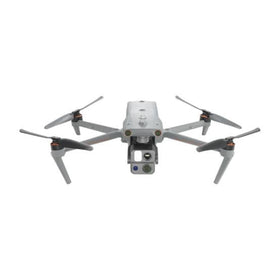
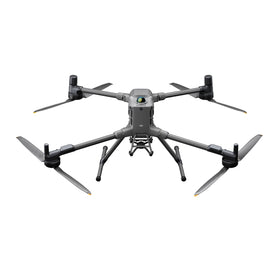
Second, the shift toward cheaper, survivable platforms like ULTRA may depress demand for expensive multi-rotor drones in certain defense contracts, potentially freeing up supply chains for commercial buyers. This could impact the used drone market, where prices for premium models like the DJI Matrice 350 RTK or Autel EVO Max 4T may soften as military buyers pivot to lower-cost alternatives. For commercial operators, this is an opportunity to acquire high-end equipment at reduced prices through certified refurbishers.
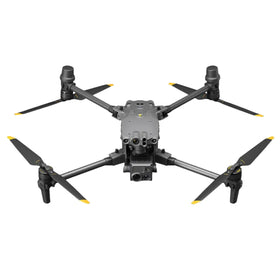
Third, the ULTRA's deployment highlights the importance of modular payloads. Military drones now carry swappable sensors for EO/IR, LiDAR, and SIGINT-a trend that commercial operators should adopt. Investing in drones with interchangeable payloads, such as the DJI M300 RTK with Zenmuse cameras, future-proofs your fleet against evolving mission requirements. At Reboot Hub, we offer pre-owned DJI drones that support these modular systems, ensuring you stay competitive.
Market Trends: Second-Hand Drone Values and Repair Demand
The ULTRA deployment also affects the second-hand drone market. As the USAF and allied forces phase out older MQ-1 Predators and some MQ-9s, a surplus of used military-grade drones may enter the civilian market through government auctions. However, these systems are often restricted due to ITAR (International Traffic in Arms Regulations) and require specialized maintenance. For most commercial operators, the more relevant impact is on the supply of DJI and Autel drones, which are frequently used for training and ISR-adjacent missions.
We are already seeing increased demand for professional DJI repair services as operators extend the life of their fleets amid economic uncertainty. The ULTRA's success may further encourage budget-conscious operators to invest in refurbished equipment rather than new retail units. At Reboot Hub, we provide comprehensive inspection and repair services, ensuring that your used drone performs like new-critical for maintaining operational reliability in sensitive missions.
Additionally, the geopolitical tensions driving ULTRA deployment could lead to stricter export controls on drone technology. The U.S. government has already restricted DJI sales in certain regions, and similar measures may expand. Commercial operators should diversify their supply chains and consider pre-owned units from trusted sources to mitigate compliance risks.
Technical Specifications and Operational Performance
While detailed specs remain classified, defense analysts estimate the ULTRA's turbocharged engine delivers a cruise speed of 60-80 knots and a service ceiling of 20,000 feet. Its endurance of 24-36 hours surpasses most commercial drones by an order of magnitude. For comparison, a DJI Matrice 350 RTK with extended batteries achieves only 55 minutes of flight time. The ULTRA's payload includes high-resolution EO/IR cameras with laser rangefinders and synthetic aperture radar (SAR) for all-weather surveillance.
The turbocharged variant is particularly noteworthy for its ability to climb rapidly to altitude and maintain station in high winds, a common challenge in Middle Eastern deserts. This performance is achieved through advanced lightweight composites and a fuel-injected engine that sips aviation gasoline. The modular design allows ground crews to swap payloads in under 30 minutes, a capability that commercial operators can emulate with systems like the DJI SkyPort payload adapter.
Regulatory and Policy Implications
The ULTRA deployment may influence FAA and EASA policies on BVLOS operations. If the USAF demonstrates safe long-endurance flights in mixed airspace, regulators may expedite approvals for commercial operators seeking similar waivers. However, the military's use of restricted airspace and advanced detect-and-avoid systems means commercial operators will still face hurdles. Operators should prepare by documenting their safety cases and investing in ADS-B Out transponders, which are becoming standard for BVLOS waivers.
Furthermore, the deployment could trigger new security restrictions on foreign-made drones in the U.S. market. The NDAA has already banned DJI from government contracts, and similar bans may extend to commercial operators working with federal agencies. This creates demand for non-Chinese alternatives, such as the Autel EVO series or Skydio X10, which are available refurbished at Reboot Hub.
Frequently Asked Questions
How does the ULTRA drone compare to the MQ-9 Reaper in cost and capability?
The ULTRA drone costs under $1 million per unit, compared to over $30 million for an MQ-9 Reaper. While the Reaper carries heavier payloads and can launch Hellfire missiles, the ULTRA excels in endurance and stealth, making it ideal for persistent surveillance in contested airspace. Its turbocharged engine allows for powered flight, whereas the Reaper relies on a more powerful but louder turboprop.
What does this deployment mean for commercial drone pilots?
Commercial drone pilots should view this as a validation of long-endurance, fixed-wing platforms for BVLOS operations. It may accelerate FAA rulemaking for BVLOS waivers, benefiting agricultural, pipeline, and survey operators. Additionally, the shift toward cheaper military drones could lower prices for used commercial drones, making pre-owned units like those at Reboot Hub more accessible.
Can I buy a used ULTRA drone for civilian use?
No. The ULTRA is a classified military system subject to ITAR restrictions, making it unavailable for civilian purchase. However, the technological trends it represents-modular payloads, high endurance, and low cost-are influencing commercial drone design. For equivalent performance in civilian applications, consider a refurbished DJI Matrice 350 RTK or Autel EVO Max 4T, available through Reboot Hub's marketplace.
As the USAF deploys turbocharged ULTRA drones to the Middle East, the commercial drone industry must adapt to shifting market dynamics. From regulatory changes to second-hand pricing, the ripples of this military move will be felt for years. Stay ahead by monitoring defense trends and investing in refurbishment-labeled equipment from Reboot Hub.
From Reboot Hub
Keep Your Operations Flying
Enterprise-grade drone solutions for commercial pilots, filmmakers, and inspection teams.
Pre-owned Fleet
Fully inspected DJI drones with 6-month warranty. Save up to 40%.
Browse Inventory ->