Public Safety and Delivery Drones Head for UTM Showdown – What It Means for Fleets
America now has four registered drones per crewed aircraft, but no agreed right-of-way system. A DRONERESPONDERS official warns of a looming airspace conflict. For fleet operators, this signals rising demand for certified hardware, repair capacity, and second-hand DJI stock.

Notas editoriales
- Este artículo combina informes externos citados con el análisis propio de Reboot Hub para compradores de drones, operadores de flotas, clientes de reparación y observadores del mercado de DJI seminuevos.
- Los hechos de la fuente se separan de la interpretación. Cuando un informe proporciona datos limitados, el artículo indica dicha limitación y presenta la visión de Reboot Hub como un análisis.
- Reboot Hub posee vínculos comerciales con productos y servicios de reparación de drones; dichos enlaces son recursos para el lector y no determinan la conclusión del artículo.
America now has roughly four registered drones for every single crewed aircraft, yet the country lacks any agreed system for deciding which drone moves out of the way when public safety and delivery drones share the same low-altitude corridor. In a piece published June 24 in Homeland Security Today, Charles Werner, director of the DRONERESPONDERS Public Safety Alliance, laid out a stark warning: the current uncoordinated growth of drone operations is setting public safety responders and commercial delivery fleets on a collision course over Unmanned Traffic Management (UTM). For drone fleet operators, repair customers, and second-hand buyers, this sector signal demands immediate attention to fleet readiness, parts availability, and the health of the used DJI market.

The core problem: no right-of-way framework
Werner’s argument rests on a simple but urgent point. The FAA has enabled rapid drone registration and operational expansion, but it has not yet mandated a UTM framework that assigns priority or separation between different types of drone missions. Public safety drones—used for search and rescue, fire monitoring, law enforcement, and disaster response—cannot simply yield to every delivery drone without compromising their mission timelines. Delivery fleets, meanwhile, operate under tight commercial schedules and increasingly dense route networks. Without a standardized rule for who yields, when, and under what conditions, both sectors face growing operational friction and safety risk.
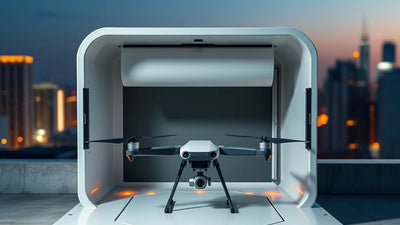
The scale is not theoretical. With four drones per crewed aircraft, the low-altitude airspace is already crowded. The DroneXL.co article notes that Werner specifically warns that “the country has no agreed system for deciding which one moves out of the way.” This lack of UTM interoperability will force fleet operators to invest in hardware and software capable of negotiating priority in real time. That means higher demand for drones with robust communication and data-link capabilities, and for ground infrastructure that can support persistent, coordinated operations. The DJI Dock 3, with its IP56 rating, wide operating temperature range of -30 to 50 °C, and ability to land in winds up to 12 m/s, is exactly the kind of hardened, always-ready platform that public safety agencies and delivery fleets will turn to. Its 55 kg weight and compact closed dimensions of 640x745x770 mm make it deployable in urban and remote sites alike.
What this means for drone buyers
For anyone buying a drone today—whether a small operator, a fleet manager, or a repair customer—the UTM collision warning translates into a practical reality: the value of certified, serviceable hardware is about to rise. Drones that cannot receive firmware updates, lack Remote ID compliance, or have obsolete data links will become second-tier assets faster than many expect. Public safety agencies, in particular, will prioritize fleets that can integrate with future UTM systems, which will likely require drones that support broadcast and networked identification, as well as reliable command-and-control links.
Commercial drone planning
Build the next fleet step around inspected hardware and serviceable parts.
Use Reboot Hub to compare certified DJI drones, repair options, and OEM components before the market moves again.
On the second-hand market, this creates a bifurcation. Well-maintained DJI drones with clean repair records and genuine parts will command premium prices because they can be re-deployed into public safety or high-compliance commercial roles. Drones with non-genuine parts, undocumented damage, or outdated firmware will struggle to find buyers. For Reboot Hub readers, the signal is clear: invest in professional repair services that use OEM parts, and keep your fleet in a state of certification readiness. If you are buying used, demand documentation of repair history and firmware compliance. The certified refurbished DJI drones available through Reboot Hub’s collection offer a verified path into this market without the risk of hidden issues.
Market and sector signal
Werner’s warning is not just a regulatory forecast; it is a market signal that will shape spending patterns across drone hardware, repair, and secondary markets for the next two to three years. Public safety budgets are already earmarked for drone programs—the DRONERESPONDERS organization itself represents hundreds of agencies. Delivery fleets are backed by venture capital and logistics giants. When these two massive demand pools collide over limited airspace and tighter compliance rules, the pressure will cascade down the supply chain.
Key effects that Reboot Hub readers should monitor:
- Parts scarcity: Genuine DJI spare parts, especially for enterprise models like the Matrice series and the Dock 3, will see longer lead times as agencies and fleets stockpile components for maintenance and expansion. Reboot Hub’s OEM spare parts collection will become a critical resource for those who need guaranteed authentic hardware.
- Repair queue growth: As more drones operate in higher-stakes missions, repair turnaround times will lengthen. Professional repair services with genuine parts capability will be in greater demand. Reboot Hub’s professional DJI repair services are positioned to handle this increased load with fast, certified work.
- Second-hand DJI market tightening: Drones that fit the UTM-ready profile—recent models, documented repairs, no unauthorized modifications—will become harder to find and more expensive. The supply of compliant used DJI drones will shrink as agencies and fleets buy up available inventory.
- Counter-UAS intersection: Public safety and delivery fleets both need to avoid not only each other but also potential interference from counter-UAS systems. MTS Radar solutions, integrated into fleet management, can provide situational awareness that reduces collision risk. Reboot Hub’s MTS Radar page offers context for operators evaluating that technology.
For stock-sector watchers, drone-related public companies that offer UTM software, communication modules, and hardened hardware are likely to see increased investor attention. The UTM collision headline is a catalyst for the entire drone ecosystem.
Preparing your fleet for UTM integration
The timeline for a national UTM framework is uncertain, but the direction is not. The FAA has been testing UTM concepts since 2020, and the pressure from both public safety and delivery operators will accelerate rulemaking. What can a fleet manager do today?
First, audit your fleet for Remote ID compliance and data-link frequency compatibility. Drones that operate only on unlicensed 2.4 GHz bands may face interference in congested urban airspace. Enterprise models like the DJI Matrice 350 RTK or the Dock 3 are designed for multi-band communication and can accept future firmware upgrades that support priority negotiation. Second, establish a maintenance cadence that uses only OEM parts. A drone with a third-party battery or a non-genuine motor may not meet the reliability standards that public safety agencies require for shared airspace. Reboot Hub’s OEM spare parts collection ensures you are sourcing components that match original specifications, from motors and propellers to main boards and sensors.
Third, consider the role of ground infrastructure. The DJI Dock 3, weighing 55 kg and rated IP56, can be deployed in harsh environments without shelter. Its open dimensions of 1760x745x485 mm and closed dimensions of 640x745x770 mm mean it can be mounted on a vehicle rooftop or a building pad with a small footprint. For public safety teams needing persistent coverage of a disaster zone, or for delivery operators running last-mile hubs, the Dock 3 provides an automated base that keeps the drone mission-ready. Its 800 W maximum input power and ability to operate at altitudes up to 4500 m make it versatile across many regions.
Finally, do not wait for the UTM system to be finalized. Begin coordinating with local public safety agencies and other fleet operators to establish informal right-of-way agreements. The operational data you collect now will inform your procedures when the regulatory framework arrives.
How will the UTM collision warning affect the resale value of my DJI drone?
Immediately, the warning increases demand for drones that are UTM-ready—those with Remote ID, multi-band radios, and verified repair histories. Older models without these features will lose value faster. Certified refurbished units with documented compliance will maintain or even increase in price as buyers seek reliable assets.
Should I buy a used DJI Dock 3 now or wait?
If you can find a verified used Dock 3 with a clean service record and original accessories, buying now is prudent. The public safety and delivery sectors will snap up available inventory as UTM pressures grow, likely pushing second-hand prices higher in the next 6-12 months. Reboot Hub’s certified refurbished drone collection is one place to start searching.
What repair issues should I expect if my fleet increases flight hours due to UTM preparations?
Higher flight hours accelerate wear on propellers, motors, and primary circuit boards. For dock-based systems like the DJI Dock 3, the landing pad mechanism and charging contacts also experience fatigue. Using only OEM spare parts and scheduling professional overhauls at certified centers like Reboot Hub’s repair service will keep your fleet ready for the elevated operational tempo that UTM integration demands.
From Reboot Hub
Build the next fleet step around inspected hardware and serviceable parts.
Use Reboot Hub to compare certified DJI drones, repair options, and OEM components before the market moves again.
Certified DJI drones
Inspected pre-owned aircraft with warranty coverage and clear condition grading.
Browse inventory ->Genuine-part repair
Diagnostics, repair planning, and component replacement for working DJI fleets.
Book a repair ->OEM spare parts
Batteries, propellers, gimbals, and essential DJI components for faster recovery.
Shop parts ->