Protolabs Expands Drone Manufacturing Capacity: What Operators Need to Know
Protolabs announces capacity expansion to serve the growing drone industry. We analyze what this means for supply chain stability, buyer costs, pre-owned DJI market trends, and repair parts availability.

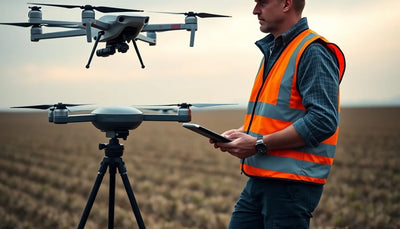
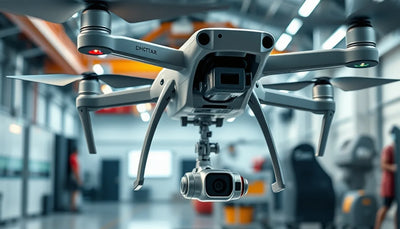
On July 8, 2026, Protolabs, a leader in digital manufacturing, announced it is expanding its manufacturing capacity specifically to serve the growing drone industry. The news, reported by Investing.com Canada, signals a structural shift in how drone components—from airframes to specialized brackets—are produced. For commercial operators, fleet managers, and buyers in the pre-owned DJI market, this expansion carries implications that reach far beyond a single factory floor.
When a major contract manufacturer consciously scales up for aerospace and unmanned systems, it often reflects a sustained increase in demand from original equipment manufacturers and aftermarket parts suppliers. Protolabs is effectively betting that the drone manufacturing sector requires faster turnaround, higher volumes, and more flexible production than what general-purpose prototyping and low-volume shops can consistently deliver. That bet is worth examining closely, particularly for anyone making procurement, repair, or fleet planning decisions over the next 12 to 18 months.
What this expansion signals for the drone supply chain
Protolabs specializes in injection molding, CNC machining, and 3D printing for rapid prototyping and low-to-medium volume production. Its decision to dedicate more capacity to drone industry customers suggests that airframe makers, payload integrators, and component suppliers are moving beyond early-stage development and into more repeatable, higher-volume production cycles. According to the Investing.com Canada report, the move is directly tied to anticipated growth in the drone sector, though specific volume targets or customer contracts were not disclosed.
Market context
Turn market news into a buy, repair, or trade-in decision.
Compare pre-owned availability, resale timing, and repair economics before the market moves again.

For fleet operators, the practical implication is straightforward: as Protolabs and similar digital manufacturers scale, the lead time for sourcing replacement parts and custom components should decrease. Instead of waiting eight to twelve weeks for a custom CNC-machined motor mount or a small batch of injection-molded landing gear brackets, operators may see those timelines compress to two to four weeks. Faster parts availability directly reduces aircraft downtime—a key cost driver for any commercial operation conducting aerial surveying, inspection, or logistics.
Additionally, the expansion points toward greater standardization in drone component design. Protolabs’ business model works best when customers are willing to optimize parts for manufacturability. As more drone designers and repair specialists adopt Design for Manufacturing (DFM) principles, operators can expect better interoperability between aftermarket and OEM parts, which in turn supports the health of the pre-owned and repair ecosystems. When high-quality third-party components are more readily available, the total cost of ownership for a used aircraft decreases, and the incentive to keep older platforms flying increases.
What this means for drone buyers
For buyers evaluating new or used drone platforms, the Protolabs expansion is a positive supply-side signal. A more resilient component supply chain reduces the risk that a popular airframe will become orphaned due to parts shortages. This matters especially for operators who buy pre-owned DJI drones, where continued availability of replacement arms, gimbal brackets, and landing gear is essential to long-term value.
When contract manufacturers like Protolabs increase capacity specifically for drones, it also creates pricing pressure. More production lines mean lower per-unit costs for precision parts over time. Those savings can flow downstream to repair shops and end users. In a market where genuine OEM spare parts for DJI platforms often command premium prices, any downward cost pressure on manufacturing translates to more competitive pricing for professional DJI repair services that rely on quality components.
Another factor: supply chain stability supports the resale value of used equipment. If a buyer knows that parts and repairs will remain accessible for a given airframe, they are more willing to pay a higher price for that aircraft on the second-hand market. Conversely, airframes with poor parts availability see accelerated depreciation. The Protolabs expansion, while not directly tied to any specific drone model, reinforces a broader trend of institutional support for drone manufacturing that should give buyers more confidence in the longevity of their investments.
Reboot Hub analysis: A practical takeaway for fleet managers: when planning your next equipment purchase, consider not just the aircraft itself but the ecosystem of parts and repair services that surrounds it. Platforms whose components are compatible with digital manufacturing methods like Protolabs’ are likely to enjoy longer support windows and more competitive repair pricing. This is a factor worth weighing alongside flight performance and payload capability.
Implications for fleet maintenance and repair
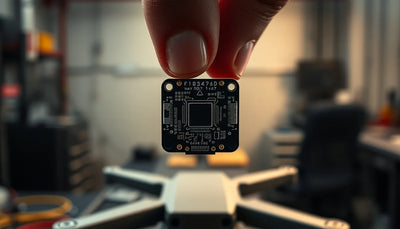
Drone repair has traditionally faced two bottlenecks: availability of genuine parts and lead times for custom or low-volume components. Protolabs’ expansion directly addresses the second bottleneck. By offering drone-specific CNC machining and 3D printing capacity, the company enables repair providers to source non-structural brackets, housings, and small mechanical parts without waiting for minimum order quantities from large OEMs.
For operators who rely on drone trade-in guide information when upgrading their fleets, the expansion also has a forward-looking effect. If trade-in programs require that aircraft be in good mechanical condition to maximize value, the ability to quickly source replacement parts ensures that even older airframes can be brought up to a sellable standard. A robust supply chain for components directly supports the circular economy of the drone market.
That said, operators should not expect Protolabs’ expansion to solve every repair challenge overnight. The company focuses on smaller, precision parts—structural components like main airframe shells and large battery housings likely remain the domain of specialized molders and OEM supply chains. However, for the thousands of small plastic and metal parts that keep a fleet running, the new capacity is a meaningful improvement. Fleet managers should note which components on their aircraft are candidates for digital manufacturing and factor that into their spares strategy.
Another important nuance: Protolabs operates as a contract manufacturer, not a parts distributor. The end customer will typically order through the original equipment manufacturer or a repair partner. Operators should ask their repair providers whether they leverage digital manufacturing services for hard-to-source parts. If the answer is no, it may be worth exploring alternative repair shops that do, as they can often offer faster turnaround times and lower costs.
Broader market implications for the pre-owned and repair ecosystem
The drone aftermarket—consisting of used equipment sales, third-party repairs, and non-OEM parts—has long operated in the shadow of primary manufacturing. The Protolabs expansion suggests that the industry is maturing to the point where contract manufacturers see sustained, bankable demand from drone companies. That maturity benefits everyone who participates in the aftermarket.
When manufacturing capacity grows for drone-specific components, the cost of raw materials for repair decreases. Repair shops can offer more competitive pricing on services like gimbal replacement, arm swaps, and shell repairs. Those savings pass through to end users, making it more economical to repair an older DJI Inspire or Matrice platform than to replace it with a new unit. This dynamic strengthens the business case for buying high-quality used equipment and maintaining it over a longer service life.
Furthermore, the expansion signals to the financial community that drone hardware is a viable long-term investment category. As institutional manufacturing support firms up, the risk profile of drone fleet ownership improves. Lenders, insurers, and leasing companies become more comfortable with drone assets when they know that replaceable parts are widely available. That liquidity supports higher trade-in values and more active resale markets.
For the second-hand DJI market specifically, the news is cautiously positive. DJI's own supply chain is global and sophisticated, but the availability of aftermarket and third-party-compatible components from manufacturers like Protolabs gives operators alternatives when factory parts are back-ordered or discontinued. This does not replace genuine OEM spares, especially for flight-critical items, but it does create a safety net for cosmetic, structural, and non-safety-critical repairs.
Operators should also consider the timing. Protolabs is expanding now, which means the effects will be felt gradually over the next two to four quarters. Fleet managers who act early—by building relationships with repair shops that use digital manufacturing, or by stocking spares for airframes with strong aftermarket support—will be ahead of the curve when component availability tightens during peak season.
How will this expansion affect the price of spare parts for my existing drone?
Over the next 12 to 18 months, the cost of many small precision components—such as brackets, mounts, and covers—should trend downward as more production capacity comes online. Larger structural parts that require dedicated molds may not see immediate price changes, but operators can expect more competitive pricing and faster turnaround for CNC-machined and 3D-printed parts.
Does Protolabs' announcement mean I should wait to buy a used drone?
No. The expansion supports long-term parts availability but does not change current market conditions. If you find a well-maintained pre-owned platform at a fair price, the news simply reinforces that support infrastructure will likely improve over the aircraft's service life, making it a lower-risk purchase than it might have been a year ago.
Is this manufacturing expansion directly related to any specific drone brand or model?
The Investing.com Canada report did not name specific customers or airframes. Protolabs serves a broad range of drone industry clients, from startups to established OEMs. The capacity increase benefits the ecosystem as a whole rather than any single platform, so operators of all major brands—including DJI—should see gradual improvements in parts availability and pricing.
Fuentes consultadas
- Proto Labs Inc (PRLB) Stock Price & News - Google Finance - primary source
- DIU Blue UAS - official government source
Reboot Hub Editorial ofrece análisis de compra, reparación, reventa y operatividad para propietarios de drones. Si detecta algún error, contáctenos para solicitar una revisión de corrección conforme a nuestra política editorial.