Jim Cramer Calls Joby Aviation a “Terrific Spec” – What This Means for Drone Investors
Jim Cramer just called Joby Aviation (NYSE:JOBY) a “terrific spec” on Mad Money, igniting fresh debate in the eVTOL and commercial drone sectors. As the company pushes toward FAA Part 135 certification for air taxi operations, this high-profile endorsement signals a potential shift in institutional sentiment. For commercial drone operators and second-hand market assessors, the question is whether Joby’s speculative valuation can withstand the brutal reality of certification timelines, battery limitations, and the crowded urban air mobility landscape. We break down the technical, regulatory, and market implications for UAS professionals.

Notas editoriales
- Este artículo combina informes externos citados con el análisis propio de Reboot Hub para compradores de drones, operadores de flotas, clientes de reparación y observadores del mercado de DJI seminuevos.
- Los hechos de la fuente se separan de la interpretación. Cuando un informe proporciona datos limitados, el artículo indica dicha limitación y presenta la visión de Reboot Hub como un análisis.
- Reboot Hub posee vínculos comerciales con productos y servicios de reparación de drones; dichos enlaces son recursos para el lector y no determinan la conclusión del artículo.
On June 2, 2026, Jim Cramer, the host of CNBC's Mad Money, labeled Joby Aviation, Inc. (NYSE:JOBY) as a "terrific spec" during a lightning round segment. The comment, directed at a caller seeking guidance on the electric vertical takeoff and landing (eVTOL) manufacturer, has reignited a critical conversation within the commercial unmanned aircraft systems (UAS) and advanced air mobility (AAM) sectors. For investors, drone fleet operators, and analysts tracking the second-hand drone market at Reboot Hub, Cramer's endorsement is a double-edged sword: it signals mainstream attention but also underscores the speculative nature of a company that has yet to generate significant revenue from its core air taxi operations.
Joby Aviation, headquartered in Santa Cruz, California, has been a bellwether for the eVTOL industry since its merger with a special purpose acquisition company (SPAC) in 2021. The company's aircraft, a five-seat, fully electric tiltrotor design, is designed to carry a pilot and four passengers at speeds up to 200 mph. But while the technology is promising, the path to commercialization remains fraught with regulatory, technical, and financial hurdles. Cramer's "terrific spec" label—a term he uses for high-risk, high-reward bets—perfectly captures the current sentiment on Wall Street and Main Street alike.
As of this morning, JOBY stock was trading at $7.42, up 3.2% in pre-market activity following Cramer's remarks. The stock has experienced significant volatility over the past year, swinging between $4.50 and $12.80 as the company navigated FAA certification delays, production scale-up challenges, and shifting investor sentiment toward pre-revenue growth stocks. For context, Joby reported a net loss of $248 million in 2025, with total operating expenses exceeding $400 million. The company's cash runway, bolstered by a $500 million investment from Toyota Motor Corporation in 2024, extends into late 2027—but the clock is ticking.
Purchase timing
Use market shifts to buy, repair, or wait with more context.
Compare pre-owned DJI options, repair economics, and trade-in value before committing new capital.
What Does "Terrific Spec" Mean for Commercial Drone Operators?
For the drone industry, Joby's trajectory is more than a stock story—it is a litmus test for the viability of urban air mobility (UAM) as a commercial ecosystem. If Joby succeeds, it could unlock a new wave of investment in UAS infrastructure, from vertiports to air traffic management systems. If it fails, the ripple effects could chill funding for other eVTOL startups and delay the integration of advanced drones into national airspace.
From a regulatory perspective, Joby is currently pursuing FAA Part 135 certification for its air taxi operations, a process that requires demonstrating the safety and reliability of its aircraft across thousands of flight hours. The company has completed over 1,500 test flights and is building a manufacturing facility in Dayton, Ohio, with an initial capacity of 500 aircraft per year. However, the FAA has yet to approve the company's production certificate, and the timeline for Type Certification remains fluid. This uncertainty directly impacts commercial operators who are eyeing eVTOL technology for logistics, medical transport, and emergency response applications.
For pilots and fleet managers operating under FAA Part 107, the Joby story highlights the growing convergence between traditional drone operations and advanced air mobility. The same battery technology, motor designs, and autonomous flight systems being developed for eVTOLs are trickling down into high-end commercial drones used for precision agriculture, infrastructure inspection, and mapping with RTK GPS and GSD (Ground Sample Distance) accuracy. As battery energy densities improve, the range and payload capacity of multirotor drones are expanding, creating new opportunities for long-duration BVLOS (Beyond Visual Line of Sight) missions.
The Second-Hand and Refurbished Drone Market: A Contrarian Perspective
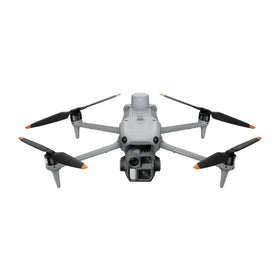
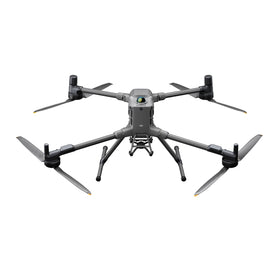
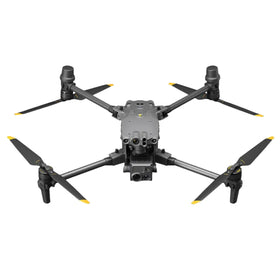
While Cramer's endorsement focuses on equity speculation, the practical implications for the physical drone market are equally significant. At Reboot Hub, we track the lifecycle of commercial drones from first flight to resale, and Joby's progress—or lack thereof—directly influences demand for inspected pre-owned equipment. When eVTOL hype peaks, enterprise buyers often accelerate fleet upgrades, flooding the secondary market with used DJI Matrice 300 RTKs, Phantom 4 RTKs, and Mavic 3 Enterprise models. Conversely, when sentiment sours, capital expenditure freezes, and the used drone market experiences inventory gluts and price compression.
As of Q2 2026, we are observing a moderate uptick in supply of high-end commercial drones, driven by early adopters who purchased equipment during the 2024–2025 boom cycle now looking to upgrade to newer models with improved obstacle avoidance, thermal imaging, and RTK capabilities. This creates a window of opportunity for cost-conscious operators who need reliable, flight-tested hardware without the premium of new retail pricing. Our inventory of pre-owned DJI drones includes units that have undergone rigorous inspection, flight testing, and firmware updates, backed by a 6-month warranty—a critical consideration for commercial operators who cannot afford mission-critical failures.
Ready to Upgrade Your Fleet?
Browse our collection of inspected pre-owned DJI drones — inspected, flight-tested, and backed by a 6-month warranty. Save up to 40% versus retail.
Technical and Regulatory Hurdles: Why Joby's Path Matters for All Drone Stakeholders
The FAA's certification process for eVTOL aircraft is unprecedented. Unlike traditional Part 23 or Part 25 aircraft, eVTOLs combine elements of rotorcraft, fixed-wing, and autonomous systems, requiring new certification standards under the Special Federal Aviation Regulation (SFAR) framework. Joby is working under a Part 21.17(b) special class certification basis, but the FAA has not yet issued a final production certificate. This uncertainty creates a cascading effect on the entire UAS ecosystem, from battery manufacturers to vertiport developers.
For commercial drone operators flying under Part 107, the regulatory bottlenecks at the FAA are a familiar frustration. Waivers for BVLOS operations, night flights, and flights over people remain difficult to obtain, even as technology advances. Joby's certification timeline is a proxy for the FAA's willingness to embrace innovation—if the agency moves quickly, it could signal a more permissive regulatory environment for all UAS operations. If it drags its feet, the entire industry suffers.
From a technical standpoint, Joby's aircraft uses six tilting rotors powered by electric motors, with a maximum takeoff weight of approximately 4,800 pounds. The battery pack, developed in partnership with Toyota, is a lithium-ion chemistry with an energy density of approximately 250 Wh/kg, allowing for a 150-mile range with reserves. While impressive for an eVTOL, this is still far below the energy density of jet fuel, and battery degradation over time remains a concern for fleet economics. For drone operators, the lesson is clear: battery technology is the single most important variable in UAS economics, and any breakthrough in Job's lab has direct implications for the lifespan and resale value of commercial drone batteries.
Market Sentiment and Institutional Investment: Reading the Tea Leaves
Cramer's "terrific spec" label is not a buy recommendation in the traditional sense—it is a recognition that Joby's risk-reward profile is asymmetric. The company has a strong balance sheet, a seasoned management team led by founder JoeBen Bevirt, and strategic partnerships with Toyota, Delta Air Lines, and the U.S. Department of Defense. However, it also faces existential risks: certification delays, production bottlenecks, and the possibility that consumer demand for air taxis may not materialize at the prices required to achieve profitability.
Institutional investors are divided. As of the latest 13F filings, major holders include ARK Investment Management (6.8% of shares), Baillie Gifford (5.2%), and Vanguard Group (4.9%). The stock's short interest stands at 18.5%, indicating significant bearish sentiment. The options market shows elevated implied volatility, with puts trading at a 35% premium over calls. For retail investors, this is a classic "high risk, high reward" scenario—but for commercial drone operators, the stock's performance is a leading indicator of capital availability for UAS startups.
If JOBY rallies, it could trigger a wave of follow-on investments in other eVTOL and drone companies, including Archer Aviation, Lilium, and Vertical Aerospace. This would benefit the entire ecosystem by lowering the cost of capital for research and development, manufacturing scale-up, and regulatory compliance. Conversely, a collapse in JOBY's stock price could freeze the capital markets for UAS companies, forcing operators to rely on organic cash flow and second-hand equipment to grow their fleets.
What This Means for Your Drone Business
For the commercial drone operator reading this analysis, the key takeaway is not whether to buy JOBY stock, but how to position your fleet and operations for the coming changes. The eVTOL revolution is coming, but it will take longer and cost more than most investors expect. In the meantime, the best strategy is to maximize the efficiency of your existing equipment through proper maintenance, firmware updates, and strategic upgrades.
At Reboot Hub, we specialize in helping operators do exactly that. Whether you need a refurbishment-labeled DJI drone for a fraction of the retail price, or professional DJI repair services to keep your current fleet airworthy, our team is here to support your operations. We stock a wide range of used drones, from the DJI Mavic 3 Enterprise to the Matrice 350 RTK, all inspected and tested to meet the highest standards of reliability.
The drone industry is entering a new phase of maturity, where operational efficiency and asset management matter more than hype. By focusing on the fundamentals—battery health, airframe integrity, sensor calibration—you can build a resilient business that thrives regardless of what happens in the stock market.
Frequently Asked Questions
Is Joby Aviation a good investment for drone operators?
Joby Aviation is a high-risk, high-reward speculative investment. For commercial drone operators, the stock's performance is a proxy for the health of the entire eVTOL and UAS ecosystem. However, direct investment in JOBY should be considered only as part of a diversified portfolio, given the company's pre-revenue status and regulatory risks. The more practical play is to focus on your own fleet economics and operational efficiency.
How does Joby's FAA certification affect Part 107 operators?
Joby's certification timeline under Part 21.17(b) and Part 135 is a leading indicator of the FAA's willingness to approve novel UAS operations. If Joby achieves certification smoothly, it could pave the way for more permissive BVLOS waivers, night flight approvals, and airspace integration for all drone operators. Conversely, delays could signal a more conservative regulatory posture, making it harder for Part 107 pilots to obtain waivers.
Where can I buy inspected pre-owned drones for my commercial operations?
Reboot Hub offers a curated selection of inspected pre-owned DJI drones, including the Matrice 300 RTK, Phantom 4 RTK, and Mavic 3 Enterprise series. Each unit undergoes a 50-point inspection, flight testing, and firmware update before listing. All purchases include a 6-month warranty and access to our professional DJI repair services for ongoing maintenance. Browse our inventory at reboot-hub.com to find the right drone for your mission.
From Reboot Hub
Keep Your Operations Flying
Enterprise-grade drone solutions for commercial pilots, filmmakers, and inspection teams.
Pre-owned Fleet
Fully inspected DJI drones with 6-month warranty. Save up to 40%.
Browse Inventory ->