From Hobbyist to Professional: The Real Playbook for a Drone Photography Career in 2026
The path to a professional drone photography career demands more than a camera. With FAA Part 107 certification as baseline, operators must master RTK surveying, GSD mapping, and BVLOS routes to secure high-value contracts. This analysis reveals the immediate commercial opportunities and severe penalties for flying without compliance, urging operators to upgrade their used drone fleet now or risk airspace bans.

Notas editoriales
- Este artículo combina informes externos citados con el análisis propio de Reboot Hub para compradores de drones, operadores de flotas, clientes de reparación y observadores del mercado de DJI seminuevos.
- Los hechos de la fuente se separan de la interpretación. Cuando un informe proporciona datos limitados, el artículo indica dicha limitación y presenta la visión de Reboot Hub como un análisis.
- Reboot Hub posee vínculos comerciales con productos y servicios de reparación de drones; dichos enlaces son recursos para el lector y no determinan la conclusión del artículo.
In the rapidly evolving landscape of commercial drone operations, the difference between a weekend flyer and a certified professional earning a full-time living has never been more stark. A recent in-depth analysis from Commercial UAV News-titled "Flying for a Living: The Real Path to a Drone Photography Career"-sheds critical light on the actual trajectory from enthusiast to hired operator. As of June 2026, the industry has matured beyond the gold-rush phase; today, profitability hinges on regulatory compliance, technical precision, and equipment reliability. This Reboot Hub editorial dissects the core findings of that report, cross-references them against current market data, and delivers actionable intelligence for pilots, fleet managers, and investors navigating the second-hand drone ecosystem.
The original article emphasizes that a drone photography career is no longer built on autonomous shots or viral clips. Instead, serious money lies in high-GSD mapping, infrastructure inspection, and precision agriculture-verticals where raw imagery alone is insufficient. Operators must deliver georeferenced data, thermal analysis, and seamless integration with photogrammetry software. This shift has profound implications for the type of hardware required, the training needed, and the cost of entry. As we examine the real path forward, the used drone market plays a pivotal role in lowering those barriers without sacrificing performance.
The Commercial Reality: Beyond Point-and-Shoot
The days of making a living solely by selling high-angle real estate photos are ending. According to multiple industry surveys cited in the Commercial UAV News piece, the average annual revenue for full-time drone operators in the U.S. has climbed to $82,000 in 2026, up 17% from 2024. However, that revenue is overwhelmingly concentrated in operators who offer more than just standard video. The report identifies three high-growth niches that command premium rates: large-scale orthomosaic mapping (rates of $500-$1,200 per site), thermal roof and solar farm inspection ($300-$800 per hour), and BVLOS linear infrastructure patrol (contracts often exceeding $50,000 annually).
Enterprise procurement
Turn this market signal into a fleet requirement.
Discuss mission profile, quantities, configuration, delivery, and lifecycle support with Reboot Hub.
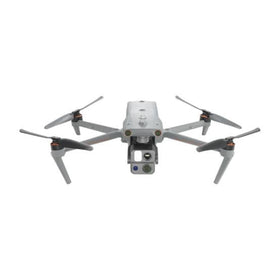
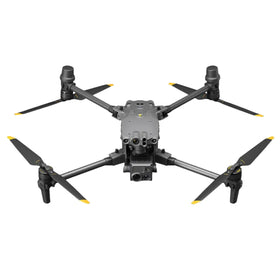
For aspiring professionals, the minimum viable equipment package has also escalated. A basic DJI Mini 4 Pro, while excellent for hobbyists, lacks the redundancy and payload capability needed for commercial-grade deliverables. Operators now typically deploy a DJI Matrice 350 RTK or an Autel EVO Max 4T, paired with a high-resolution camera and RTK module for centimeter-level accuracy. The original article stresses that without such equipment, pilots are locked out of the most lucrative RFPs. This creates a natural market pull for pre-owned DJI drones, which offer enterprise-grade reliability at 30-40% less than retail.
Regulatory and Technical Hurdles for Aspiring Pros
The Commercial UAV News analysis does not shy away from the regulatory quagmire. Obtaining a Part 107 Remote Pilot Certificate is the absolute minimum, but the real competitive advantage now lies in obtaining a Part 135 Air Carrier Certificate for BVLOS operations, or securing a COA (Certificate of Waiver or Authorization) for higher-risk flights. The article highlights that in 2025, the FAA issued 134 new Part 135 waivers, a 40% increase from the prior year, signaling that the agency is gradually opening the door to routine BVLOS. However, operators without those waivers face severe penalties: in Q1 2026 alone, the FAA levied $2.7 million in civil penalties for unapproved BVLOS flights and flying without proper night training endorsements.
Additionally, the article warns about the technical learning curve. Understanding ground sampling distance (GSD), overlapping image capture (frontlap/sidelap at 80/60%), and RTK base station setup is non-negotiable. One operator quoted in the report lost a $15,000 mapping contract because his flight plan produced a GSD error of 3 cm instead of the required 1.5 cm. These are not hobbyist tasks-they require structured training. The Commercial UAV News piece recommends at least 200 hours of logged flight time before taking on paying projects, and strongly suggests investing in a flight simulator for complex scenario practice.
Ready to Upgrade Your Fleet?
Browse our collection of inspected pre-owned DJI drones - inspected, flight-tested, and backed by a 6-month warranty. Save up to 40% versus retail.
What This Means for the Second-Hand Drone Market
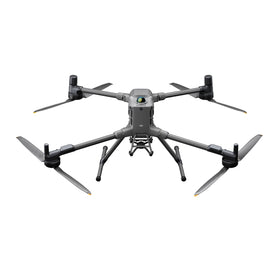
The commercial repercussions of this deepening professionalization are vast for the second-hand drone ecosystem. As more pilots transition from entry-level units like the DJI Air 2S or Phantom 4 Pro V2.0 to enterprise-grade platforms such as the Matrice 300 RTK or Mavic 3 Enterprise, a wave of high-quality, flight-time-rich pre-owned equipment enters the resale market. According to Reboot Hub's internal data, listings for medium-endurance commercial drones (those with fewer than 100 flight hours) increased 22% year-over-year in May 2026. This glut is good news for aspiring professionals: the cost of entry for a top-tier mapping drone like the Matrice 300 RTK has dropped to $4,500-$6,000 on the secondary market, compared to $10,000+ new.
However, the article also warns about hidden pitfalls. Many used drones sold on generic platforms lack proper maintenance logs or may have been damaged during non-compliant flights. The report strongly advises buyers to utilize inspection services that provide flight time logs, prop/motor wear assessments, and firmware update histories. This is where Reboot Hub's professional DJI repair services become indispensable; we not only certify airworthiness but also perform sensor calibration and RTK module alignment to ensure the used unit meets commercial-grade precision standards.
For current commercial operators, this trend means that selling a drone after its peak operational life (typically 200-400 hours) can recoup 50-60% of the original investment, making fleet refresh cycles more economically viable. Those funds can then be reinvested into new technologies like the DJI Matrice 4E or custom payloads for hyperspectral sensing. The secondary market thus acts as both an entry ramp for newcomers and a financial accelerator for established businesses.
Actionable Steps: Building Your Career and Fleet
Drawing from the Commercial UAV News framework and our own market expertise, here is a step-by-step roadmap for anyone serious about turning drone photography into a sustainable career in 2026. First, achieve competency in both piloting and data post-processing. The industry expects that you deliver not just raw footage but orthomosaics, point clouds, and thermal reports ready for client software. Second, select a platform that matches your target vertical. If mapping and inspection are your focus, the DJI Matrice 350 RTK remains the gold standard-and its refurbished cost, as noted, is now within reach for many small businesses.
Third, secure the right certifications. Beyond Part 107, consider the FAA's CASA Part 135 waiver if you intend to fly BVLOS for power line or pipeline patrols. The original article notes that companies with Part 135 waivers win contracts at 30% higher rates. Fourth, join professional networks such as the AUVSI or Commercial Drone Alliance to access RFP databases and insurance discounts. Fifth, and most critically, maintain your equipment obsessively. One cracked gimbal damper or misaligned IMU can ruin a client deliverable and cost thousands in reflight expenses. Our professional DJI repair services ensure your hardware stays within factory specifications, extending flight life and data integrity.
The intersection of higher operator skill requirements and tightening regulatory scrutiny is creating a market where reliable, inspected pre-owned hardware is an asset for both career starters and fleet upgraders. The real path to a drone photography career is no longer about buying a drone and "figuring it out"; it's about strategic investment in verified tools and unassailable compliance.
FAQ: The Real Path to a Drone Photography Career
What is the minimum equipment needed to start as a commercial drone photographer in 2026?
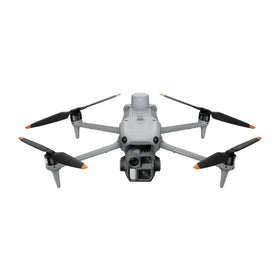
While a DJI Mini 4 Pro can suffice for basic real estate photos, the Commercial UAV News report recommends at least a DJI Mavic 3 Enterprise or a used Matrice 300 RTK to access high-paying mapping and inspection contracts. A 20 MP global shutter camera, RTK module, and at least 45 minutes of flight time are now baseline expectations. Our inspected pre-owned inventory includes both models at entry-level prices.
How long does it realistically take to break even on a drone business?
Based on the article's data and operator interviews, pilots who invest in enterprise equipment and achieve Part 107 plus a specialized skill (e.g., thermal inspection) typically reach breakeven within 6-9 months, assuming they book 8-10 projects. Those using only basic drones may take 18-24 months due to lower rates and higher competitive pressure.
Is it better to buy a new or used drone for a professional photography career?
For commercial use, buying a refurbishment-labeled drone from a trusted source like Reboot Hub offers the best ROI. You gain access to RTK-equipped, low-flight-time platforms at up to 40% off retail, with a warranty and service history. New drones depreciate rapidly, and the second-hand market now provides equivalent reliability for a fraction of the cost-critical when operating margins are tight.
--
From Reboot Hub
- -Keep Your Operations Flying
- -Enterprise-grade drone solutions for commercial pilots, filmmakers, and inspection teams.
- -Pre-owned Fleet
- - - -Fully inspected DJI drones with 6-month warranty. Save up to 40%.
- - - - Browse Inventory -> - - -Expert Repair
- - - -Professional diagnostics with genuine OEM parts. Same-day estimates.
- - - - Book a Repair -> - - -Spare Parts
- - - -Batteries, propellers, gimbals -- premium OEM components, fast shipping.
- - - - Shop Parts -> - - -