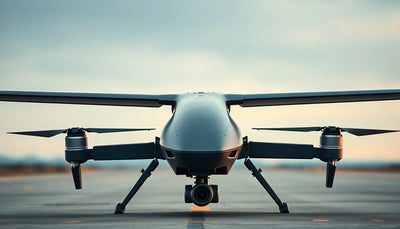
DJI Matrice 4E and Terra Map Khumbu Icefall in 2026 Everest Season
DJI Matrice 4E and DJI Terra mapped the Khumbu Icefall during the 2026 Everest climbing season. This news analysis explains what the extreme-environment mission means for enterprise fleet buyers, repair planning, and the pre-owned DJI market.

The 2026 Mount Everest climbing season has brought an unlikely piece of hardware into one of the planet's most hazardous environments. According to an ANTARA News report carried by Google News DJI, a DJI Matrice 4E and DJI Terra were used to map the Khumbu Icefall during the current climbing season. For commercial operators, this is not just a dramatic field story. It is a signal about how serious mapping work is being pushed into conditions where reliability is not a specification sheet nicety but a survival issue. The Khumbu Icefall is a constantly shifting glacier between Everest Base Camp and Camp I, and mapping it accurately has direct consequences for route planning and climber safety. That a DJI enterprise platform and photogrammetry workflow were deployed there tells fleet managers something valuable about mission tolerance, payload confidence, and the kind of drone equipment that holds up when the operating envelope shrinks.
This news arrives at a time when enterprise drone buyers are increasingly asking whether a flagship Matrice platform is worth the premium over lighter or older systems. The Everest deployment is not a formal stress test with published data, and we should not treat a single news report as a certification. But it is a practical data point. The Matrice 4E and Terra combination was trusted for work where a failure would not just cost a flight, it would cost time in a very short weather window. For procurement managers, the takeaway is less about heroics and more about lifecycle reality: the aircraft chosen for the icefall is the same class of machine that carries commercial lidar, thermal, and high-resolution mapping payloads in less extreme jobs. If the platform can be operated successfully in that environment, its margin for error in standard industrial operations is likely substantial.
The source news and what it actually confirms
The ANTARA News report identifies two specific products: the DJI Matrice 4E quadcopter and DJI Terra mapping software. The stated task was to map the Khumbu Icefall during the 2026 climbing season. That is the full factual core of the announcement. We are not told who operated the flight, how long it took, how many sorties were required, or whether the data changed any route decisions on the mountain. What the source does confirm is that an enterprise-grade imaging drone and professional photogrammetry software were considered the right tools for one of the most demanding mapping targets on Earth.
Industrial drone procurement
Source a brand-new industrial drone for this mission.
Discuss mission fit, aircraft model, quantities, configuration, pickup, and lifecycle support with Reboot Hub.

For operators, the practical implication is about workflow confidence. The combination of a high-resolution mapping drone with a processing platform is exactly what a modern surveying or infrastructure inspection team runs. The Everest mission did not require exotic custom hardware; it used commercially available DJI equipment and software that a qualified enterprise team can deploy on a construction site, a quarry, or a floodplain. This reduces the distance between an elite expedition and an everyday commercial job. When a buyer sees this class of machine operating at altitude in freezing conditions, it strengthens the argument that the hardware is built for extended field duty, not just controlled test environments.
It is also worth noting what the source does not contain. There are no claimed flight times, no stated altitude limits, no temperature ratings, and no payload specifications in the excerpt. We should avoid inventing performance figures. The commercial lesson stands on the event itself: a six-figure-equivalent industrial mapping package was chosen for high-consequence mountain work, and it was reported as a normal operational fact rather than an experimental prototype story.
Fleet planning and lifecycle thinking after a high-altitude mission
For a fleet operator, every news story about a demanding drone deployment raises a practical question: what would this mission do to my aircraft, and when would I buy another one? The Matrice 4E used on the icefall is an example of a mission-ready platform, but high-altitude work with extreme cold, wind, and blowing snow takes a toll on airframes, batteries, gimbals, and sensors. Even in less punishing terrain, the operational cost curve matters. An enterprise drone that flies frequent mapping sorties will eventually need genuine OEM spare parts, professional repair services, and honest assessment of when a unit should be retired or sold.
The pre-owned DJI market will likely see an impact from this kind of field validation. Stories like this support residual value for well-maintained Matrice aircraft because they reinforce the platform's reputation for ruggedness. Buyers searching for pre-owned DJI drones often ask whether a used enterprise platform can handle serious field conditions. This news gives them a reference point: the same product family is being deployed in one of the most inhospitable places on the planet. That does not mean every used unit is perfect, but it does mean the design baseline is credible.
Pilots and fleet managers should adjust their maintenance thinking accordingly. If you are flying Matrice-class equipment on high-exposure jobs, the pre-flight inspection list should include structural checks, gimbal calibration, and battery health reviews. After a hard deployment, a thorough inspection by certified technicians matters more than a quick visual check. Access to professional DJI repair services is a practical safeguard when an aircraft has been through cold, dust, or high-vibration operations.
The lifecycle question also extends to software. DJI Terra is the data-processing end of this workflow, and any operation that captures high-volume mapping data needs a reliable processing pipeline. A drone that flies a perfect mission still fails its purpose if the data cannot be turned into a usable survey product. Fleet planning should therefore budget not only for aircraft and sensors, but for the software subscriptions and the staff who know how to run them.
What this means for enterprise operators
Enterprise operators should read this report as a realistic signal about when a brand-new industrial drone procurement is a practical next step. The Matrice 4E is not a hobbyist machine; it is a purpose-built tool for operators who need repeatable, high-accuracy mapping in demanding conditions. If your missions involve large-area surveys, construction progress monitoring, environmental assessment, or infrastructure inspection where downtime is expensive, a dedicated enterprise platform is justifiable. The mission fit is about more than image quality. It is about configuration, available time, and support. A new unit with a warranty and a known service history is attractive when you cannot afford a surprise failure in the middle of a campaign.
Quantity and fleet structure also matter. The icefall mapping mission was likely executed with a small number of aircraft doing high-value sorties. That model favors owning a few high-capability platforms rather than many cheap units. Maintenance planning for that approach is different: this new aircraft line needs professional servicing, reliable spare parts, and a defined repair pathway. Downtime per sortie is tolerable if the sortie itself delivers critical data, but unscheduled downtime for a single-operator mission can stop a project. The report reinforces the value of a prepared operator who has planned for battery rotation, field servicing, and data backup. For fleet buyers, the operational conclusion is to consider where marginal performance gains justify new procurement. If a team is already flying older or smaller systems and losing time to re-flights, the Matrice 4E class is a defensible upgrade target. If the existing fleet already meets mission tolerances, the icefall story is useful validation, but it should not trigger a rush purchase. The practical answer for a buyer is to map their own mission envelope: terrain, temperature, altitude, wind, and data accuracy requirements. Where the envelope matches the demonstrated capability of this platform, new procurement is a reasonable strategic move.
For those considering a trade-in of older enterprise equipment, this news is also a useful market-conditions reference. Demand for capable used Matrice platforms generally stays healthy when the enterprise ecosystem is actively reporting real-world deployments. If you are upgrading from an earlier Matrice series, the trade-in route can offset the cost of new hardware. The drone trade-in guide offers a practical framework for evaluating when an old airframe's value is best realized as credit toward newer equipment. The decision to retire or sell a unit should be based on flight hours, maintenance history, and the cost of bringing it to current mission requirements, not on a single news event. For teams translating this development into aircraft configuration and fleet requirements, Reboot Hub's B2B drone procurement service can help scope configuration, fleet quantity, maintenance planning, and lifecycle support before a quotation.
Repair, resale, and the real-world lesson for buyers
The Everest field deployment has a clear implication for repair services and the secondary market. Industrial drones that fly in harsh environments will eventually require component replacement. High-altitude missions stress propulsion systems, batteries, and gimbal assemblies. The commercial ecosystem that supports this market is therefore not only about selling new aircraft; it is about maintaining the installed base. Operators who depend on these platforms need access to genuine OEM parts and skilled repair facilities rather than improvised fixes. A plan that includes a trusted repair partner improves the effective lifetime of the fleet and protects resale value when a unit is eventually replaced.
For buyers on the second-hand market, the key lesson is provenance. A pre-owned Matrice 4E with a clean service log and verified flight hours is a different asset than one with an unknown history. The appearance of this platform in high-profile missions increases demand for the model family, which can support resale pricing. Sellers should keep comprehensive records of repairs and firmware updates. Buyers should request flight logs and maintenance documentation before committing to a purchase. The presence of a service history is an indicator that the seller treated the aircraft as a professional asset, which matters more than cosmetic condition.
Another practical point for pilots is about handling expectations. A drone that can work on the Khumbu Icefall is still subject to the physical limits of batteries, propellers, and visibility. No amount of platform confidence replaces sound mission planning. Field operators should use this story to review their own standard operating procedures for cold-weather operations, high-altitude performance, and emergency recovery. The aircraft is a tool, and the skill of the operator remains the variable that determines mission success or failure.
Was the exact reporting confirmed by DJI or independent agencies?
No. The source is a news report from ANTARA News carried through Google News DJI. It names the Matrice 4E and DJI Terra as the equipment used to map the Khumbu Icefall, but it does not include flight logs, operational telemetry, or independent inspection results.
What should an operator do differently after reading this?
Review your high-exposure mission checklist before a new aircraft purchase. Confirm that any new platform is justified by your own mapping requirements, and ensure that your maintenance plan includes battery health checks, gimbal calibration, and access to fast professional repair support. The Everest story validates the platform class, but your decision should follow your mission data.
Does this story prove the DJI Matrice 4E is a good investment on the used market?
It supports the platform's reputation for ruggedness and field credibility, which is positive for demand and residual value. However, a used purchase should still be based on flight hours, maintenance records, and inspection results rather than on a headline. Verified provenance remains the most important factor.
Fuentes consultadas
- DJI Matrice 4E and DJI Terra Map Khumbu Icefall During 2026 Climbing Season on Mount Evere - primary source
- DIU Blue UAS - official government source
Reboot Hub Editorial ofrece análisis de compra, reparación, reventa y operatividad para propietarios de drones. Si detecta algún error, contáctenos para solicitar una revisión de corrección conforme a nuestra política editorial.