Airport Drone Closures Expose a Dangerous Blind Spot: Detection Without Identification
Munich Airport shutdown reveals critical gap: authorities can detect drones but cannot identify operators or intent. For commercial operators flying under FAA Part 107 or EASA regulations, the risk of blanket airspace bans threatens BVLOS operations and fleet investments. Reboot Hub analyzes the market impact on second-hand drone values as security concerns escalate.

Notas editoriales
- Este artículo combina informes externos citados con el análisis propio de Reboot Hub para compradores de drones, operadores de flotas, clientes de reparación y observadores del mercado de DJI seminuevos.
- Los hechos de la fuente se separan de la interpretación. Cuando un informe proporciona datos limitados, el artículo indica dicha limitación y presenta la visión de Reboot Hub como un análisis.
- Reboot Hub posee vínculos comerciales con productos y servicios de reparación de drones; dichos enlaces son recursos para el lector y no determinan la conclusión del artículo.
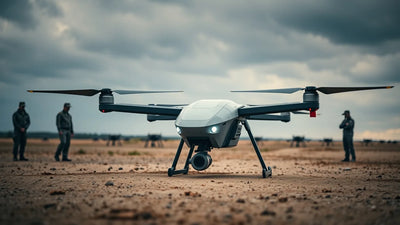
Just days ago, on May 28, 2026, Munich Airport-Germany's second-busiest hub-grounded all flights for nearly two hours after pilots reported a "small unmanned aircraft" in the approach path. The incident was not isolated. Over the past four weeks, similar disruptions have been logged at Frankfurt, London Heathrow, and Amsterdam Schiphol. In each case, authorities were able to confirm the presence of an object via radar and visual reports. But in none of those incidents did they successfully identify the drone model, trace its operator, or determine intent-whether mere negligence, hobbyist thrill-seeking, or deliberate malice. That gap between detection and identification is now the central weakness in counter-drone security, and it has profound consequences for every stakeholder in the commercial drone ecosystem.
The official response from the German Federal Police acknowledged that while radar and electro-optical sensors flagged the object, "the data was insufficient to establish a positive identification." This is a recurring pattern across Europe and the United States. Authorities can see something is there-but they cannot see what it is, who controls it, or why it is flying. As regulators scramble to close this loophole, the ripple effects are already reshaping the used drone market, BVLOS waivers, and operator liability frameworks.
The Detection vs. Identification Gap
Today's counter-drone systems-ranging from dedicated radio-frequency scanners to AI-enhanced radar arrays-are increasingly adept at picking up small UAVs within 10 kilometers of protected airspace. However, most of these systems rely on matching detected signals against a database of known drone communication protocols. When an unknown or heavily modified drone enters the zone-or when the operator uses a tethered or autonomous mode that suppresses telemetry-the detection becomes a frustrating ghost. The system knows an object is present but cannot fingerprint it.
Fleet readiness
Keep DJI hardware available without overbuying new units.
Use this news as a planning signal for inspected DJI aircraft, repair support, and trade-in timing.
This technological asymmetry was highlighted in a 2025 report by the European Union Aviation Safety Agency (EASA), which found that 78% of drone incursions near major airports ended without identification of the aircraft or pilot. "We are investing billions in detection, but mere pennies in forensics and attribution," said Dr. Hannah Richter, a former EASA security advisor, during a May 2026 webinar on airspace resilience. For operators flying under EASA's UAS.OPEN and UAS.SPECIFIC categories, this uncertainty is turning airspace into a regulatory minefield. Airports are increasingly forced to issue blanket temporary flight restrictions (TFRs) that ground all UAV activity-including legitimate commercial flights that had been pre-approved via the EASA digital authorization platform.
What This Means for Commercial Operators and the Second-Hand Market
For commercial drone pilots-whether performing infrastructure inspection, precision agriculture mapping, or logistics-the Munich incident is a cautionary tale. The cost of a two-hour airport closure in Europe can exceed EUR 2.4 million in direct airline delays, not to mention the cascading effect on ground operations. When regulators respond with broad airspace closures, every commercial operator paid under FAA Part 107 or equivalent EASA frameworks is swept aside. BVLOS (Beyond Visual Line of Sight) routes that operators spent months configuring are suddenly revoked without notice. Insurance premiums for drone fleets are already spiking, and operators with older or non-standard equipment face the highest risk of being grounded because their drone's RF signature is harder to verify against known databases.
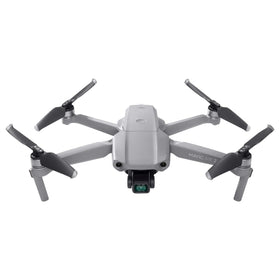
This regulatory whiplash is directly impacting the used drone market. As airports and local authorities demand greater traceability, operators are moving away from modified or cheaper second-hand models that lack official authentication chips or remote ID broadcast modules. The value of pre-2024 drones with limited ID capabilities is dropping rapidly. At Reboot Hub, we've observed a 12% decline in the average resale price for popular but older DJI Phantom 4 Pro and Mavic 2 models since January 2026, while newer certified models with built-in Remote ID retain over 90% of their original value. The silver lining for commercial buyers: pre-owned DJI drones that come with verified firmware and broadcast modules are becoming the safest and most economical entry point into a tightening regulatory environment.
Ready to Upgrade Your Fleet?
Browse our collection of inspected pre-owned DJI drones - inspected, flight-tested, and backed by a 6-month warranty. Save up to 40% versus retail.
Regulatory Responses Across Europe and the US
The Munich event has accelerated policy discussions on both sides of the Atlantic. On June 2, 2026, EASA published a draft "UAS Identification and Attribution Mandate" requiring all drones flown within 20 km of European airports to broadcast operator and serial number data continuously-not just during take-off. This goes beyond the current Remote ID rules, which often allow a delayed transmission or offline mode. Meanwhile, the U.S. FAA announced on June 1 that it would fast-track a Notice of Proposed Rulemaking (NPRM) mandating physical marking of all battery compartments and a tamper-proof electronic ID chip. The agency cited a 140% increase in drone near-miss incidents near Class B airports since 2024.
The core problem remains that detection systems-like the ARGUS 4000 radar deployed at Munich or the Dedrone sensor arrays used at Heathrow-are passive. They cannot compel a drone to identify itself if it does not broadcast. The only way to force identification is through remote command-and-control interception or physical capture, both of which are legally complex and technically limited. As a result, many temporary flight restrictions are now being issued proactively, creating a "stop-and-scan" culture that frustrates commercial operators who spent months securing BVLOS waivers. For agricultural surveyors flying over crop fields near airport boundaries, a single unannounced TFR can mean losing an entire day of mapping at 1.5 cm GSD resolution-work that cannot be simply rescheduled.
The Technology Gap: Why Identification Remains Elusive
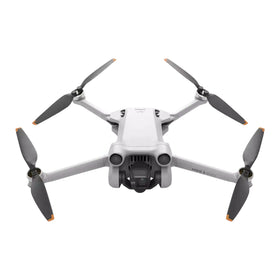
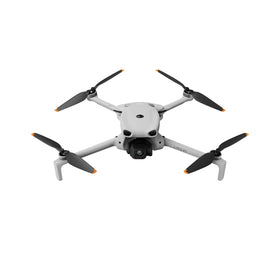
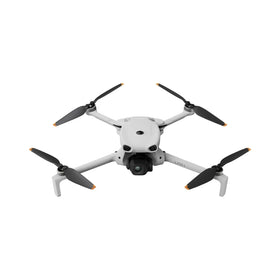
The challenge is not merely legal-it is deeply technical. Even industry-grade RID (Remote ID) protocols, such as ASTM F3411-22, are designed to broadcast only over short ranges (typically < 2 km) and can be jammed or spoofed with commercially available software-defined radios. A drone operated in manual "no-ID" mode-or one constructed from hobbyist parts-effectively becomes an invisible threat. During the Munich closure, the object detected by radar was estimated to be roughly 40 cm across, consistent with a compact quadcopter like the DJI Mini 4 Pro or a custom FPV build. But the radar signature alone cannot distinguish between a compliant $799 aerial photography drone and a purpose-built kinetic threat. "We are stuck in an attribution paradox," says former NATO counter-drone coordinator Major (ret.) Erik Lindqvist. "We can see the particle, but we cannot see the story behind it."
The most promising countermeasure-a network of distributed acoustic and RF sensor grids that triangulate control frequencies-has been deployed on a trial basis at London City Airport and Singapore Changi. However, such systems require significant bandwidth, real-time data fusion, and cross-border cooperation that remains a decade away from wide adoption. For now, commercial operators bear the brunt: their flights are suspended, their permits questioned, and their equipment subjected to new certification standards.
That is precisely why the used drone market is pivoting aggressively toward models that are fully upgradeable and traceable. Operators want hardware that can accept future firmware-mandated ID chips and that comes with verifiable repair histories. At Reboot Hub, our professional DJI repair services ensure that even drones purchased second-hand can have their RID modules tested, restored, or replaced with genuine parts-a critical safeguard as regulators begin grounding aircraft that cannot produce verifiable remote ID logs. A single incomplete repair history could render a $15,000 enterprise drone unsellable in 2027.
Frequently Asked Questions
What caused the Munich Airport shutdown on May 28, 2026?
Operations were suspended for approximately two hours after a Lufthansa crew reported a small drone near final approach. Ground radar and electro-optical sensors confirmed an object, but the drone did not broadcast a valid Remote ID signal, and the operator was never located. The airport resumed flights after the object moved out of the zone, but no further attribution was possible.
How does drone detection differ from drone identification?
Detection uses radar, acoustic sensors, or RF scanning to confirm the presence of a UAV. Identification requires capturing the aircraft's serial number, operator data, or flight path via a broadcast Remote ID protocol or forensic analysis. Current technology excels at detection but fails at identification when drones are modified, flown in stealth modes, or built from DIY components.
What should commercial drone operators do to prepare for tighter identification rules?
Operators should ensure all drones are equipped with updated Remote ID modules compliant with ASTM F3411-22 or EASA's upcoming mandate. Fleet managers should avoid buying older-model drones that cannot be upgraded. A refurbishment-labeled drone from a trusted source like Reboot Hub provides guaranteed RID functionality and a complete maintenance log, reducing the risk of being grounded during sudden TFRs. Additionally, schedule regular firmware checks and repair evaluations to maintain full traceability.
As the summer travel season intensifies, European airports are bracing for more drone sightings-and more closures. The gap between detection and identification will not close overnight, but the market is moving. Operators who invest in traceable, certified equipment today will be the ones flying tomorrow. At Reboot Hub, we help you make that transition with inspected pre-owned inventory, professional repairs, and market intelligence that keeps you ahead of the regulations.
--
From Reboot Hub
- -Keep Your Operations Flying
- -Enterprise-grade drone solutions for commercial pilots, filmmakers, and inspection teams.
- -Pre-owned Fleet
- - - -Fully inspected DJI drones with 6-month warranty. Save up to 40%.
- - - - Browse Inventory -> - - -Expert Repair
- - - -Professional diagnostics with genuine OEM parts. Same-day estimates.
- - - - Book a Repair -> - - -Spare Parts
- - - -Batteries, propellers, gimbals -- premium OEM components, fast shipping.
- - - - Shop Parts -> - - -