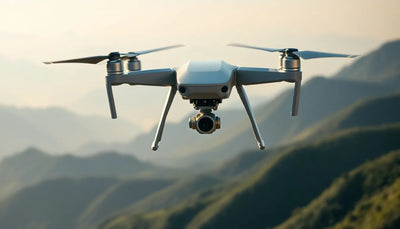
Rural China drone report points to a quieter commercial shift
A Chinese news report on rural drone use shows the technology moving beyond package delivery toward local services and infrastructure support. For commercial operators and buyers, the signal is about service models, not hardware hype.

Quick answer
A Tide News Client report from China indicates rural drone activity is expanding beyond package delivery into broader local service and infrastructure roles.
- The report frames rural drones as a platform for possibility, not just parcel transport.
- The development points to service-model demand rather than a single hardware category.
- Commercial operators should watch how rural service contracts shape fleet and repair needs.
- The pre-owned DJI market may see steady demand from operators testing lower-cost entry points.
A new report from Tide News Client, a Chinese news outlet, describes rural drone activity in China as moving beyond package delivery and into a broader role the publication calls “another kind of rural possibility.” The piece, distributed through Google News RSS, does not name a specific company, agency, or launch event. Instead, it frames the development as a shift in how drones are being used in rural areas, with the emphasis on services and local infrastructure rather than parcel logistics alone.
Market context
Turn market news into a buy, repair, or trade-in decision.
Compare pre-owned availability, resale timing, and repair economics before the market moves again.

For commercial UAV operators and buyers, that framing matters. Package delivery has long been the headline story for rural drone economics, but it is also the hardest model to scale profitably. A report that points toward other rural use cases, even without detailed operational data, suggests that demand may be forming around quieter, more localized service work. Reboot Hub analysis treats this as a market signal rather than a confirmed deployment program, because the source is limited and does not include official verification.
What the report actually says
The Tide News Client report, as summarized in the source data, states that drones are delivering “not packages, but another kind of rural possibility.” The phrasing is deliberately broad. It does not specify whether the drones are carrying medical samples, supporting agricultural inspection, assisting with rural surveying, or performing infrastructure checks. The source does not identify a manufacturer, a government body, or a commercial operator by name.
That lack of specificity is important for readers. In source-limited reporting mode, Reboot Hub attributes the central claim directly to Tide News Client and does not present the development as confirmed by an agency or company. The report is best read as an indicator of narrative direction in China’s rural drone market, not as a verified operational milestone. Still, the fact that a regional news client is covering rural drone use in this way suggests local awareness and interest are growing beyond the delivery-focused stories that have dominated coverage for years.
Why the service angle matters more than the hardware
For years, rural drone coverage in China and elsewhere has centered on logistics: can a drone carry a package from a distribution hub to a village, and can it do so profitably? The Tide News Client report shifts the emphasis. If drones are being discussed as a platform for broader rural possibility, the commercial implication is that buyers and operators should think about service contracts, recurring inspection work, and local infrastructure support, not just delivery payloads.
This matters for fleet planning. A drone bought for one rural task often gets repurposed for another when local demand changes. Operators who maintain flexible, well-documented fleets are better positioned to take on varied rural work. The report does not provide pricing, payload, or range data, so Reboot Hub will not speculate on those figures. The practical takeaway is that rural drone demand may be more diversified than a simple delivery narrative suggests.
What this means for drone owners and the market
For commercial buyers and fleet managers, the report reinforces a familiar lesson: rural drone economics are service-driven, not hardware-driven. A drone that sits idle between delivery runs is a cost. A drone that can shift between inspection, survey, and local support tasks is a revenue asset. The Tide News Client report, even with its limited detail, points toward a market where flexibility and maintenance readiness carry more weight than any single headline feature.
That has implications for the pre-owned DJI market. Operators testing rural service models often look for lower-cost entry points before committing to new enterprise hardware. Pristine pre-owned DJI drones and inspected pre-owned units can fill that role, especially when buyers need a reliable platform without the full capital outlay of a new enterprise system. For repair customers, the same logic applies: a rural operator with a diversified workload cannot afford long downtime, which makes professional DJI repair and genuine OEM spare parts a practical planning priority. Readers evaluating the broader drone service landscape can also consult the Drone Wiki for reference material on platforms and maintenance considerations. For owners evaluating service and lifecycle risk, Drone Wiki explains the relevant repair, parts, resale, or operational path.
The report does not mention DJI, any specific model, or any repair provider. Reboot Hub is drawing a market inference, not reporting a confirmed DJI development. The inference is modest: as rural drone use broadens, demand for dependable used platforms and fast repair support tends to follow. Buyers and fleet managers should watch whether rural service contracts in China and elsewhere begin to specify platform types, maintenance requirements, or spare parts availability. Those details, if they emerge in future reporting, would turn this narrative signal into a more concrete procurement trend.
What operators should watch next
The most useful follow-up for commercial readers is whether this rural service framing appears in procurement documents, local government tenders, or operator interviews. The Tide News Client report is a single source with limited detail, so it should not drive immediate purchasing decisions. But it can shape how operators think about fleet flexibility and repair readiness.
For a buyer or pilot reading this, the practical step is to review current fleet utilization. If your drones are configured for one narrow task, consider whether a more flexible setup would let you respond to rural service opportunities as they emerge. For repair customers, the step is simpler: confirm that your maintenance provider can support mixed-use fleets and that spare parts are available without long lead times. The report does not justify urgency, but it does justify attention.
FAQ
Frequently asked questions
Is this report about a specific drone company or government program?
No. The Tide News Client report does not name a specific company, agency, or government program. It describes a broad shift in how rural drone use is being discussed in China.
Does this mean package delivery drones are failing in rural areas?
The report does not say that. It frames rural drone use as expanding beyond package delivery into other local service and infrastructure roles. Reboot Hub treats this as a narrative shift, not a confirmed operational failure.
Should I change my drone buying or repair plans based on this report?
Not immediately. The source is limited and lacks operational detail. However, operators with flexible fleets and reliable repair support are better positioned if rural service demand broadens as the report suggests.
Which sources support this update?
The article distinguishes reported information from analysis and does not present an unverified source as official confirmation.
What remains subject to change?
Retail pricing, availability, product bundles and regulatory timelines can change. Readers should verify the latest terms with the named retailer, manufacturer or regulator before acting.
How should buyers or operators use this analysis?
Use the verified facts as a starting point, then compare mission fit, lifecycle support, maintenance needs and current procurement terms before making a purchase or fleet decision.
Konsultierte Quellen
- Source material - primary source
Zum Zeitpunkt der Veröffentlichung waren keine weiteren offiziellen Dokumentationen verfügbar.
Die Redaktion von Reboot Hub liefert Käufer-, Reparatur-, Wiederverkaufs- und Betriebsanalysen für Drohnenbesitzer. Sollten Sie einen Fehler finden, kontaktieren Sie uns für eine Korrekturprüfung gemäß unseren Redaktionsrichtlinien.