FirstEnergy grant funds police and educator drone training program
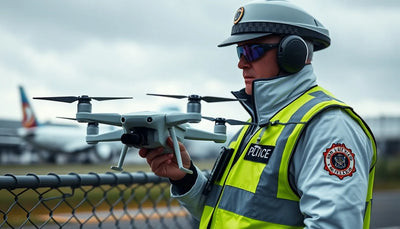
A new FirstEnergy Foundation grant is funding drone training for police officers and educators through Warren County Community College. The program signals growing institutional investment in public-sector UAS skills, with implications for training demand, fleet readiness, and the broader commercial drone support market.

Quick answer
The FirstEnergy Foundation provided a grant to the Warren County Community College Foundation to support drone training for police officers and educators, as reported by SUAS News.
- FirstEnergy Foundation is the funding source
- Warren County Community College Foundation is the recipient
- Training targets police officers and educators
- The program focuses on drone operation skills
- The development reflects growing public-sector UAS investment
Evidence: SUAS News
Fleet readiness
Keep DJI hardware available without overbuying new units.
Use defense and fleet news as a planning signal for repair support, inspected pre-owned aircraft, and replacement timing.

A grant from the FirstEnergy Foundation to the Warren County Community College Foundation is helping fund drone training for police officers and educators, according to reporting by SUAS News. The development, announced in September 2026, highlights how utility-adjacent philanthropic funding is increasingly flowing into public-sector unmanned aircraft systems training rather than hardware purchases alone.
For commercial drone operators, fleet managers, and repair service providers, the story matters less for its dollar figure and more for what it signals: public agencies are formalizing UAS competency through structured instruction. When police departments and educational institutions invest in certified training pathways, they tend to create follow-on demand for maintenance, spare parts, and replacement aircraft. That is a commercial signal worth watching closely.
The grant and the training program
SUAS News reports that the FirstEnergy Foundation provided the grant to the Warren County Community College Foundation to support drone training aimed at police officers and educators. The college serves as the training host, positioning itself as a regional hub for public-sector UAS instruction. While the source does not specify the exact grant amount, curriculum length, or aircraft models used, the core fact is clear: a utility foundation is funding public safety and education drone training through a community college channel.
This structure is notable. Rather than a police department purchasing training directly from a manufacturer or a private flight school, the funding flows through a college foundation. That model tends to produce repeatable, cohort-based training cycles rather than one-off workshops. For commercial operators, this suggests a growing pipeline of formally trained public-sector pilots entering the airspace and, eventually, the equipment and service market.
Why utility foundations are funding drone training
FirstEnergy is an electric utility holding company with a service footprint across multiple U.S. states. Its foundation has historically funded community safety, education, and workforce development initiatives. The drone training grant fits a pattern where utilities see indirect value in better-trained public safety UAS operators. Police departments and emergency responders often operate near critical infrastructure, including power lines, substations, and transmission corridors. Better-trained pilots reduce risk to that infrastructure and improve coordination during outages, storm response, and security incidents.
For the commercial drone ecosystem, utility involvement is a quiet but meaningful demand driver. Utilities themselves operate inspection drone fleets, and their foundations funding public-sector training creates overlapping skill standards. A police officer trained through a utility-funded program may later interact with utility inspection crews, shared airspace protocols, or joint emergency response operations. That cross-pollination strengthens the case for standardized maintenance and repair practices across public and private fleets.
What this means for drone owners and the market
The immediate takeaway for independent operators and small fleet owners is that public-sector UAS training is becoming more structured and better funded. That raises the baseline of pilot competency in shared airspace, which is generally positive for safety and operational predictability. It also means that police departments and schools are building internal knowledge about drone maintenance, battery handling, and component wear, which historically leads to more disciplined fleet management rather than reactive equipment replacement.
For the pre-owned DJI market, the signal is indirect but real. As more public agencies train pilots on specific platforms, those platforms become the default procurement choice for subsequent purchases. Departments that train on DJI aircraft tend to buy DJI aircraft, and when they cycle older units out of service, inspected pre-owned inventory becomes a viable option for smaller agencies, training programs, and individual operators. Reboot Hub analysis suggests that any expansion of formal training programs tends to support steady demand for both new and pre-owned DJI drones, as training fleets require spare units and replacement parts at predictable intervals.
Repair service providers should also note the operational implication. Training programs generate higher aircraft utilization rates, which means more wear on gimbals, landing gear, propellers, and batteries. A police training cohort running repeated flight exercises over several weeks will consume components faster than a casual consumer pilot. That is a demand pattern repair shops can plan around, particularly if they stock OEM-pulled parts for the models most commonly used in public-sector instruction. For owners evaluating service and lifecycle risk, Drone Wiki explains the relevant repair, parts, resale, or operational path.
The broader public-sector UAS trend
The FirstEnergy grant is one data point in a longer trend of institutional investment in public safety drone programs. Police departments, fire services, and emergency management agencies across the U.S. have been building UAS capabilities for search and rescue, scene documentation, traffic incident reconstruction, and disaster assessment. Community colleges have emerged as a preferred training venue because they offer accredited instruction, liability coverage, and grant administration capacity.
For commercial operators, this trend has a dual effect. On one hand, more trained public-sector pilots means more professional behavior in shared airspace and fewer high-profile incidents that invite restrictive regulation. On the other hand, it means public agencies are becoming more sophisticated buyers of drone equipment and services, which raises the bar for private vendors who want to serve that market. Fleet managers who understand training-driven procurement cycles will be better positioned to anticipate demand for specific aircraft models, batteries, and repair services.
FAQ
Frequently asked questions
Who is funding the drone training program?
The FirstEnergy Foundation is funding the program through a grant to the Warren County Community College Foundation, as reported by SUAS News in September 2026.
Who will receive the drone training?
The training is aimed at police officers and educators, according to the source reporting. The specific number of trainees and the exact curriculum details were not disclosed in the available source data.
Why does this matter for commercial drone operators?
Public-sector training programs create follow-on demand for aircraft, spare parts, and repair services while raising overall pilot competency in shared airspace. Operators and repair providers who track these programs can better anticipate equipment demand patterns.
Which sources support this update?
The visible evidence links identify SUAS News; each source is used only for the claim it directly supports.
What remains subject to change?
Retail pricing, availability, product bundles and regulatory timelines can change. Readers should verify the latest terms with the named retailer, manufacturer or regulator before acting.
How should buyers or operators use this analysis?
Use the verified facts as a starting point, then compare mission fit, lifecycle support, maintenance needs and current procurement terms before making a purchase or fleet decision.
Konsultierte Quellen
- SUAS News - primary source
Zum Zeitpunkt der Veröffentlichung waren keine weiteren offiziellen Dokumentationen verfügbar.
Die Redaktion von Reboot Hub liefert Käufer-, Reparatur-, Wiederverkaufs- und Betriebsanalysen für Drohnenbesitzer. Sollten Sie einen Fehler finden, kontaktieren Sie uns für eine Korrekturprüfung gemäß unseren Redaktionsrichtlinien.
Dieser Artikel ist ein Marktkommentar für Drohnenbetreiber und -käufer und stellt keine Anlageberatung dar. Reboot Hub bietet keine Finanzberatung und empfiehlt keine Wertpapiertransaktionen.