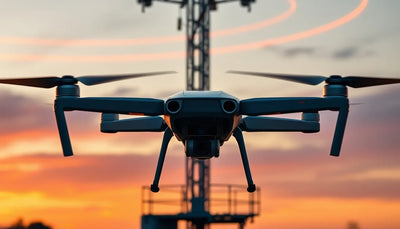
EOS Lands $124M UAE Counter‑Drone Deal, Advances Gen5 Laser
Electro Optic Systems secured a $124 million counter-drone order from the UAE and is advancing a Gen5 laser weapons joint venture. How this affects commercial drone buyers and fleet operators.

Electro Optic Systems (EOS), an Australian defence technology company, has secured a US$124 million order from the United Arab Emirates for counter-drone systems. Simultaneously, EOS is progressing its Gen5 laser weapons joint venture, a development that signals accelerating investment in directed-energy countermeasures against unmanned aerial vehicles. For commercial drone operators, fleet managers, and buyers in the pre‑owned market, these moves carry tangible implications for operational security, equipment reliability, and market dynamics.
The US$124 million order and its strategic context

According to a report by Defence Industry Europe, the contract awarded to EOS by the UAE is specifically for counter-drone systems. The substantial financial commitment from a Middle Eastern defence customer underscores the growing priority placed on defeating small unmanned aircraft in sensitive airspace. While the exact systems were not detailed in the source information, the scale of the order suggests deployment across critical infrastructure, military bases, or border protection sites.
For drone operators worldwide, this is not an isolated event. Military and government procurement of counter-UAS technology has accelerated sharply over the past two years. The UAE order joins a series of similar acquisitions by other nations, indicating that counter-drone capabilities are becoming standard equipment rather than experimental tools. This trend directly affects the commercial drone ecosystem: as more countermeasures are fielded, the operational environment becomes more complex for civilian operators flying near restricted areas.
Fleet readiness
Keep DJI hardware available without overbuying new units.
Use defense and fleet news as a planning signal for repair support, inspected pre-owned aircraft, and replacement timing.
Fleet managers should take note that the proliferation of radio-frequency jammers, spoofers, and kinetic interceptors can create unforeseen interference or compliance risks. Even if your drones are not the target, operating near active counter-drone zones may expose equipment to stray electromagnetic fields or trigger automated detection systems. Ensuring that your fleet's hardware is up to date and that pilots are trained to identify and avoid such environments is becoming a prudent operational practice.
Gen5 laser weapons joint venture – implications for counter-drone technology

The same source confirms that EOS is advancing its Gen5 laser weapons joint venture. Laser-based counter-drone systems represent a step change in capability, offering the potential to engage targets at the speed of light with a low cost per engagement. The Gen5 designation typically indicates a fifth-generation laser system, likely featuring improved beam control, higher power output, and longer effective range compared to earlier models.
While no specific technical specifications were provided in the source, the commercial significance for the broader drone industry is evident. Laser weapons do not rely on projectiles that generate debris, making them suitable for use in populated or sensitive areas. This could reduce the operational barriers that currently limit counter-drone deployment in civilian airspace. For commercial operators, the emergence of effective, low-collateral-damage countermeasures might eventually create new rules of the road for drone flights near airports, stadiums, or energy facilities.
The joint venture structure also hints at a strategic partnership likely involving technology transfer, local manufacturing, or shared intellectual property. This could accelerate the fielding of Gen5 systems in the UAE and other markets, further raising the baseline of counter-drone protection worldwide. Drone buyers and fleet operators should monitor these developments because the systems that protect critical infrastructure today may become standard requirements for future drone operations in certain geographies.
What this means for drone buyers

For those considering a purchase in the pre-owned DJI market, the EOS contract offers two relevant signals. First, sustained defence spending on counter-drone technology often filters into the civilian supply chain. Components such as infrared sensors, gimbal assemblies, and processing boards are frequently dual-use, and military demand can tighten availability for OEM spare parts. Buyers of pre-owned drones should expect that certain high-demand spare parts may become harder to source or more expensive over the next 12 to 18 months.
Second, as counter-drone systems become more prevalent, the value of drones with robust signal characteristics and firmware protections may increase. Older models lacking modern encryption or frequency agility could face operational restrictions in areas where countermeasures are deployed. This shifts the calculus for buyers evaluating second-hand units: a pristine pre-owned DJI drone with a strong transmission system might hold its resale value better than a model with known vulnerabilities.
Fleet operators looking to upgrade or expand their inventory should consider consulting a drone trade-in guide when planning to swap out older equipment. Trading in drones that are more susceptible to interference while they still command reasonable value can be a smart financial move. Additionally, investing in pre-owned DJI drones from reputable sources ensures that the hardware has been inspected and is running current firmware, reducing the risk of operational issues in a counter-drone-heavy environment.
One actionable step for any buyer or fleet manager: before finalising a purchase or deployment in a new region, verify the local airspace security environment. Are there known military or government counter-drone facilities nearby? Have there been reports of jamming incidents? Knowing these factors can influence which drone model is best suited for the mission and whether additional shielding or frequency-hopping modules are advisable.
Practical steps for commercial fleet operators and repair customers

The EOS order serves as a reminder that the airspace is becoming more contested, even for legitimate commercial users. Fleet operators should take a proactive approach to maintenance and repair to ensure their drones remain compliant and reliable. Here are specific actions to consider:
- Review firmware and transmission settings. Ensure all drones in the fleet are running the latest manufacturer firmware, which often includes updates to frequency management and interference mitigation. Contact professional DJI repair services if you are unsure about updating older units.
- Inspect antennas and connectors. Counter-drone systems often rely on overwhelming or confusing radio signals. A drone with a damaged or poorly connected antenna is far more vulnerable to signal disruption. Regular inspection of connectors, cables, and antenna mounts should be part of every maintenance cycle.
- Evaluate trade-in timing. If your fleet includes models with limited frequency agility or older encryption standards, consider trading them in sooner rather than later. The trade-in guide mentioned above can help you assess the current value of your equipment and plan an upgrade path that minimises financial risk.
- Stay informed about local counter-drone deployments. Subscribe to aviation authority notices and defence industry news for your operating regions. Knowing where and when counter-drone systems are active can help you avoid inadvertent violations or equipment damage.
For repair customers, these developments underline the importance of using genuine OEM spare parts. Authentic components ensure that the drone's radio and processing systems operate within design specifications, which is critical when flying in environments with elevated electronic interference. Substandard third-party parts can degrade performance and increase vulnerability to countermeasures.
Finally, fleet managers should engage with suppliers who understand the evolving threat landscape. A supplier that offers inspected pre-owned units backed by professional repair services provides an added layer of assurance that your equipment is ready for challenging conditions.
Will the EOS contract affect the availability of DJI drones or parts?
Indirectly, yes. The US$124 million order may increase demand for certain electronic components that are also used in commercial drones, potentially leading to longer lead times for OEM spare parts. However, the pre-owned market is less exposed to immediate shortages. Buyers can still find quality pre-owned DJI drones through reputable dealers.
Should commercial drone operators be concerned about flying near counter-drone systems?
Yes, especially if operating near military bases or critical infrastructure. Counter-drone systems may inadvertently interfere with legitimate drones through jamming or spoofing. Operators should consult NOTAMs and local airspace warnings before flying in unfamiliar areas, and consider using drones with advanced frequency-hopping capabilities.
What is the best way to protect my drone investment given these trends?
Keeping your drone updated, using genuine parts, and maintaining good physical condition are key. For those considering an upgrade, trading in older models while they still retain value can be a smart strategy. Consulting a drone trade-in guide can help you evaluate the right timing and maximise your return.