DJI Readies High-Payload Drone – What It Means for Operators
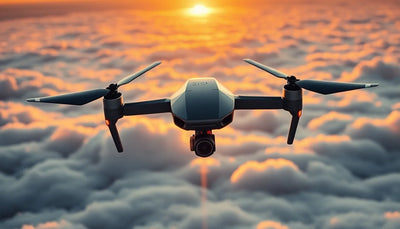
DJI is developing a new drone with high payload capacity and advanced technology, according to recent reports. The move signals a deeper push into industrial applications and could reshape fleet planning, repair strategies, and the pre-owned market for heavy-lift drones.

A recent report from Notebookcheck indicates that DJI is preparing to launch a new drone designed specifically for high payload capacity and advanced onboard technology. While specific model names, payload weights, and flight performance figures have not been confirmed through official channels, the direction is clear: DJI is doubling down on industrial-grade lifting power. For fleet operators, repair professionals, and buyers in the pre-owned market, this development carries distinct implications that merit early attention.
The drone industry has long seen payload as the dividing line between consumer novelty and commercial utility. A high-payload platform can carry larger sensors, multi-spectral cameras, LiDAR units, or delivery packages—capabilities that directly serve agriculture, infrastructure inspection, public safety, and logistics. DJI’s move, as reported, suggests they intend to compete more aggressively in these verticals, which are currently served by both their own Matrice series and competing platforms from Autel, Freefly, and others. The timing of the report, coming in mid-2026, aligns with a broader trend of manufacturers seeking to capture recurring revenue from enterprise drone operations rather than one-time consumer sales.
The payload push: what the reports indicate
The Notebookcheck article describes the upcoming model as featuring “high payload capacity and advanced tech.” While that phrasing is general, it points to a deliberate engineering emphasis on lifting heavier equipment without sacrificing flight dynamics. In practical terms, a high-payload drone typically requires stronger motors, larger propellers, reinforced airframe structures, and sometimes dual-battery systems to maintain flight time under load. DJI has historically shared such design philosophy with its Matrice 300 and Matrice 350 platforms, so the new model may either be an extension of that line or a completely new series.
DJI buying context
Match product news to hardware you can actually deploy.
Check inspected DJI aircraft, repair support, and trade-in timing before deciding whether to upgrade, repair, or wait.

For commercial operators, the promise of more payload headroom means fewer compromises when choosing mission equipment. A drone that can lift a full-size Sony Alpha camera with a 24-70mm lens and gimbal, or a heavy-duty LiDAR scanner, opens up higher data quality and wider survey coverage per flight. It also simplifies payload swapping, reducing downtime between tasks. If DJI integrates advanced avionics—such as enhanced obstacle avoidance, RTK positioning, or improved transmission range—the value proposition strengthens further.
However, without official specifications from DJI, operators should treat these early reports as directional intelligence rather than actionable data. The absence of confirmed numbers means fleet managers should hold off on fleet-wide purchasing decisions until DJI releases full technical documentation. The pre-owned market, meanwhile, will treat any new high-payload announcement as a trigger for price re-evaluation of existing heavy-lift models.
Implications for fleet operators and repair planning
Any new high-payload drone from DJI will have ripple effects beyond initial purchase decisions. Fleet operators who currently run older heavy-lift units—whether from DJI or other brands—will need to assess upgrade costs, battery compatibility, payload adapter changes, and the availability of spare parts. A new model often means a new form factor, which can obsolete existing accessories and ground support equipment.
Repair shops and maintenance providers should also prepare for an influx of trade-ins or decommissioned units as operators rationalise their fleets. Older drones with lower payload efficiency may flood the secondary market, creating buying opportunities for budget-constrained operators but also putting downward pressure on resale values. For those offering professional DJI repair services, it will be important to source genuine OEM parts for both the current fleet and incoming pre-owned units that require refurbishment. Maintaining a stock of legacy parts will become critical as DJI shifts production focus to the new model.
Additionally, operators should start evaluating their current mission profiles to see if higher payload capacity would unlock new revenue streams. An inspection company that currently flies a Mavic 3 may not need a high-payload platform, but a surveying firm using a Matrice 300 might benefit from the ability to carry a heavier laser scanner without sacrificing battery life. The decision to upgrade or hold should be based on contract requirements, not vendor marketing. Fleet managers would be wise to conduct a payload audit of their existing drones and compare the cost of mission completion per flight hour before committing to a new purchase.
What this means for drone buyers
For buyers actively considering a heavy-lift drone, the report suggests that waiting might be prudent—but only if the mission can tolerate a delay. New product launches often bring improved technology, but they also carry initial production risks, unknown field reliability, and higher introductory pricing. Early adopters may face firmware teething issues or limited third-party accessory selection.
On the other hand, buyers who need a drone now for contracted work cannot afford to wait for an unconfirmed product. In that case, purchasing a current-generation high-payload model from the pre-owned market offers a cost-effective middle ground. Entities like pre-owned DJI drones from reputable sellers provide access to proven platforms at reduced prices, with the potential to resell later when the new model arrives and stabilises in the market. A drone trade-in guide can help operators calculate the optimal time to switch.
Another angle: the emergence of DJI’s new high-payload drone could compress pricing on older models across both new and used markets. If you’re patient, you may find deals on Matrice 300 or similar units as dealers clear inventory. The key is to monitor secondary market listings and set alerts for condition-specific drops. Buyers who identify trusted pre-owned sources now will be better positioned to act when the price dip materialises.
Pre-owned DJI drones and the secondary market shift
The pre-owned DJI market has always been sensitive to new product launches. When DJI releases a model with a clear performance leap—like the introduction of the Mavic 3’s 4/3 sensor or the Matrice 350’s enhanced transmission—the resale value of older units typically drops by 10–25% within three to six months. A new high-payload model is likely to trigger a similar correction, particularly for heavy-lift drones that are harder to sell because of their specialised nature.
Operators who currently own high-payload drones (e.g., Matrice 200 series, Matrice 300, or Inspire 2 with payload mounts) face a strategic choice. They can sell now while the news is fresh and prices are still relatively stable, or they can hold and risk a sharper decline once DJI formally announces the new model. Selling early into a market that still values current gen units can maximise return. Conversely, buyers looking to enter heavy-lift operations on a budget should start monitoring for sellers who are eager to upgrade.
From a repair and spares perspective, the secondary market shift will increase the number of pre-owned units needing maintenance. Platforms that were operated hard in agricultural or industrial settings often require motor replacements, gimbal recalibration, or battery pack rebuilds. Repair shops that stock OEM-pulled parts and offer certified service will become even more valuable as the installed base of older models grows on the second-hand market. The ability to restore a pre-owned high-payload drone to near-original condition will determine whether it remains a productive asset or becomes a spare-part donor.
In summary, DJI’s apparent development of a new high-payload drone is a signal that the industrial drone market is maturing. For every participant—from fleet managers to one-pilot operators, from repair technicians to pre-owned buyers—the next twelve months will bring both opportunities and risks. Staying informed through reliable source channels, updating fleet strategies with a cold eye on ROI, and leveraging the secondary market wisely will separate those who thrive from those who merely react.
FAQ
What makes a drone “high payload” and why does it matter for commercial work?
A high-payload drone is typically rated to carry 2 kilograms or more of mission equipment. This matters because heavy sensors like LiDAR, hyperspectral cameras, or delivery payloads require lift capacity beyond consumer drones. Higher payload capacity directly expands the range of commercial applications a single platform can serve.
Should I sell my current heavy-lift drone now or wait for DJI’s announcement?
That depends on your urgency and equipment condition. If your drone is in excellent shape and you are ready to upgrade, selling before the official launch may capture a higher resale price. If you are content with performance, holding and using the drone for ongoing contracts while monitoring the secondary market for price corrections is a lower-risk approach.
How can I prepare my repair business for a potential influx of pre-owned heavy-lift drones?
Build inventory of OEM-pulled motors, landing gear, gimbal boards, and battery management modules for current DJI Matrice and Inspire models. Establish your shop as a trusted destination for professional DJI repair services and invest in diagnostic tools that can handle high-voltage batteries and heavy airframe alignments. Early preparation positions you to serve sellers and buyers in the coming used-market wave.