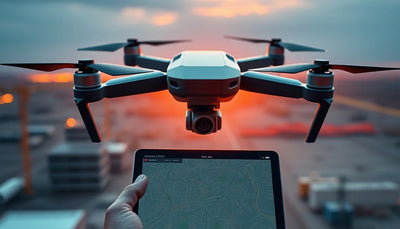
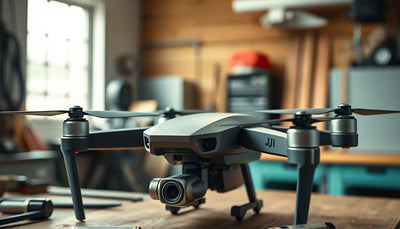
DJI Avata discounted to $719 at Amazon, a $98.95 price cut
Amazon is now listing the DJI Avata at $719, a $98.95 reduction from its prior price. The discount arrives as commercial operators and second-hand buyers continue tracking Avata pricing closely for fleet and ownership planning.

Quick answer
Amazon is currently selling the DJI Avata for $719, a $98.95 discount from its previous listed price, according to Mashable.
- The reported sale price is $719 on Amazon.
- The discount is $98.95 off the prior price.
- Mashable is the primary reporting source for the listing.
- The Avata is positioned as a premium drone in the source.
Evidence: DJI ROMO official robot vacuum page · DJI Support ROMO beginner guide
DJI buying context
Match product news to hardware you can actually deploy.
Check inspected DJI aircraft, repair support, and trade-in timing before deciding whether to upgrade, repair, or wait.

Mashable reports that the DJI Avata is currently listed on Amazon at $719, a reduction of $98.95 from its prior price. The listing positions the Avata as a premium drone, and the discount is the central development for buyers tracking this model. For commercial operators, repair customers, and second-hand market participants, even a modest retail price move can shift the arithmetic around new versus pre-owned acquisition decisions.
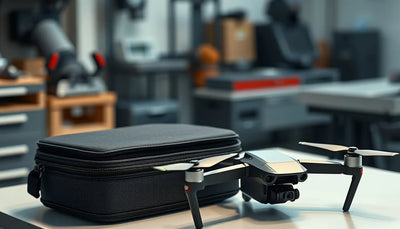
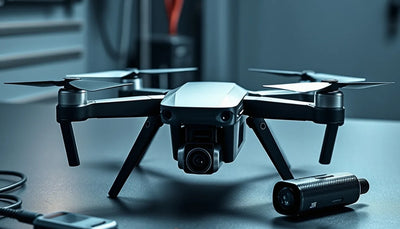
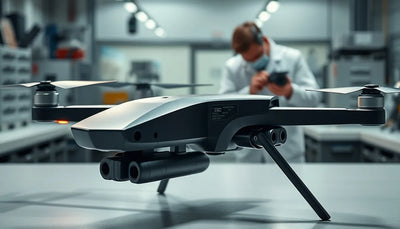
The Avata occupies a specific place in the DJI lineup. It is not the largest enterprise platform, nor the smallest consumer camera drone. It is a compact FPV-style airframe with guarded propellers, and that form factor has made it relevant for indoor inspection work, close-quarters flight, and pilots who want a more protected platform than an open-propeller quad. A price cut at a major retailer like Amazon is therefore worth reading as a signal about inventory, demand, and where the broader DJI retail channel is heading.
The reported discount and what the source actually says
According to Mashable, the DJI Avata is on sale for $719 at Amazon, with the stated savings of $98.95. The source describes the Avata as a premium drone, which is a meaningful framing because it suggests the discount is not positioned as a clearance of an obsolete product. Rather, the listing appears to present the Avata as a current premium offering available at a temporary lower price.
Reboot Hub analysis should be careful not to overstate what this means. The source does not provide a sale end date, inventory levels, or a comparison against other retailers. It does not confirm whether this is an Amazon-led promotion or a broader DJI channel adjustment. What is clear is that the listed price has moved downward by roughly 12 percent from the prior figure, and that movement is the kind of data point fleet managers and individual buyers should log when they are building a purchase timeline.
For operators who have been waiting on the sidelines, the practical question is whether a $98.95 reduction changes the total cost of ownership calculation. It may not, by itself, justify a fleet expansion. But when combined with existing spare parts inventory, battery holdings, or repair relationships, a lower entry price can make adding one more unit more defensible.
What this means for drone buyers
The most immediate implication is that new-unit pricing for the Avata is now more competitive with the pre-owned market. When a current-generation DJI platform drops below a psychological threshold, it compresses the gap between buying new and buying inspected pre-owned. Buyers who were previously comparing a used Avata against a full-price new unit may now find that the new-unit discount changes their decision. For those who still prefer pre-owned inventory, the retail price cut can also serve as a benchmark for negotiating fair resale values.
Fleet operators should treat this as a budgeting signal rather than an emergency. A single retailer listing at $719 does not guarantee that enterprise distributors, authorized resellers, or regional channels will match the price. Procurement teams should verify whether the Amazon price includes the same accessories, batteries, or support options that a commercial purchase would. The source does not detail bundle contents, so operators should not assume parity across sellers.
For individual pilots and small service providers, the discount may be enough to justify moving forward. The Avata's guarded-propeller design has practical appeal for indoor work and close-proximity flight, and a lower acquisition cost reduces the payback period on early jobs. Buyers who are evaluating a pristine pre-owned DJI Avata should weigh the new-unit discount against the condition, inspection history, and included components of the used option. A well-inspected pre-owned unit may still offer better value if it includes spare batteries or accessories that a bare new listing does not. For buyers comparing ownership options, Pristine Pre-Owned DJI Avata provides a practical next step for model, condition, and replacement timing.
Pre-owned market and repair implications
Retail price movement on a current DJI model has a direct effect on the second-hand market. When new units are discounted, pre-owned listings must adjust or risk sitting unsold. Sellers who priced their used Avata based on the older retail figure may now find their asking price too close to the new discounted price. That is not a crisis, but it is a repricing event that resellers and private sellers should acknowledge.
For repair customers, the discount matters in a different way. The Avata is a model that can require propeller, frame, or gimbal service after impact, especially given its FPV flight profile. When replacement parts and labor costs approach a meaningful fraction of the new discounted price, some owners will choose to replace rather than repair. Repair shops should be aware that a $719 new-unit price can influence a customer's willingness to approve a $300 or $400 repair estimate. That does not make repair less valuable, but it changes the conversation around economic repair thresholds.
OEM-pulled parts and genuine DJI spare components remain relevant regardless of retail price movement. Even at a discounted new price, a well-maintained Avata with a damaged gimbal or cracked frame can often be returned to service for less than the cost of a new unit. Operators should evaluate repair decisions on a case-by-case basis rather than assuming that a lower new price automatically makes replacement the better choice.
Market context and what operators should do now
The broader context here is that DJI consumer and prosumer pricing is not static. Retailers run promotions, inventory shifts, and seasonal discounts that can move prices by meaningful percentages. For commercial operators, the discipline is to track these movements without overreacting. A $98.95 cut on the Avata is notable, but it is not a structural market shift. It is a data point in an ongoing pattern of channel-level price adjustments.
What should a buyer, pilot, repair customer, or fleet manager do differently after reading this? The answer is simple: verify the current price, compare it against total acquisition cost including batteries and accessories, and then decide whether the new-unit discount or an inspected pre-owned option better fits the operational need. For those evaluating ownership costs, a pristine pre-owned DJI Avata can still be a strong alternative when the used unit includes components that a bare discounted listing does not.
There is no urgency in the source data. Mashable reports a current sale price, not a final clearance or discontinuation. Operators who need an Avata now should take advantage of the lower entry point if the listing matches their requirements. Operators who are still planning should log the $719 figure as a reference and watch whether other retailers follow. The disciplined approach is to treat this as useful market information, not as a reason to rush a purchase decision.
FAQ
Frequently asked questions
Is the DJI Avata actually on sale at Amazon?
Yes. Mashable reports that the DJI Avata is listed at $719 on Amazon, a $98.95 reduction from its prior price. The source describes the Avata as a premium drone.
Does this price cut mean the Avata is being discontinued?
The source does not indicate that the Avata is being discontinued. It reports a current sale price at Amazon without providing information about product lifecycle changes or discontinuation.
Should I buy new or consider a pre-owned DJI Avata?
That depends on total acquisition cost. Compare the discounted new price against the included accessories and condition of pre-owned options. A well-inspected pre-owned unit with spare batteries or accessories may still offer better overall value for some buyers.
Which sources support this update?
The visible evidence links identify DJI ROMO official robot vacuum page and DJI Support ROMO beginner guide; each source is used only for the claim it directly supports.
What remains subject to change?
Retail pricing, availability, product bundles and regulatory timelines can change. Readers should verify the latest terms with the named retailer, manufacturer or regulator before acting.
How should buyers or operators use this analysis?
Use the verified facts as a starting point, then compare mission fit, lifecycle support, maintenance needs and current procurement terms before making a purchase or fleet decision.
Konsultierte Quellen
- mashable.com via Google News - primary source
- DJI ROMO official robot vacuum page - official product page
- DJI Support ROMO beginner guide - official support guide
Die Redaktion von Reboot Hub liefert Käufer-, Reparatur-, Wiederverkaufs- und Betriebsanalysen für Drohnenbesitzer. Sollten Sie einen Fehler finden, kontaktieren Sie uns für eine Korrekturprüfung gemäß unseren Redaktionsrichtlinien.