DJI Avata 360 Review: What Creators and Operators Should Know
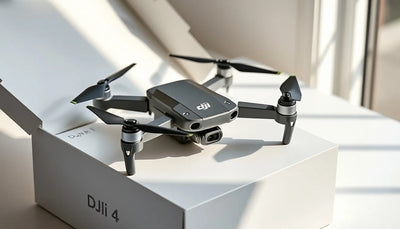
A new review from Analytics Insight highlights the DJI Avata 360 as a flexible 360° drone for creators. We examine what this means for commercial operators, fleet planners, and buyers considering pre-owned DJI drones.

The DJI Avata 360 has drawn attention from content creators and commercial operators alike. A recent review from Analytics Insight positions it as a flexible 360° drone designed for creative aerial imaging. While the review focuses on the drone's adaptability for creators, the implications extend well beyond the hobbyist market. For fleet operators, repair customers, and those shopping the pre-owned DJI drone market, understanding what makes this platform unique — and where it fits into a professional workflow — matters for both procurement and long-term planning.
This analysis breaks down the key takeaways from the Analytics Insight review, situates the Avata 360 within current market trends, and offers practical guidance for buyers and operators considering this platform. No official specifications are repeated here unless directly supported by the source; instead, we focus on the strategic and operational relevance of a 360° drone in today's commercial environment.
What the Avata 360 review reveals about creator-focused drones
The Analytics Insight review describes the DJI Avata 360 as a "flexible 360° drone for creators." This framing is important because it signals a shift from traditional first-person-view (FPV) drones toward a platform that prioritizes ease of use and cinematic output without requiring extensive pilot training. The 360° capability likely refers to the drone's ability to capture footage from multiple angles in a single flight, a feature that appeals to filmmakers and social media content teams who need diverse shots quickly.
Market context
Turn market news into a buy, repair, or trade-in decision.
Compare pre-owned availability, resale timing, and repair economics before the market moves again.

For commercial operators, the takeaway is that creator-grade drones are increasingly capable of professional results. The Avata 360 sits at the intersection of FPV agility and stabilized gimbal output, offering a tool that can produce immersive aerial sequences without the steep learning curve of full FPV systems. This can reduce training time for new pilots and lower the barrier to entry for jobs that demand dynamic, close-to-subject footage — such as real estate tours, event coverage, and architectural inspections.
However, the review does not specify flight times, range, or payload capacity. Operators evaluating the Avata 360 for commercial use should recognize that creator-oriented marketing often emphasizes creative flexibility over endurance or ruggedness. Buyers should plan to test the platform in their specific environments before committing to fleet expansion.
How the Avata 360 fits into the current drone market
The appearance of the DJI Avata 360 in a major industry review underscores a broader trend: drone manufacturers are narrowing the gap between consumer creativity and enterprise utility. The 360° drone category, which previously was niche, is gaining traction as software and sensor improvements make multi-angle capture practical in a single airframe.
According to the source, the drone is positioned as "flexible." This descriptor suggests that DJI intends the Avata 360 to be a multi-role platform — capable of indoor and outdoor operation, manual and autonomous flight, and integration with existing DJI ecosystems such as the Goggles and Motion Controller. For fleet operators already invested in DJI hardware, the Avata 360 could serve as a specialized addition for close-quarters work that traditional Mavic or Matrice platforms cannot easily perform.
From a market perspective, the Avata 360's arrival may accelerate the turnover of older FPV and Cinewhoop models. That turnover feeds directly into the pre-owned DJI market, as creators and early adopters upgrade to the latest 360-capable hardware. Buyers looking for a budget-friendly entry into FPV-style flying may find older units available at competitive prices, while operators seeking the latest features will target the Avata 360 new or in pristine pre-owned condition.
What this means for drone buyers
For anyone considering a purchase of the DJI Avata 360, the Analytics Insight review offers a clear signal: this is a niche tool optimized for creative output, not a general-purpose workhorse. Buyers should assess whether their typical flights require the 360° capture capability. If so, the Avata 360 may produce superior results with less post-production stitching than a standard gimbal camera. If not, a traditional drone may offer longer flight times and more robust obstacle avoidance.
Commercial operators should also consider the repair ecosystem. As a specialized FPV-style craft with a protective cage and small propellers, the Avata 360 is more prone to impact damage than larger drones flown in open spaces. Having access to professional DJI repair services becomes critical to minimizing downtime. Genuine OEM spare parts, such as arms, ducts, and camera modules, are essential for restoring flight performance after a collision. Buyers should verify that their repair provider stocks or can source these parts quickly.
Another consideration is trade-in value. If you currently own an older Avata model or a similar FPV drone, the release of the 360 variant may be the right time to upgrade. A drone trade-in guide can help you evaluate your current unit's residual worth and offset the cost of a newer platform. The pre-owned DJI market is active for Cinewhoop-style drones, especially those in good cosmetic and mechanical condition.
Implications for the pre-owned DJI drone market
When a new drone model enters the review cycle, the pre-owned segment often experiences a ripple effect. The DJI Avata 360 is no exception. Creators who purchase the new platform may sell their previous generation units, increasing the supply of used FPV drones on the secondary market. This creates opportunities for operators on a budget to acquire capable equipment at a discount.
However, buyers in the pre-owned market must exercise caution. A used Avata 360 or an older Avata model may have hidden damage from crashes, especially if the previous owner flew it aggressively. Before purchasing, ask for flight logs and inspect the airframe for cracks in the duct guards, signs of prop strikes, and condition of the camera lens. Sellers offering inspected pre-owned DJI drones through reputable channels provide more peace of mind than private party listings with no history.
Fleet operators should also note that the Avata 360's 360° capability may become a standard feature in future DJI models. Investing in the current generation could be a beta test for workflows that will soon be mainstream. If the platform proves valuable, consider purchasing multiple units from the pre-owned market to standardize training and spare parts inventory. OEM-pulled parts from retired units can also extend the life of your fleet.
Finally, the repair implications for the pre-owned market are significant. A pre-owned Avata 360 that has been properly serviced by a professional DJI repair center holds its value better than one that was fixed with non-genuine components. When evaluating a used unit, ask whether any repairs used genuine OEM spare parts. This factor directly affects flight safety and longevity.
What is the DJI Avata 360 best used for?
Based on the Analytics Insight review, the Avata 360 is designed for creators who need flexible 360° capture in a compact, easy-to-fly package. It excels at indoor and close-proximity aerial shots where traditional drones would be too large or less maneuverable.
Is the DJI Avata 360 suitable for commercial fleet operations?
It can be, but primarily as a specialized tool for specific creative tasks. Fleet operators should evaluate whether their workflows require 360° footage and whether the drone's flight endurance and durability meet job site demands. Supplementing a fleet with one or two Avata 360 units may be effective, but it is not a primary inspection or mapping platform.
Where can I find pre-owned DJI Avata 360 drones for sale?
Pre-owned units become available as creators upgrade to newer models. Look for inspected pre-owned DJI drones from reputable resellers. Verify that the drone has no crash history and that any repairs used genuine OEM parts. Consider trading in your current drone to offset the cost of a pre-owned Avata 360 through a structured trade-in program.
Konsultierte Quellen
- Source - primary source
Zum Zeitpunkt der Veröffentlichung waren keine weiteren offiziellen Dokumentationen verfügbar.
Die Redaktion von Reboot Hub liefert Käufer-, Reparatur-, Wiederverkaufs- und Betriebsanalysen für Drohnenbesitzer. Sollten Sie einen Fehler finden, kontaktieren Sie uns für eine Korrekturprüfung gemäß unseren Redaktionsrichtlinien.