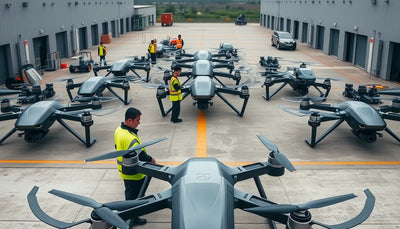
DFI Launches Strategy to Reshape India's Drone Component Supply
DFI has announced a strategic push to transform India's drone component sector, according to OneArabia. The move signals shifting supply chain dynamics that could affect component availability, pricing, and sourcing decisions for commercial drone operators and fleet buyers.

Quick answer
DFI has launched a strategic initiative to transform India's drone component manufacturing and supply ecosystem, as reported by OneArabia.
- DFI announced a strategy focused on Indian drone component production
- The report frames this as a supply chain localization and growth move
- Commercial operators should monitor component availability and pricing shifts
- The development could affect sourcing decisions for drone fleets and repair planning
DFI has launched a strategic initiative aimed at reshaping India's drone component landscape, according to a report published by OneArabia and surfaced through Google News. The announcement positions the company as a direct participant in the push to build out domestic component manufacturing and supply capacity for one of the world's fastest-growing commercial drone markets.
Market context
Turn market news into a buy, repair, or trade-in decision.
Compare pre-owned availability, resale timing, and repair economics before the market moves again.

The report frames the move as a deliberate, market-shaping strategy rather than a narrow product release or internal restructuring. For commercial operators, fleet managers, and repair-focused buyers, that distinction matters. Component sourcing decisions are increasingly shaped by where manufacturing capacity is being built, and India's drone sector has been absorbing significant policy and investment attention. DFI's entry into this space adds another signal that the supply chain is shifting.
What the DFI announcement signals for the component market
According to the OneArabia report, DFI is pursuing a bold strategy to revolutionize Indian drone components. The language is broad, but the commercial implication is specific: a company with established industrial capability is signaling intent to compete for a larger share of the drone component value chain in India. That includes the motors, electronic speed controllers, flight controllers, frames, and power delivery hardware that underpin both consumer and enterprise platforms.
Reboot Hub analysis: announcements like this rarely change component pricing overnight, but they do reshape procurement expectations over a 12-to-24-month horizon. Buyers who currently rely on imported components or long lead-time international orders may see new domestic alternatives emerge. Fleet managers planning multi-year maintenance budgets should treat this as an early indicator rather than an immediate supply fix.
The report does not include specific production volumes, pricing commitments, or compatibility details for existing drone platforms. Operators should therefore avoid assuming that DFI components will be drop-in replacements for current OEM parts. What the announcement does establish is directional intent: component manufacturing in India is attracting serious commercial attention.
Why India's drone component push matters for global supply chains
India has been building a regulatory and industrial framework designed to reduce dependence on imported drone hardware. The OneArabia report places DFI's strategy within that broader context, where domestic component production is seen as a strategic priority rather than a niche manufacturing opportunity. For global buyers, this matters because India's drone market is expanding across agriculture, logistics, surveying, and public safety applications.
A localized component base changes the arithmetic for repair and maintenance. When replacement parts can be sourced closer to the point of operation, lead times compress and inventory planning becomes less dependent on international shipping cycles. For operators managing fleets in South Asia or adjacent regions, that could translate into more predictable repair turnaround and lower holding costs for spare parts.
At the same time, the report does not provide evidence that DFI's components have been certified for use in specific DJI or other OEM platforms. Operators should continue to rely on genuine OEM spare parts where warranty coverage and airworthiness documentation are required. The strategic shift is notable, but it does not replace established compatibility and certification requirements.
What this means for drone owners and the market
The most immediate effect of DFI's announcement is informational: it tells buyers, fleet operators, and repair providers that India's component sector is attracting investment from companies with industrial scale. That can influence long-term sourcing strategies, especially for operators who run mixed fleets or who already source non-critical components from regional suppliers.
For pre-owned DJI drone owners, the development is more indirect. Pre-owned aircraft depend on the continued availability of genuine OEM parts for safe, reliable repair. A stronger third-party component ecosystem does not change the need for OEM-pulled parts in critical systems, but it can create alternatives for peripheral components such as mounts, frames, and non-flight-critical accessories. Buyers evaluating pre-owned DJI drones should still prioritize platforms with documented maintenance history and access to genuine parts. For operators researching component trends and repair considerations, the Drone Wiki provides a practical reference point. For owners evaluating service and lifecycle risk, Drone Wiki explains the relevant repair, parts, resale, or operational path.
Fleet managers should treat this announcement as a reason to review current component sourcing assumptions. If a meaningful share of replacement parts can eventually be sourced domestically in India, procurement teams may need to adjust supplier evaluation criteria, lead-time expectations, and inventory models. The report does not provide enough detail to act on immediately, but it does justify monitoring DFI's follow-through over the coming quarters.
What operators should watch next
The OneArabia report leaves several questions open. It does not specify which component categories DFI will prioritize, whether the strategy includes partnerships with drone manufacturers, or how the company plans to address certification and quality assurance. Those details will determine whether the announcement translates into commercially available parts or remains a strategic positioning statement.
Operators and buyers should watch for three things. First, any follow-up announcements identifying specific component lines or manufacturing capacity. Second, signals about pricing relative to imported alternatives. Third, any indication that DFI's components are being adopted by established drone manufacturers or enterprise fleet programs. Each of those would move the announcement from strategic intent to practical market impact.
For now, the responsible posture is measured attention. The announcement is a legitimate market signal, but it is not yet a supply chain event. Commercial operators should continue to source critical components through verified channels and avoid speculative purchasing based on a single strategy announcement.
FAQ
Frequently asked questions
What did DFI announce?
DFI announced a strategic initiative to transform India's drone component sector, as reported by OneArabia. The report describes the move as a bold strategy to revolutionize component manufacturing and supply in the Indian market.
Does this change component pricing for drone operators?
Not immediately. The announcement signals long-term supply chain intent, but the report does not include pricing data, production volumes, or confirmed component availability. Operators should monitor follow-up announcements before adjusting procurement budgets.
Should pre-owned DJI drone owners be concerned?
No immediate concern. Pre-owned DJI aircraft still depend on genuine OEM parts for critical repairs. A stronger third-party component market may eventually expand options for peripheral parts, but it does not replace OEM-pulled components where compatibility and safety matter.
Which sources support this update?
The article distinguishes reported information from analysis and does not present an unverified source as official confirmation.
What remains subject to change?
Retail pricing, availability, product bundles and regulatory timelines can change. Readers should verify the latest terms with the named retailer, manufacturer or regulator before acting.
How should buyers or operators use this analysis?
Use the verified facts as a starting point, then compare mission fit, lifecycle support, maintenance needs and current procurement terms before making a purchase or fleet decision.
Konsultierte Quellen
- OneArabia via Google News - primary source
Zum Zeitpunkt der Veröffentlichung waren keine weiteren offiziellen Dokumentationen verfügbar.
Die Redaktion von Reboot Hub liefert Käufer-, Reparatur-, Wiederverkaufs- und Betriebsanalysen für Drohnenbesitzer. Sollten Sie einen Fehler finden, kontaktieren Sie uns für eine Korrekturprüfung gemäß unseren Redaktionsrichtlinien.