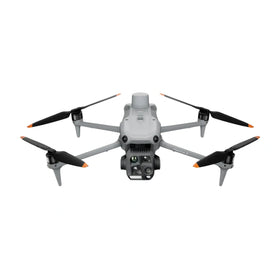
Tank vs. Drone: KNDS’s New Ride Just Admitted the UAV Is King
KNDS’s new Franco-German tank packs an active protection system (APS) specifically designed to counter precision drone swarms and loitering munitions. For commercial UAV operators flying under Part 107 or BVLOS waivers, the military’s obsession with counter-drone tech signals a looming regulatory cascade into national airspace. Is your RTK-mapped site or critical infrastructure route about to face new defense-driven restrictions? Reboot Hub decodes what this $50B armor deal means for the civilian drone economy and the exploding used drone market.

Redaktionelle noter
- Denne artikel kombinerer navngiven ekstern rapportering med Reboot Hub's egen analyse for dronekøbere, flådeoperatører, reparationskunder og observatører af det brugte DJI-marked.
- Kildefakta er adskilt fra fortolkning. Når en rapport indeholder begrænsede data, gør artiklen opmærksom på denne begrænsning og præsenterer Reboot Hub's synspunkt som en analyse.
- Reboot Hub har kommercielle links til droneprodukter og reparationstjenester; disse links er ressourcer til læseren og er ikke bestemmende for artiklens konklusion.
PARIS - In a move that sends shockwaves through both defense ministries and commercial drone operators alike, the Franco-German defense consortium KNDS has officially unveiled its proposal for a next-generation main battle tank to replace France's aging Leclerc fleet. Announced on June 16, 2026, the platform features an in-house active protection system (APS) and a revolutionary modular armament suite capable of swapping a standard 120mm smoothbore gun for a devastating 140mm variant. While this might seem like pure armor talk, for the Commercial UAV industry, this is the loudest admission yet that the era of the drone has fundamentally changed the calculus of ground warfare - and by extension, the future of contested and civilian airspace everywhere.

The KNDS proposal is, at its core, a direct response to the existential threat posed by cheap, attritable drones. From the battlefields of Ukraine to the skies over Nagorno-Karabakh, the footage of first-person view (FPV) drones and loitering munitions destroying multi-million dollar main battle tanks has become emblematic of a new age in asymmetric warfare. KNDS's decision to prioritize an in-house APS over simply adding more composite armor is a tacit acknowledgment that traditional passive protection is no longer sufficient to survive on a modern battlefield. This holds profound lessons for the drone industry, from the development of heavy-lift logistics UAVs to the proliferation of counter-drone technology that will inevitably trickle down into civilian airspace regulations. The era of the unmanned system is not coming; it is already here, and the world's premier tank builders are proving it.
The APS Arms Race: A $50B Validation of the Drone Threat
The cornerstone of the new KNDS tank is its Active Protection System (APS). Unlike traditional steel or composite armor which attempts to absorb or deflect a hit, APS uses millimeter-wave radar arrays and hard-kill interceptors to detect, track, and physically destroy incoming projectiles before they reach the hull. Specifically, KNDS is developing this system to counter the top-attack profile of modern anti-tank guided missiles (ATGMs) and, crucially, the loitering munitions and drone-dropped bomblets that have proven so devastating in recent conflicts. The system must now contend with small, slow-moving, highly maneuverable targets with tiny radar cross-sections - a task traditionally relegated to ground-based air defense, not tank protection.
Fleet readiness
Keep DJI hardware available without overbuying new units.
Use this news as a planning signal for inspected DJI aircraft, repair support, and trade-in timing.
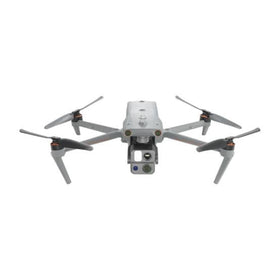
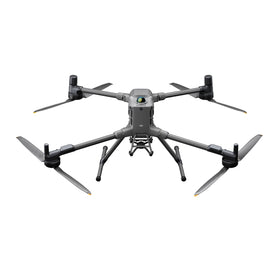
For the commercial drone sector, specifically operators flying DJI Matrice 300/350 RTK, Autel Evo Max 4T, or heavy-lift platforms for infrastructure inspection and survey, the military's massive R&D investment here is a double-edged sword. The technology required to detect and defeat small, slow-moving UAVs is becoming incredibly sophisticated. As these systems get cheaper and are deployed on domestic military bases, we will inevitably see pressure on national aviation authorities like the FAA and EASA to restrict airspace further around critical infrastructure under the guise of "counter-UAS" security. The same radar technology used to protect a tank in Europe can be mounted on a power plant in Ohio. This represents a clear and present risk to BVLOS waivers and routine commercial drone operations near sensitive sites. The cost asymmetry is staggering: a KNDS APS interceptor pack likely costs over $200,000 per engagement, while an FPV drone that it is designed to kill can be built for under $1,000. This mathematical reality is driving a massive push toward cheaper, swarming drone payloads - a trend that directly benefits the commercial ecosystem by driving down component costs and improving autonomy software.
Modularity Lessons: From Tank Guns to Drone Payloads
KNDS's design philosophy of a swappable main cannon - 120mm for conventional tank-on-tank engagements, 140mm for future bunker-busting or anti-structure needs - is a direct parallel to the modular payload ecosystem that drives the second-hand and refurbished drone market. A single rotorcraft platform like the DJI M600 Pro or Matrice 350 can be configured for high-accuracy RGB mapping, LiDAR scanning, thermal inspection, or even agricultural spraying, depending on the mission. The KNDS tank is essentially applying this same "mission-defined configuration" logic to a 70-ton armored vehicle, proving that flexibility in payload architecture is the gold standard for modern defense procurement.
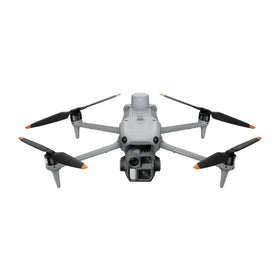
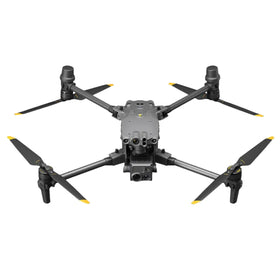
This validation of modularity from the legacy defense sector strengthens the business case for operators who invest in versatile, payload-agnostic platforms. As defense budgets increasingly favor flexible, upgradable systems over single-role hardware, expect corresponding demand for multi-role drones that offer similar longevity and upgradability. This is fantastic news for the value retention of platforms like the DJI M30 series or the Matrice 350, which offer swappable payloads and robust SDK support. When the French military standardizes on a new heavy-lift drone for logistics, they will likely demand the same modularity KNDS is promising for the new tank - and that demand will cascade down to the civilian second-hand market as older, less modular gear gets liquidated.
Ready to Upgrade Your Fleet?
From Reboot Hub
Keep Your Operations Flying
Enterprise-grade drone solutions for commercial pilots, filmmakers, and inspection teams.
Pre-owned Fleet
Fully inspected DJI drones with 6-month warranty. Save up to 40%.
Browse Inventory ->