Kratos Stock Surges on JPMorgan Upgrade: What It Means for the UAV Defense Boom
Wall Street just placed a massive bet on Kratos Defense (NASDAQ:KTOS), signaling an unprecedented surge in defense UAV spending. For commercial operators navigating Part 107 BVLOS waivers and RTK surveying margins, this macro shift means tighter competition for advanced components and a strategic opportunity in the used drone market. Are you ready for the supply chain squeeze?

Redaktionelle noter
- Denne artikel kombinerer navngiven ekstern rapportering med Reboot Hub's egen analyse for dronekøbere, flådeoperatører, reparationskunder og observatører af det brugte DJI-marked.
- Kildefakta er adskilt fra fortolkning. Når en rapport indeholder begrænsede data, gør artiklen opmærksom på denne begrænsning og præsenterer Reboot Hub's synspunkt som en analyse.
- Reboot Hub har kommercielle links til droneprodukter og reparationstjenester; disse links er ressourcer til læseren og er ikke bestemmende for artiklens konklusion.
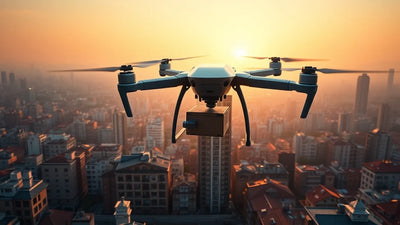
The investment landscape for unmanned aerial systems was rattled on June 15, 2026, as JPMorgan Chase formally upgraded Kratos Defense & Security Solutions (NASDAQ: KTOS) from Neutral to Overweight. The financial giant's analysts cited an "inflection point" in defense procurement, specifically pointing to Kratos' dominance in jet-powered, attritable drone platforms and a robust pipeline of contracts from the U.S. Department of Defense. The stock surged over 5% in pre-market trading on the news, confirming Wall Street's appetite for dedicated defense UAV pure-plays.

This upgrade is far more than a routine stock rating change. It serves as a powerful macroeconomic signal for the entire UAS ecosystem. When a Tier-1 financial institution like JPMorgan signals "Overweight" on a non-traditional defense contractor known for disrupting the status quo of manned aviation, it validates the thesis that autonomous air combat is not a futuristic concept but a present-day industrial reality. For the commercial drone sector, the ripples of this defense boom are both a warning and a strategic opportunity.
While Kratos operates in a classified realm of high-speed jet targets and collaborative combat aircraft (CCAs), the market dynamics that drive their success-component supply chains, engineering talent acquisition, and regulatory pathways-are intrinsically linked to the commercial drone world. Understanding this connection is critical for any enterprise operator running a fleet of DJI Matrice 350 RTKs, conducting long-range BVLOS inspection, or making strategic capital allocation decisions in the second half of 2026.
Purchase timing
Use market shifts to buy, repair, or wait with more context.
Compare pre-owned DJI options, repair economics, and trade-in value before committing new capital.
The Kratos Thesis: Why "Attritable" is the Golden Keyword for Defense UAVs
JPMorgan's analysis hinges on Kratos' mastery of the "attritable" drone market. Unlike expendable cruise missiles or multi-billion-dollar stealth bombers, attritable aircraft are designed to strike a perfect balance between cost and capability. Kratos platforms like the BQM-177A subsonic aerial target and the XQ-58A Valkyrie are built for high performance-jet speeds, stealth shaping, and advanced payloads-at a fraction of the cost of manned fighters. The USAF's CCA program is central to this thesis, envisioning loyal wingman drones that fly alongside F-35s at a unit cost of under $5 million.
This economic model is a direct threat to legacy prime contractors and a massive validation of "good enough" hardware. JPMorgan specifically noted that Kratos' ability to rapidly iterate and produce at scale without the overhead of traditional defense giants gives it a unique competitive moat. For the commercial UAV sector, this mirrors the exact value proposition that has made pre-owned DJI drones so attractive: high-end capability delivered at a disruptive price point.
The immediate contract wins cited by JPMorgan include follow-on orders for the Air Force's BQM-177A program and incremental funding for the XQ-67A, an offshoot of the Valkyrie program. These wins indicate a budgetary commitment from the Pentagon that extends well into the next decade. For investors and operators alike, this is the most concrete signal yet that the era of unmanned mass production has arrived.
What a Defense UAV Boom Means for the Commercial Drone Market
The transfer of technology and talent from defense primes to the commercial sector is rarely linear, but it is inevitable. The immediate impact of the Kratos surge is a tightening of the global supply chain for advanced electronics. The same FPGAs, radiation-hardened processors, and high-end EO/IR sensors used in military CCAs are often the same components that power enterprise-grade surveying and inspection drones. When the DoD places massive orders, it creates a vacuum in the commercial supply chain, leading to longer lead times and higher prices for new equipment.
Furthermore, the demand for software engineers with experience in autonomous navigation and obstacle avoidance is at an all-time high. Kratos and its competitors are actively recruiting from the commercial pool, driving up salary expectations and making it harder for drone service providers (DSPs) to scale their internal engineering teams. For the everyday Part 107 pilot, this creates a bifurcated market: new hardware is harder to get and more expensive, while the used market becomes increasingly attractive for fleet expansion.
Ready to Upgrade Your Fleet?
Browse our collection of inspected pre-owned DJI drones - inspected, flight-tested, and backed by a 6-month warranty. Save up to 40% versus retail.
Q&A: How Does This Impact the Everyday Drone Pilot and Operator?
Q: Will the Kratos defense boom drive up the cost of my DJI Matrice or Mavic Enterprise equipment?
A: Indirectly, yes. The global supply for high-grade sensors (RTK modules, LIDAR, thermal cameras) is finite. When defense contractors lock in multi-year contracts for these components, it creates upward price pressure on the commercial secondary market. We are already seeing a 5-10% increase in the cost of new-in-box high-end accessories. This makes the value proposition of the used drone market even stronger, as operators can sidestep retail inflation by acquiring pre-owned, flight-tested hardware.
Q: Does the focus on "attritable" jet drones mean anything for my BVLOS waiver applications under FAA Part 107?
A: Absolutely. The core technology behind the CCA program-robust detect-and-avoid (DAA) systems, secure command and control (C2) data links, and redundant autopilots-is directly transferable to the commercial space. As Kratos and the USAF log thousands of hours of autonomous flight in the National Airspace System (NAS), the FAA gains critical safety data. This data will accelerate the approval of BVLOS operations for commercial operators using platforms like the DJI Dock or M30 series. The defense sector is effectively paving the regulatory runway for commercial autonomy.
Q: What is the single biggest strategic takeaway for my drone surveying business right now?
A: Capital preservation and asset utilization. The macroeconomic signal from JPMorgan and Kratos is that defense spending will crowd out commercial access to new hardware. Instead of chasing the latest high-priced flagship models, the smart play is to acquire high-quality used equipment from reputable sources. Platforms like the DJI Phantom 4 RTK, Matrice 300 RTK, and M300 H20T are proven workhorses that still deliver survey-grade accuracy (down to 1 cm GSD) and are available at 30-40% below retail through verified refurbishment channels.
The Second-Hand Market Angle: Turning Defense Momentum into Operational Savings
At Reboot Hub, we analyze these macro trends daily. The Kratos upgrade confirms a pattern we have observed since early 2025: enterprise operators are holding onto their equipment longer, and the secondary market is maturing into a high-turnover, high-reliability channel. As defense dollars flow into R&D and production, commercial firms are increasingly scrutinizing their CAPEX. This benefits the astute operator who leverages the used drone market to deploy multiple platforms for the cost of one new unit.
We are currently seeing a significant influx of Matrice 300 RTK and Matrice 30T units as enterprise fleets begin a staggered upgrade to the newer Matrice 350 RTK and M4E platforms. This creates a golden window for surveying firms, inspection companies, and public safety agencies to acquire premium hardware at deeply discounted prices. Every unit on our marketplace undergoes a rigorous 48-point inspection process, actual flight testing, and comes with a warranty that matches the industry standard for new equipment.
Furthermore, for operators holding onto legacy platforms like the M210 V2 or the Inspire 2, ensuring those assets remain reliable is critical. The demand for repairs and spare parts is soaring as defense priorities stretch lead times for new OEM components. Our professional DJI repair services allow commercial fleets to keep their aircraft in rotation without the downtime and cost associated with sending units back to the manufacturer. We use genuine DJI parts and provide detailed telemetry logs after every repair, ensuring full compliance with insurance and regulatory requirements.
The synergy between defense momentum and commercial sustainability is clearer than ever. While Kratos soars on the back of jet-powered CCAs, the practical reality for the commercial drone industry is a tighter supply chain and higher costs for new assets. The winning strategy is not to outspend the defense budget, but to outsmart the market cycle by acquiring high-quality, pre-owned hardware and maintaining existing fleets with expert care.
1. Is the Kratos stock upgrade directly relevant to my commercial drone business in 2026?
Yes. Kratos' contract wins signal massive government investment in autonomous flight technology and mass production. This validates the long-term viability of BVLOS and autonomous operations, which will shape FAA regulations and public acceptance for years. It also creates a supply-side squeeze on components, making the refurbished market exceptionally valuable for cost-conscious commercial operators.
2. What specific technologies from Kratos should commercial operators keep an eye on?
Monitor Kratos' "Open Mission Systems" (OMS) architecture and their low-cost, high-performance sensing arrays. If they succeed in reducing the cost of advanced radar and EO/IR systems for the CCA program, these technologies will eventually filter down into the commercial ecosystem, making future DJI and Autel models even more capable for precision mapping and inspection.
3. Where does Reboot Hub recommend allocating capital amidst this defense-driven market?
Minimize upfront CAPEX by investing in inspected pre-owned equipment. We recommend diversifying fleets with high-capacity platforms like the DJI Matrice 300 RTK or the M30 Enterprise Bundle, available at significant discounts on our marketplace. Preserve your operating budget for crew training, insurance, and softwar while maintaining flight readiness through our specialized repair division.
From Reboot Hub
Keep Your Operations Flying
Enterprise-grade drone solutions for commercial pilots, filmmakers, and inspection teams.
Pre-owned Fleet
Fully inspected DJI drones with 6-month warranty. Save up to 40%.
Browse Inventory ->