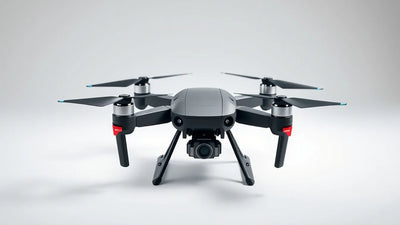
Czech Sub-250g Drone Hits 351 MPH, Shatters Speed Record
A Czech team’s sub-250g drone reached 351 mph, breaking the weight-class speed record. This milestone shows what lightweight builds can achieve, hinting at future ultra-fast mini drones for racing, inspection, and fleet use.

Redaktionelle noter
- Denne artikel kombinerer navngiven ekstern rapportering med Reboot Hub's egen analyse for dronekøbere, flådeoperatører, reparationskunder og observatører af det brugte DJI-marked.
- Kildefakta er adskilt fra fortolkning. Når en rapport indeholder begrænsede data, gør artiklen opmærksom på denne begrænsning og præsenterer Reboot Hub's synspunkt som en analyse.
- Reboot Hub har kommercielle links til droneprodukter og reparationstjenester; disse links er ressourcer til læseren og er ikke bestemmende for artiklens konklusion.
A Czech engineering team has pushed the boundaries of what a sub-250g drone can do, recording a blistering 351 mph and breaking the existing world speed record for the weight class. The achievement, reported by DroneXL, highlights a growing interest in extreme miniaturized performance. For commercial drone buyers, fleet operators, and repair customers, the record signals that lightweight airframes can now deliver speeds once reserved for much larger systems. While the drone itself is likely a custom-built racer rather than a production model, the propulsion and aerodynamic lessons are directly relevant to future commercial products and aftermarket upgrades.

Speed records in the sub-250g category are not just bragging rights. They demonstrate that small platforms can handle high-energy flight without breaching weight thresholds that trigger more stringent regulations in many regions. For drone operators, this means the possibility of faster inspection rounds, quicker mapping missions, and more responsive search-and-rescue aircraft—all without needing a heavier, more regulated vehicle. The Czech team’s 351 mph run proves that the physics works; the commercial question is how soon the technology becomes accessible and reliable.
Record-breaking performance in a lightweight package
The source of the record is a Czech drone that weighs under 250 grams and reached an average speed of 351 mph. That figure is roughly 3.5 times faster than the typical DJI Mini 4 Pro’s top speed, illustrating the wide performance gap between consumer camera drones and dedicated racers. The achievement is described as smashing the previous sub-250g record, though specific prior numbers were not detailed in the report. What matters for the industry is that the record was set with a drone that would legally qualify as a “toy” or “micro” UAV in many jurisdictions, meaning no Remote ID, no pilot license, and reduced operational restrictions for recreational users.
For commercial operators, the immediate implication is that propulsion efficiency and aerodynamic design have advanced enough to make a 300+ mph sub-250g airframe physically possible. This opens the door for ultra-fast inspection drones that could cover long linear assets—pipelines, power lines, railways—in a fraction of the current flight time. However, the trade-off likely includes reduced payload capacity, shorter endurance, and increased fragility. Buyers should not expect a 351 mph off-the-shelf product anytime soon, but the message is clear: the limits of small UAVs are being pushed, and future commercial models will benefit from the same battery, motor, and materials breakthroughs that enabled this record.
What this means for drone buyers
Drone buyers looking for speed currently have limited options in the sub-250g market. Most lightweight consumer drones prioritize camera stability, portability, and flight safety over raw velocity. The Czech record demonstrates that there is a demand—and a technical pathway—for ultra-fast mini drones. Buyers who want similar performance today must turn to the DIY racing scene, sourcing high-KV motors, aerodynamic frames, and compact flight controllers. The used market for racing components may see increased interest as enthusiasts attempt to replicate the record configuration.
Commercial drone planning
Build the next fleet step around inspected hardware and serviceable parts.
Use Reboot Hub to compare certified DJI drones, repair options, and OEM components before the market moves again.
Fleet managers evaluating future purchases should watch for announcements from manufacturers that specialize in FPV and racing hardware. It is plausible that within 12–24 months, a production sub-250g drone offering speeds in the 100–150 mph range will appear at a reasonable price point. The record also reinforces the value of lightweight builds for regulatory flexibility. Buyers who operate in regions where sub-250g drones are exempt from registration or operational restrictions may find that a fast mini drone offers a better balance of performance and compliance than a heavier model. For now, the best course of action is to monitor racing forums and component suppliers for early signs of commercialization.
Commercial and regulatory implications
The 351 mph record lands at a time when regulators worldwide are tightening rules for drone speed and weight. The European Union’s drone regulations, for example, classify sub-250g drones as C0 class, allowing open-category flights without specific authorization. A drone that flies at 351 mph still belongs in that class, but its kinetic energy at that speed could raise safety concerns. Regulators may respond by introducing performance-based limits within weight classes, treating speed as a risk factor even for lightweight drones. Operators should be aware that record-setting performance does not guarantee regulatory acceptance—future rules could cap speeds for sub-250g drones in certain airspace.
For the second-hand drone market, the record has a modest but real impact. Used high-performance motors, lightweight carbon-fiber frames, and compact ESCs are already traded among racers. The publicity around this record may drive demand for those components, potentially raising prices for rare or custom parts. Repair customers who work on racing drones will need to stay current with materials that can handle extreme speeds, including reinforced solder joints and vibration-dampened mounts. Fleet operators who maintain a mix of commercial and hobbyist drones should note that the skills and parts used in record attempts often filter into mainstream repair practices within a few years.
What this means for fleet managers and repair customers
Fleet managers overseeing large-scale drone operations should view the Czech record as a technology signpost. If high-speed sub-250g drones become commercially available, they could dramatically cut flight times for routine linear inspections. A 351 mph drone could cover 5 km in under 30 seconds, though battery life at that speed would be measured in minutes, not hours. Realistic applications would be short bursts of speed for critical segments, with the drone flying slower during transit. Maintenance teams should prepare for higher wear on propellers and motors when operating near the performance envelope—repair intervals will shrink as speeds increase.
Repair customers, especially those in the racing and FPV community, can use the record to benchmark their own builds. The Czech team’s achievement likely relies on custom-wound motors, bespoke aerodynamic fairings, and fine-tuned power management. While replicating a 351 mph setup is expensive and technically demanding, the knowledge that such speeds are possible encourages experimentation. Repair shops that stock high-quality racing components and offer custom soldering or firmware tuning will be well positioned to serve customers aiming for that level of performance. The used drone market will see a trickle of retired race frames that still offer 150–200 mph capability at a fraction of the build cost, making them valuable for fleet experimentation without risking a full purchase.
Operators should ask one question after reading this: “Could a sub-250g drone with a top speed of 100–150 mph handle my mission faster and with fewer regulatory hurdles than my current model?” For many, the answer will be yes, and the Czech record provides proof that the technology is advancing rapidly. Keeping an eye on component suppliers and early adopters will help buyers, fleets, and repair customers stay ahead of the curve.
Will this 351 mph drone be sold to consumers?
No indication from the source suggests that the record-breaking drone is a commercial product. It is most likely a custom build optimized for a single record attempt. However, the technological insights may influence future products from racing drone manufacturers.
How does sub-250g speed affect regulatory requirements?
In most regions, the sub-250g weight class exempts drones from registration and pilot licensing for recreational use. Speed itself is not currently regulated within that class, but regulators may consider speed-based restrictions if ultra-fast micro drones become common.
What should a buyer look for in a fast sub-250g drone today?
Buyers interested in speed should focus on racing-specific frames, high-KV motors, and compact flight controllers. The used market offers many capable builds for speeds up to 100–150 mph. For a ready-to-fly option, the DJI Avata 2 is fast but heavier; the sub-250g category lacks a high-speed production model as of this writing.
From Reboot Hub
Build the next fleet step around inspected hardware and serviceable parts.
Use Reboot Hub to compare certified DJI drones, repair options, and OEM components before the market moves again.
Pre-owned DJI drones
Inspected pre-owned aircraft with warranty coverage and clear condition grading.
Browse inventory ->Genuine-part repair
Diagnostics, repair planning, and component replacement for working DJI fleets.
Book a repair ->OEM spare parts
Batteries, propellers, gimbals, and essential DJI components for faster recovery.
Shop parts ->