Cathedral City Police Achieve 90% Drone Coverage Using DJI Hardware – Defying Federal Ban Threats
Cathedral City Police deploy 3 DJI drone docks to achieve 90% city coverage, directly challenging federal moves to ban Chinese UAV hardware. For commercial operators, this case study redefines DFR operations, Part 107 compliance, and the resale value of used DJI fleets amid regulatory uncertainty. Find out what this means for your assets.

Redaktionelle noter
- Denne artikel kombinerer navngiven ekstern rapportering med Reboot Hub's egen analyse for dronekøbere, flådeoperatører, reparationskunder og observatører af det brugte DJI-marked.
- Kildefakta er adskilt fra fortolkning. Når en rapport indeholder begrænsede data, gør artiklen opmærksom på denne begrænsning og præsenterer Reboot Hub's synspunkt som en analyse.
- Reboot Hub har kommercielle links til droneprodukter og reparationstjenester; disse links er ressourcer til læseren og er ikke bestemmende for artiklens konklusion.
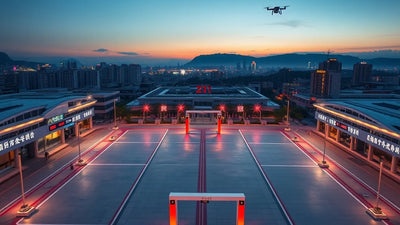
In a quiet desert city in Southern California, a small police department has accomplished what many federal agencies have only dreamed of: near-ubiquitous aerial surveillance of an entire municipality using drone-in-a-box technology. As of June 2026, the Cathedral City Police Department (CCPD) reports roughly 90 percent coverage of its 22-square-mile jurisdiction from just three rooftop-based DJI drone docks. The achievement is remarkable not only for its operational efficiency but for the hardware it relies on — DJI — at a time when much of the country is under pressure to rip out Chinese-made drones from government rooftops.

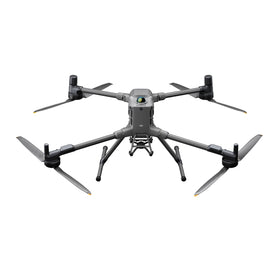
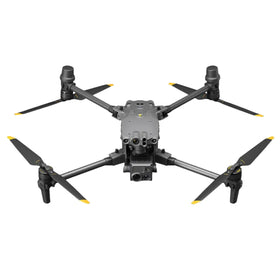
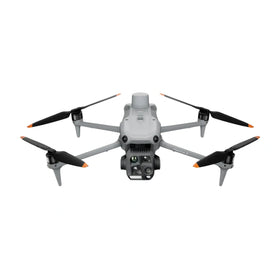
The department’s Drone as First Responder (DFR) program, which began in 2018 with a single Phantom, has now scaled to three permanent DJI Dock 2 stations placed atop municipal buildings. Each dock houses a Matrice 350RTK that can be deployed in under 30 seconds. The result: an average response time of 32 seconds drone-on-scene for priority calls. That’s faster than most patrol units can even start their engines.
The Cathedral City Model: 90% Coverage via DJI Docks
Cathedral City sits in a valley surrounded by the San Jacinto Mountains, with a population of about 55,000. The police department’s drone program manager explained that the three docks were strategically placed to create overlapping coverage zones. The DJI Dock 2 units — each costing roughly $15,000 new — are equipped with RTK GPS for precision landing and autonomous charging. They operate 24/7, launching on schedule for patrols or automatically when a 911 call comes in with a location inside the coverage footprint.
Fleet readiness
Keep DJI hardware available without overbuying new units.
Use this news as a planning signal for inspected DJI aircraft, repair support, and trade-in timing.
The 90% figure refers to the percentage of the city’s land area that is within a 2-minute flight time from at least one dock. For high-density residential and commercial zones, coverage is effectively continuous. Only the far northern foothills and a small industrial pocket remain outside the automated net. The department says it plans to add a fourth dock by late 2026 to push coverage to 95%.
“What Cathedral City has done is a textbook case of how to implement DFR on a budget and at scale,” said an industry analyst not part of the program. “They didn’t need custom software or expensive ground infrastructure. They used off-the-shelf DJI hardware and made it work with existing dispatch systems.” The department uses DJI FlightHub 2 for fleet management and real-time video streaming to officers’ smartphones.
Defying the Federal Narrative: DJI Hardware Under Scrutiny
The Cathedral City announcement comes against a politically charged backdrop. Since 2023, multiple federal agencies — including the Department of Defense, Homeland Security, and the FAA — have warned against using Chinese-made drones due to alleged data security risks. Several states have passed laws banning government purchase of Chinese drones, and the National Defense Authorization Act (NDAA) restricts federal funding for such hardware. In early 2026, the FAA even floated a proposal to require remote identification for all foreign-made drones operating in the U.S.
Yet CCPD’s reliance on DJI Matrice 350RTK units and DJI Dock 2 stations shows that, at the local level, the cost and performance advantages of DJI continue to outweigh political pressure. “We did our risk assessment,” said a CCPD spokesperson. “We don’t transmit sensitive data over Chinese servers. We use local LTE networks and encrypted video streams. The hardware is secure for our use case.”
This stance puts CCPD at odds with the federal trend. And it raises a crucial question for law enforcement and commercial operators across the country: Are DJI drones still viable, and if so, what is the secondary market value of these systems as agencies begin to divest?
Ready to Upgrade Your Fleet?
Browse our collection of inspected pre-owned DJI drones — inspected, flight-tested, and backed by a 6-month warranty. Save up to 40% versus retail.
What This Means for Commercial Operators and Law Enforcement
For everyday drone pilots and commercial operators, the Cathedral City case study provides a real-world benchmark for DFR feasibility and fleet planning. The fact that a mid-sized city achieved 90% coverage with just three off-the-shelf DJI Dock 2 units — total hardware cost under $60,000 — is a powerful argument for the technology’s ROI. It directly contradicts the narrative that DJI equipment is obsolete or unsafe for American missions.
However, the regulatory uncertainty creates ripples in the second-hand market. Agencies that have already invested heavily in DJI platforms — many police K-9 units, fire departments, and survey firms — face a dilemma. Should they divest now and risk losing coverage, or hold on to systems that may become non-compliant with future federal contracts? This tension is already driving up demand for pre-owned DJI drones from civilian buyers who want the performance without the political baggage. At Reboot Hub, we’re seeing a surge in inquiries from private security firms and agricultural operators looking to pick up lightly used Matrice 300 and 350 units as agencies shift to newer platforms.
The commercial takeaway is clear: the used drone market is bifurcating. High-hours DJI aircraft owned by government entities may sell at a discount, while low-hours units from private operators hold value. But for those who can legally operate DJI — and many can, under Part 107 without federal funding restrictions — these platforms remain the gold standard for reliability, payload integration, and autonomous capability.
What does the Cathedral City case mean for a Part 107 operator running a DJI Matrice 350?
First, it validates that DJI’s remote management and dock ecosystem is mature enough for persistent BVLOS ops without RID exemptions. That’s good news for anyone doing critical infrastructure inspection or security patrol. Second, it means that if a federal ban eventually hits the civilian market, the aftermarket for DJI hardware will tighten. If you’re planning to upgrade or expand your fleet within 12 months, now is the time to lock in pricing on professional DJI repair services and second-hand purchases before supply shrinks.
Reboot Hub's Take: The Resilience of DJI in the Second-Hand Market
From a resale perspective, the Cathedral City story is a double-edged sword. On one hand, it demonstrates that DJI hardware continues to perform at a high level in demanding government applications. That reinforces brand trust. On the other hand, it highlights the political risk: any agency that buys DJI today may face pressure tomorrow to rip it out.
We’re seeing that risk priced into the used market. A Matrice 350RTK with a DJI Dock 2 combo that retailed for $20,000 new is now trading for $12,000–$14,000 in like-new condition on platforms like Reboot Hub. That’s a 30–40% discount, but with warranties and flight logs. For budget-conscious police departments and survey firms, this creates an arbitrage opportunity: they can buy used DJI docks and aircraft at half the cost of new, deploy them in non-federally funded roles, and get the same performance Cathedral City enjoys.
The key is knowing where your equipment comes from. At Reboot Hub, every pre-owned DJI unit undergoes a 50-point inspection, including flight-hour verification, RTK calibration, and firmware reset. That’s critical as the used market floods with ex-government DJI drones that may have customized software or data storage modules. Trusted refurbishers like us are the gatekeepers of quality.
Looking ahead, Cathedral City’s success could persuade other local governments to follow suit. If even a fraction of the country’s 18,000 police departments adopt a similar DFR model, the demand for DJI-compatible docks and drones could spike. That would push up prices on the used market — making current inventory a smart investment.
Frequently Asked Questions
Is the DJI Matrice 350RTK still safe to fly under Part 107?
Yes. The FAA has not banned the use of DJI drones for commercial operations. Part 107 does not restrict the manufacturer of the aircraft. The only restrictions apply to federal government procurement and certain state-level bans. A commercial Part 107 pilot can legally fly a Matrice 350RTK today, provided it is registered and meets remote ID requirements.
Will federal bans affect the resale value of my DJI drone?
Short-term, yes. Political uncertainty creates discount pressure on used DJI drones, especially if you sell to a government buyer. However, the civilian and private security markets remain strong. A DJI Matrice 350 with a dock system still commands premium prices among operators who value reliability over political optics. Checking the used drone market on Reboot Hub shows stable pricing for inspected units.
Can I retrofit my existing DJI drone with a dock for DFR operations?
Yes. DJI’s Dock 2 is compatible with the Matrice 350RTK and the newer Matrice 4 series. If you already own a compatible aircraft, you can purchase a standalone dock unit and integrate it with your fleet management software. Many operators on Reboot Hub have done this to turn a single drone into a permanent sentinel. For installation or repairs, use our professional DJI repair services to ensure your dock and drone are fully calibrated.
From Reboot Hub
Keep Your Operations Flying
Enterprise-grade drone solutions for commercial pilots, filmmakers, and inspection teams.
Pre-owned Fleet
Fully inspected DJI drones with 6-month warranty. Save up to 40%.
Browse Inventory ->