$2,000 Drone vs. $50,000 Target: Ukraine’s Sting Interceptor Rewrites the Economics of Aerial Warfare
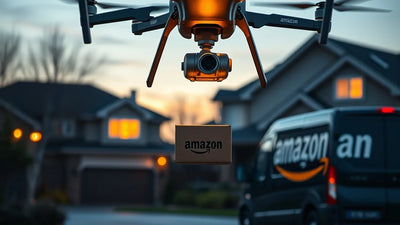
Ukraine’s 5th Assault Brigade is using a $2,000 3D-printed Sting interceptor to destroy $50,000 Russian Shahed attack drones, a 25:1 cost asymmetry captured on camera. This breakthrough in drone-on-drone combat signals a paradigm shift for commercial operators and defense contractors alike. For those in the used drone market, the implications for airspace security and counter-UAS technology are immediate and profound. Ignore this at your operational risk.

Redaktionelle noter
- Denne artikel kombinerer navngiven ekstern rapportering med Reboot Hub's egen analyse for dronekøbere, flådeoperatører, reparationskunder og observatører af det brugte DJI-marked.
- Kildefakta er adskilt fra fortolkning. Når en rapport indeholder begrænsede data, gør artiklen opmærksom på denne begrænsning og præsenterer Reboot Hub's synspunkt som en analyse.
- Reboot Hub har kommercielle links til droneprodukter og reparationstjenester; disse links er ressourcer til læseren og er ikke bestemmende for artiklens konklusion.
On May 15, 2026, Radio Free Europe/Radio Liberty published a video report that sent shockwaves through the defense and commercial drone industries. The footage, captured by a team from Ukraine's 5th Assault Brigade, shows a domestically produced, 3D-printed quadcopter-the Sting interceptor-destroying a Russian Shahed-type attack drone in mid-air. The cost asymmetry is staggering: the Sting costs between $2,000 and $5,000 to produce, while its target, the Shahed, is valued at approximately $50,000. This represents a cost ratio of between 4% and 10%, a paradigm shift in the economics of aerial warfare that has immediate and profound implications for commercial drone operators, defense contractors, and the global second-hand drone market.
For years, the narrative around drone warfare has been dominated by high-end, expensive platforms-the MQ-9 Reaper at $30 million per unit, or the Turkish Bayraktar TB2 at $5 million. The rise of the Sting interceptor signals a new era: one where low-cost, rapidly manufactured, and expendable drones can neutralize far more expensive threats. This is not just a military story; it is a commercial and regulatory watershed. The technology and tactics being proven on the battlefields of Ukraine are already shaping the future of airspace security, counter-UAS (C-UAS) systems, and the very definition of what a "drone" can achieve.

As of today, May 21, 2026, the world is watching a fundamental shift in drone doctrine. The Sting interceptor is not a bespoke, high-cost missile system. It is a 3D-printed quadcopter, assembled from commercial off-the-shelf (COTS) components, controlled by a pilot with a standard radio controller. Its success raises urgent questions for anyone operating drones in contested or regulated airspace: if a $2,000 drone can reliably kill a $50,000 target, what does that mean for the security of your own fleet? For the value of your used equipment? For the regulations that govern your operations?
Fleet readiness
Keep DJI hardware available without overbuying new units.
Use this news as a planning signal for inspected DJI aircraft, repair support, and trade-in timing.
The Sting Interceptor: A Technical Breakdown
The Sting interceptor, developed by Ukrainian engineers in collaboration with the 5th Assault Brigade, is a purpose-built "kamikaze" drone designed for one mission: to intercept and destroy incoming enemy UAVs. Its airframe is produced using additive manufacturing (3D printing), allowing for rapid prototyping, low-cost production, and easy field repair. The drone is equipped with a forward-facing camera for pilot guidance, a small explosive warhead, and a proximity or impact fuse. Its flight characteristics are optimized for speed and agility, enabling it to outmaneuver slower, larger attack drones like the Shahed.
The Shahed, an Iranian-designed one-way attack drone, has become a staple of Russian long-range strike operations. It is relatively slow, loud, and flies a predictable trajectory. While effective against static infrastructure, its vulnerability to a nimble, low-cost interceptor was dramatically exposed in the RFE/RL video. The Sting operator, using a first-person view (FPV) headset, simply flew his quadcopter into the Shahed's flight path, detonating the warhead and destroying both aircraft.

This is not a theoretical concept. The video evidence is clear. The cost asymmetry is real. And the implications for the future of drone warfare are immediate. For commercial operators, the lesson is stark: the barrier to entry for effective C-UAS technology has just dropped by an order of magnitude. The same COTS components that power your surveying drone can now be weaponized to defend an airspace.

What This Means for Commercial Drone Operators and the Second-Hand Market
Ready to Upgrade Your Fleet?
Browse our collection of inspected pre-owned DJI drones - inspected, flight-tested, and backed by a 6-month warranty. Save up to 40% versus retail.
The immediate takeaway for commercial drone pilots and fleet managers is the accelerated commoditization of drone technology. The Sting interceptor proves that a drone costing less than a high-end consumer camera can perform a mission that previously required a missile costing hundreds of thousands of dollars. This has a direct and powerful effect on the used drone market. As the military proves that cheap, expendable drones are the future, the value of older, high-end platforms may shift. A used DJI Matrice 300 RTK or a Phantom 4 Pro, once considered a depreciating asset, now represents a potential component in a C-UAS network. The second-hand market is no longer just about surveying or photography; it is about strategic assets.
For operators flying under FAA Part 107 or EASA regulations, the rise of the Sting interceptor introduces a new variable into risk assessment. Airspace security is no longer just about avoiding manned aircraft or complying with Remote ID. It is about the potential for low-cost, autonomous interceptors to be deployed in civilian airspace-either by state actors for security, or by malicious actors. The same technology that protects a military base can be used to disrupt a commercial airport. This is not alarmism; it is a direct consequence of the cost curve that the Sting interceptor has bent.
At Reboot Hub, we are already seeing the effects. The demand for pre-owned DJI drones is surging, not just from surveyors and filmmakers, but from defense contractors, security firms, and government agencies looking to build low-cost C-UAS testbeds. The line between commercial and military drone technology is blurring, and the second-hand market is the primary conduit for this technology transfer. If you are holding a used drone, its value is not just in its camera or flight time; it is in its potential as a platform for the next generation of aerial defense.
Ready to Upgrade Your Fleet?
Browse our collection of inspected pre-owned DJI drones - inspected, flight-tested, and backed by a 6-month warranty. Save up to 40% versus retail.
Q&A: What Does the Sting Interceptor Mean for You?
For the Commercial Surveyor Using a DJI Matrice 350 RTK
Question: I operate a fleet of DJI Matrice 350 RTKs for precision mapping and GSD-critical surveying under Part 107. How does a drone war in Ukraine affect my business?
Answer: Directly, it does not change your daily operations. Indirectly, it signals a fundamental shift in the regulatory and security landscape. The technology that enables a $2,000 Sting interceptor is the same technology that powers your RTK drone: COTS components, 3D-printed parts, and open-source flight controllers. As C-UAS systems become cheaper and more accessible, regulators like the FAA and EASA will be forced to update their airspace security frameworks. Expect tighter restrictions on autonomous flight, mandatory Remote ID compliance, and potential geofencing requirements for all drones operating near critical infrastructure. The era of "set it and forget it" BVLOS operations may face new hurdles as the risk of drone-on-drone engagement enters civilian airspace. Your pre-owned DJI drones are still excellent tools, but their operational envelope may shrink if security concerns escalate.
For the Defense Contractor Evaluating C-UAS Solutions
Question: Our company is bidding on a contract to provide C-UAS protection for a major airport. Should we pivot from high-end laser or jamming systems to low-cost interceptor drones?
Answer: The Sting interceptor proves that the cost curve favors swarm-based, expendable interceptors over high-value, single-point systems. A layered defense is now the gold standard: use high-end detection systems (radar, RF scanners) to identify threats, then deploy a low-cost interceptor drone to neutralize them. The economic calculus is clear. Why deploy a $500,000 laser system to kill a $50,000 Shahed when a $2,000 drone can do the same job? The key is reliability and control. The Sting's success in Ukraine proves the concept is viable, but it requires robust training, secure communications, and a legal framework for autonomous engagement. For your contract proposal, emphasize a hybrid system that integrates low-cost interceptors with existing detection and jamming infrastructure.
For the Second-Hand Drone Trader or Fleet Manager
Question: I buy and sell used drones. How should I value my inventory in light of this news?
Answer: The Sting interceptor has created a new asset class: the "expendable interceptor." Older drones that were once considered obsolete for surveying or cinematography-such as the DJI Phantom 4 Pro, the Mavic 2 Enterprise, or even custom FPV builds-now have a potential second life as C-UAS platforms. This will drive demand in the used drone market. Expect prices for rugged, well-maintained, and easily repairable drones to stabilize or even increase, especially for models with strong community support and open-source flight controller compatibility. Conversely, drones with proprietary, non-repairable components may depreciate faster. At Reboot Hub, we are seeing a surge in inquiries for bulk purchases of older DJI models for defense and security applications. If you have a fleet of aging drones, their value may be higher than you think-but only if they are in good mechanical condition. This is also a good time to invest in professional DJI repair services to ensure your inventory is flight-ready and certified, maximizing its appeal to this new buyer segment.
Regulatory and Market Implications
The Sting interceptor's success will accelerate regulatory debates worldwide. The FAA's current stance on drone-to-drone engagement is non-existent. There is no Part 107 provision for a commercial operator to intentionally destroy another drone. However, as the technology matures and becomes commercially available, regulators will be forced to create a framework. Will we see a new certification category for "C-UAS Interceptor Operators"? Will there be designated "kill zones" near critical infrastructure? These are not science fiction questions; they are the logical next step from the video published on May 15, 2026.
For commercial operators, the immediate action item is to review your security protocols. If you are flying BVLOS routes for pipeline inspection or power line surveying, consider the risk of your drone being targeted by an unauthorized interceptor. This is a new operational risk that must be factored into your safety case. The same technology that protects Ukraine's skies can be used anywhere.
At Reboot Hub, we are committed to helping our customers navigate this rapidly changing landscape. Whether you are looking to upgrade to a refurbishment-labeled DJI drone for your surveying fleet, or need professional DJI repair services to keep your assets in peak condition, our team is here to provide the expertise and hardware you need. The drone industry is entering a new era of cost disruption and tactical innovation. Stay informed, stay prepared, and stay ahead.
Conclusion: The $2,000 Question
The Sting interceptor is more than a military curiosity. It is a proof of concept that the economics of drone warfare have been permanently rewritten. For the first time, a $2,000 drone can reliably kill a $50,000 target. This asymmetry will cascade through the defense industry, the commercial drone market, and the regulatory environment for years to come. For those of us in the second-hand and refurbished drone market, it represents both a challenge and an immense opportunity. The drones you fly today may be the interceptors of tomorrow.
As we close on May 21, 2026, one thing is certain: the age of the cheap, expendable, and highly effective drone interceptor has arrived. The only question is how quickly the rest of the world will adapt.
Frequently Asked Questions
How does the Sting interceptor compare to traditional C-UAS systems like jammers or lasers?
Traditional C-UAS systems like RF jammers and high-energy lasers are effective but expensive, often costing hundreds of thousands or millions of dollars. The Sting interceptor offers a cost-effective alternative that is particularly effective against slow, predictable targets like the Shahed. However, it requires a skilled pilot and is less effective against fast-moving or highly maneuverable drones. A layered defense combining detection, jamming, and kinetic interceptors is the most robust approach.
Can the Sting interceptor technology be used for commercial airspace security?
Yes, the underlying technology-a 3D-printed, COTS-based quadcopter with a small warhead-could be adapted for commercial C-UAS applications. However, significant regulatory hurdles exist. The FAA and other aviation authorities currently have no framework for authorizing the intentional destruction of drones in civilian airspace. Any commercial deployment would require new regulations, strict operational protocols, and robust safety systems to prevent collateral damage.
What should I do with my old DJI drone now that this news is out?
Do not sell it for scrap. The demand for used, well-maintained drones in the defense and security sector is rising. If your drone is in good mechanical condition, it may be a candidate for conversion into a testbed or interceptor platform. Contact a reputable refurbisher like Reboot Hub to get a current valuation. Ensure your drone is properly maintained and documented, as buyers in this new market segment require proof of flight hours and repair history.
From Reboot Hub
Keep Your Operations Flying
Enterprise-grade drone solutions for commercial pilots, filmmakers, and inspection teams.
Pre-owned Fleet
Fully inspected DJI drones with 6-month warranty. Save up to 40%.
Browse Inventory ->