Drone Shows Light Up July 4 – What Operators Need to Know
Drone light shows are becoming a bigger part of Independence Day celebrations. This trend creates new opportunities for fleet operators and drives demand for pre-owned DJI drones, professional repair services, and genuine OEM spare parts.

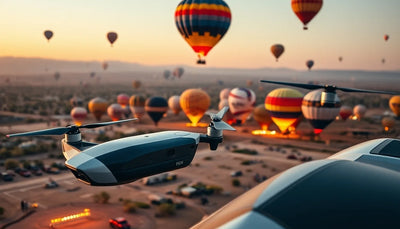
If your Fourth of July plans included staring up at the night sky this year, you had more options than ever. According to a recent report from DroneDJ, drone light shows are becoming a much bigger part of Independence Day festivities across the United States. Some communities are pairing them with traditional fireworks for a larger finale, while others are using hundreds of synchronized drones as the main event, painting animated American flags, eagles, stars, and hometown landmarks overhead.
For commercial UAV operators, fleet managers, and anyone in the drone resale or repair ecosystem, this shift represents more than just a seasonal spectacle. It signals a growing, recurring market for multi-operator drone deployment, high-utilization fleet management, and the support infrastructure that keeps those fleets flying safely. Whether you are a show provider looking to scale, a repair customer maintaining a busy fleet, or a buyer considering entry into this niche, the Independence Day trend offers concrete commercial signals worth examining.
The growing commercial appeal of drone entertainment
Drone light shows have moved from novelty to a repeatable, event-driven business model. The DroneDJ report highlights that even as fireworks remain the centerpiece of many celebrations, drone shows are increasingly integrated as either a complement or a standalone attraction. Hundreds of synchronized drones now fly in precise formations, creating moving images that are both patriotic and visually stunning.
Market context
Turn market news into a buy, repair, or trade-in decision.
Compare pre-owned availability, resale timing, and repair economics before the market moves again.

For fleet operators, the implications are straightforward: the demand for high-volume, low-altitude choreographed flight translates into regular contracts around holidays, sports events, and corporate gatherings. Operators who can field 100, 200, or more drones in a single show have a distinct advantage. This scales the need for standardized, interchangeable aircraft that can be quickly swapped, repaired, and redeployed.
Many show teams rely on DJI platforms—particularly the Matrice series and older Mavic models—because of their reliability, ease of programming, and availability in volume. The pre-owned market becomes especially attractive here. Show operators often need to acquire dozens of identical units at a reasonable cost, and inspected pre-owned DJI drones offer a path to build or expand a fleet without paying full retail for every airframe.
What this means for drone buyers
If you are considering entering the drone entertainment space—or expanding an existing fleet—the July 4 trend underlines several practical buying considerations. First, uniformity matters. A fleet of mixed models adds complexity to choreography software and spare parts management. Buyers should prioritize purchasing multiple units of the same model from a trusted source, with consistent flight logs and battery health.
Second, provenance and inspection history are critical. Drones used in light shows fly hundreds of sorties per season, putting stress on motors, ESCs, GPS modules, and LED attachment points. When sourcing from the second-hand market, look for units that have been professionally inspected and tested. This is where pre-owned DJI drones that have been carefully vetted can provide reliable fleet building blocks without the uncertain history of private-party sales.
Third, spare parts availability becomes a strategic factor. Show operations often require fast turnaround on repairs during peak season. Having a stockpile of genuine OEM spare parts—motor sets, propeller mounts, landing gear, and communication modules—is essential. A buyer who plans to run a show fleet should build relationships early with a repair partner that uses OEM-pulled parts and offers expedited service, such as professional DJI repair services.
The role of repair and spare parts in show operations
Drone light shows are intensive operations. A single performance may involve 200 to 500 drones flying in tight coordination for 10 to 15 minutes. Pre-flight checks, post-flight diagnostics, and between-shows maintenance are non-negotiable. Any downtime due to hardware failure can delay a contracted performance, which is often live on a holiday with no reschedule option.
Fleet managers running shows have shared that the most common failure points are motor bearings after repeated high-thrust maneuvers, damaged propeller guards from landing on uneven surfaces, and LED module connector wear. Having access to genuine OEM replacement parts speeds up repairs and avoids the quality variance of third-party alternatives. When a fleet is composed of pre-owned units that may have mixed usage histories, a thorough inspection and parts refresh before the season begins can prevent mid-show failures.
For repair customers, the takeaway is that professional maintenance isn't just about fixing a broken drone—it's about fleet reliability. Show operators should schedule a pre-event service cycle that includes motor vibration analysis, battery capacity checks, and GPS module accuracy verification. If your in-house team lacks the equipment or time, outsourcing to a qualified repair service with genuine parts becomes a cost-effective risk management strategy.
Broader market trends and the pre-owned DJI market
The expansion of drone entertainment has a direct impact on the second-hand drone market. As show companies upgrade to newer models or retire older airframes, they often sell off their used fleets. This creates an inflow of relatively high-hours drones that need careful evaluation. At the same time, new entrants to the show business are buying up multiple units at once, driving demand for volume lots of identical models.
This dynamic can create price advantages for buyers who are patient and knowledgeable. For example, a 100-drone lot of retired show units might appear cheap per drone, but the total cost of bringing them to operational reliability—batteries, motors, firmware updates—could exceed the savings. That is why sourcing from a dealer that inspects and certifies each unit is important. The pre-owned DJI market rewards informed procurement, not just the lowest upfront price.
Operators who have outgrown their current fleet or are consolidating into a single platform may also find value in a drone trade-in guide to understand how to recycle older equipment toward an upgrade. The trade-in model helps keep capital flowing while reducing e-waste, a consideration that aligns with the growing professionalization of the industry.
In the long view, drone light shows are becoming a recurring driver of commercial UAV utilization and, by extension, of the secondary market for airframes and parts. Fleet operators who plan their buying and maintenance cycles around these seasonal peaks will be better positioned to win contracts and keep their equipment profitable.
Is a used drone safe for use in a light show fleet?
Yes, provided it has been professionally inspected and tested. Units that come from known fleets with service records are preferable. Look for consistent firmware versions, minimal crash damage, and healthy batteries. Many show operators successfully run mixed fleets of new and pre-owned aircraft as long as they are the same model and are updated identically.
How often should show drones be serviced?
At minimum, after every 10 to 15 flight hours or before each major event season. High-utilization show drones benefit from a mid-season check and a full overhaul at the end of the season. Key components to focus on are motors, propellers, GPS modules, and LED connectors. Pre-season service is especially important if the drones have been in storage.
What should I look for when buying pre-owned show drones?
Request a flight log summary, check for firmware version consistency across the lot, and inspect physical wear on motor mounts and landing gear. Verified battery cycle counts are critical—show drones often have many short flights. Working with a seller that provides a clear inspection report and a short warranty on flight-critical parts reduces your risk significantly.
Konzultované zdroje
- DroneDJ - primary source
- Reboot Hub professional DJI repair services - official service context
- DJI Support - official support source
Redakce Reboot Hub poskytuje vlastníkům dronů analýzy nákupů, oprav, prodejní hodnoty a provozu. Pokud narazíte na chybu, kontaktujte nás pro revizi opravy v souladu s našimi redakčními zásadami.