DJI Matrice 300 RTK Reveals Hidden Hotspots in Clarkson Apartment Fire
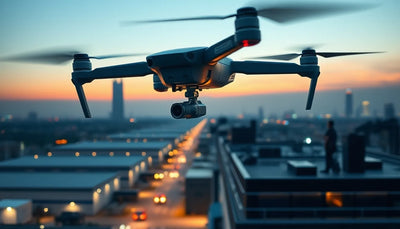
A DJI Matrice 300 RTK flown by the Monroe County Sheriff’s Office revealed hotspots hidden in the attic of a Clarkson apartment fire that ground crews could not see. The incident shows why enterprise drone thermal imaging is essential for firefighting and what it means for drone buyers.

A three-story apartment complex near SUNY Brockport in Clarkson, New York, caught fire in late June 2026, and the flames moved through the attic faster than crews anticipated. When Brockport Fire Chief Adam Leggett looked up at the building, he realized his teams could see only half of the hotspots from ground level. That limitation led the Monroe County Sheriff’s Office to deploy a DJI Matrice 300 RTK equipped with a thermal camera. The drone quickly identified remaining hotspots that were invisible from the ground, allowing firefighters to target their efforts and prevent rekindle. For commercial drone buyers, fleet operators, and anyone considering the pre-owned DJI market, this incident offers a clear operational lesson: thermal aerial inspection is no longer a luxury—it is becoming a standard tool for public safety and property assessment.
The Matrice 300 RTK used in Clarkson is a workhorse enterprise platform known for its reliability in demanding environments. While the source does not specify exact camera model or flight time, the drone’s ability to detect hidden heat sources from above highlights the fundamental advantage of aerial thermal imaging. This event also underscores a broader trend: fire departments, law enforcement agencies, and insurance firms are increasingly relying on drones to fill gaps that ground-based inspections cannot cover.
The Clarkson fire: a case study in aerial thermal imaging

According to the DroneXL.co report from June 24, 2026, the fire at the Clarkson apartment complex moved rapidly through the attic, catching crews by surprise. Chief Leggett noted that from the ground, his firefighters could not see approximately half of the hotspots. Rather than let the fire smolder unseen, the Monroe County Sheriff’s Office launched a DJI Matrice 300 RTK. The drone’s thermal camera revealed exactly where residual heat remained, enabling crews to extinguish those spots before they could reignite.
Industrial drone procurement
Source a brand-new industrial drone for this mission.
Discuss mission fit, aircraft model, quantities, configuration, pickup, and lifecycle support with Reboot Hub.
The practical implication for operators is clear: high-rise structures, complex roof lines, and deep attic spaces create blind spots that even experienced firefighters cannot overcome with traditional tools. A drone with a stabilized thermal payload can survey an entire building envelope in minutes, providing a comprehensive heat map that ground personnel can act on. For fleet managers, this means that a drone equipped with a radiometric thermal camera is not just a nice-to-have—it is a critical safety tool that can reduce property damage and lower the risk of firefighter injury.
What this means for drone buyers

If you are evaluating enterprise drones for your organization, the Clarkson incident reinforces the value of the Matrice 300 RTK platform—especially for tasks where thermal detection is essential. The Matrice 300 RTK is a mature model that remains widely available in both new and pre-owned DJI drones channels. Buyers looking for a capable thermal drone on a tighter budget should consider inspected pre-owned units that have been fully tested and come with genuine OEM spare parts.
For current owners of the Matrice 300 RTK, this real-world use case is a reminder to keep thermal sensors calibrated and clean. Dust, moisture, or physical damage can compromise thermal accuracy exactly when it matters most. If your drone has not been serviced recently, professional DJI repair services can ensure the thermal lens, gimbal, and sensors are operating to specification. The alternative—missing a hidden hotspot during a critical inspection—could have serious consequences.
Fleet managers should also consider whether their current drone fleet includes a thermal-capable aircraft for emergency response. If not, a pre-owned Matrice 300 RTK can be a cost-effective entry point. The trade-in value of older models can offset the investment; consult the drone trade-in guide to evaluate your options.
Operational lessons for fire departments and inspection crews

The Monroe County Sheriff’s Office already had the Matrice 300 RTK in its fleet, which allowed a rapid response. That readiness is instructive: agencies that pre-position drones with trained pilots and established protocols can deploy them within minutes of a report. The Clarkson fire chief explicitly stated that ground crews could not see half the hotspots, which means the drone was not just a supplement—it was the primary tool for detecting residual fire.
Operators should also note that the attic fire moved faster than expected. Thermal drones are adept at finding heat pockets behind walls, under roofing, and in insulation. But to be effective, the drone must be flown low enough and with a camera that has sufficient thermal resolution. The Matrice 300 RTK’s thermal payload options (such as the H20T) offer both wide-angle and zoom thermal views, allowing the pilot to scan quickly and then zoom into suspicious areas. While the source does not list exact zoom ranges, the principle is sound: a versatile thermal payload gives the incident commander better situational awareness.
Here is a simplified comparison drawn from the incident:
| Inspection method | Hotspot detection | Time required | Safety risk to crews |
|---|---|---|---|
| Ground-level visual check | Partial (approx. 50% visible) | Longer, may require ladder access | Higher – exposure to heat and falling debris |
| Aerial thermal drone (Matrice 300 RTK) | Comprehensive (all hotspots found) | Minutes to scan entire roof | Lower – no one needs to approach danger zone |
This table is based directly on Chief Leggett’s observation that ground crews could not see half the hotspots, and the drone’s success in revealing them. For any fleet manager or safety officer, the operational advantage is unambiguous.
Second-hand market and service implications

Events like the Clarkson fire drive demand for enterprise drones with proven reliability. The Matrice 300 RTK has been in service for several years, and many units are now entering the pre-owned market as agencies upgrade to newer models such as the Matrice 350 RTK. For buyers, this creates an opportunity to acquire a capable thermal platform at a lower price point—but due diligence is essential.
When purchasing a pre-owned DJI drones like the Matrice 300 RTK, confirm that the thermal camera module has been inspected and calibrated. Dust on the lens, a misaligned gimbal, or degraded sensor performance can render the drone ineffective for thermal work. Genuine OEM spare parts for the Matrice 300 RTK remain widely available, which extends the service life of pre-owned units. If you already own a used Matrice 300 RTK, scheduling professional DJI repair services for the thermal gimbal and camera is a smart preventive step.
For fleet managers considering a trade-in for newer equipment, the drone trade-in guide outlines how to evaluate the condition and residual value of your current drone. Given the continued relevance of the Matrice 300 RTK in public safety roles, trade-in values may hold stronger than expected—especially if the unit has low flight hours and a clean maintenance log.
Finally, the Clarkson fire is a reminder that thermal drones are not just for summertime roof inspections. Attic fires, concealed hot spots, and smoldering insulation are risks year-round. Whether you are a fire department, an insurance adjuster, or a commercial inspection company, having a reliable thermal drone—new or pre-owned—can be the difference between a contained incident and a rekindle disaster.
What drone was used in the Clarkson apartment fire?
The Monroe County Sheriff’s Office deployed a DJI Matrice 300 RTK equipped with a thermal camera to identify hidden hotspots that ground crews could not see. This specific model is a high-end enterprise platform widely used for search and rescue, inspection, and firefighting.
Why did the fire chief need a drone during the Clarkson fire?
Brockport Fire Chief Adam Leggett realized that firefighters on the ground could see only about half of the hotspots in the attic of the three-story building. A drone with thermal imaging was the only way to locate the remaining heat sources and ensure the fire was fully extinguished.
Should I consider buying a pre-owned DJI Matrice 300 RTK for thermal inspection work?
Yes, if you need a capable thermal drone for safety or inspection but want to manage costs. The Matrice 300 RTK remains a relevant platform, and inspected pre-owned units with genuine OEM parts can perform reliably. Just ensure the thermal camera has been calibrated and the drone has been serviced by a professional repair provider.