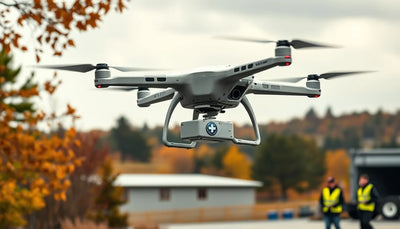
White House Drone Dominance Push Puts U.S. Supply Chain in Focus
The White House convened its first Drone Dominance industry event, signaling deeper scrutiny of what goes into U.S.-made drones. For commercial operators, fleet buyers, and repair customers, the supply-chain conversation could reshape parts availability, procurement rules, and the pre-owned DJI market.

Quick answer
The White House held its first Drone Dominance industry event on August 20, 2026, bringing together drone manufacturers, component suppliers, and government officials to discuss U.S. drone production and supply-chain requirements.
- The event signals growing scrutiny of what components go into U.S.-made drones
- Executive orders and FCC action point to a broader push for domestic drone production
- The meeting included drone manufacturers, component suppliers, and government officials
- The policy direction could affect procurement rules and parts availability for commercial operators
Evidence: DRONELIFE
Operator checklist
Turn policy news into a safer fleet decision.
Before changing aircraft, compare repair paths, available DJI inventory, and trade-in timing against the rule change.

DRONELIFE reports that the White House convened its first Drone Dominance industry event on Thursday, bringing drone manufacturers, component suppliers, and government officials together in Washington. The meeting is the latest signal that the administration's push for U.S. drone production is moving from broad rhetoric toward concrete questions about how much of the supply chain must be American.
The gathering follows a series of executive orders and FCC actions that have already begun to reshape how federal agencies and commercial buyers think about drone procurement. For operators who fly DJI hardware, manage mixed fleets, or depend on imported spare parts, the policy direction matters well beyond Washington conference rooms. Supply-chain requirements have a way of turning into procurement mandates, and procurement mandates eventually reach the repair bench and the resale market.
The policy signal behind the Drone Dominance meeting
According to DRONELIFE, the White House event brought together drone manufacturers, component suppliers, and government officials for what the administration framed as its first Drone Dominance industry gathering. The central question on the table was not whether the United States should build more drones domestically, but how much of the underlying supply chain needs to be American-sourced to qualify as a U.S.-made platform.
That distinction matters. A drone assembled in the United States can still contain flight controllers, motors, batteries, sensors, and imaging modules sourced from overseas. The administration's scrutiny appears to be moving toward the component level, where the real dependency questions live. Executive orders and FCC action cited by DRONELIFE point to a coordinated effort across agencies to tighten the definition of acceptable sourcing for drones used in sensitive or federally funded operations.
For commercial operators, the immediate takeaway is not that DJI hardware disappears overnight. It is that the procurement environment is shifting in ways that could affect which platforms qualify for government contracts, which components are available for repair, and how fleet managers plan multi-year equipment cycles. Reboot Hub analysis suggests that policy signals of this kind tend to precede formal rulemaking by months, not weeks, giving operators a window to evaluate their exposure.
What a tighter supply chain means for parts and repair
Supply-chain policy rarely makes headlines for its repair-shop implications, but that is where the operational consequences often land first. If federal procurement rules begin to favor drones with higher percentages of domestically sourced components, the downstream effect could be a bifurcated parts market: one channel serving government and enterprise fleets with compliant hardware, and another serving the broader commercial and consumer base with imported platforms and OEM-pulled parts. For owners evaluating service and lifecycle risk, The White House Roof Becomes America S Most Advanced Drone Fortress explains the relevant repair, parts, resale, or operational path.
DRONELIFE's reporting does not specify which components or thresholds are under discussion, and operators should treat any specific percentage claims as speculative for now. What is clear is that component suppliers were in the room alongside manufacturers, which suggests the administration is thinking about the supply chain at the sub-assembly level rather than just the final product level.
For repair customers, this raises practical questions about parts availability and lead times. A drone that depends on imported flight controllers or gimbal modules may face longer repair cycles if policy shifts push distributors toward domestic alternatives. Operators who fly pre-owned DJI drones or maintain older fleet models should pay attention to how component-level scrutiny evolves, because repair economics are directly tied to parts sourcing.
What this means for drone owners and the market
The commercial drone market has spent years operating on a global supply chain, with DJI hardware dominating many segments regardless of where the end user is based. A U.S. policy push toward domestic sourcing does not erase that installed base, but it can change the incentives around it. Fleet managers who currently rely on imported platforms may face new questions from clients, insurers, or grant administrators about hardware provenance.
For buyers, the practical step is to document what they fly and understand where their critical spare parts come from. A fleet that depends on a single imported component source is more exposed to policy shifts than one with multiple supply channels or domestically available alternatives. Reboot Hub analysis sees the pre-owned DJI market as particularly sensitive to this dynamic: if new imported hardware becomes harder to procure through certain channels, demand for inspected pre-owned units and genuine OEM spare parts could rise as operators look for ways to keep existing fleets flying without triggering procurement complications.
That is where the commercial bridge between policy and ownership becomes concrete. Operators evaluating their equipment strategy in light of the Drone Dominance conversation may find that The White House Roof Becomes America S Most Advanced Drone Fortress offers a useful lens on how federal security priorities are already shaping drone deployment decisions. The same logic that drives hardened government installations toward specific hardware choices will eventually filter into commercial procurement expectations.
For repair customers, the message is to avoid panic but stay informed. No rule announced this week bans imported drones or parts. What the White House event signals is a direction of travel, and direction of travel is what smart fleet managers plan around. Keeping a documented inventory of airframes, batteries, and critical modules is a low-cost way to prepare for whatever sourcing requirements emerge.
The pre-owned DJI market and the sourcing question
DJI remains the dominant platform across commercial, public safety, and consumer drone segments in the United States, a reality that any domestic sourcing push must contend with. The administration's Drone Dominance agenda does not change the installed base overnight, but it does create a strategic question for operators: do you continue buying new imported hardware, shift toward domestically assembled alternatives where they exist, or extend the life of existing fleets through repair and pre-owned acquisitions?
DRONELIFE's reporting on the White House event does not name specific manufacturers or component thresholds, so any claim about which platforms will or will not qualify under future rules would be premature. What operators can do now is evaluate their exposure. A fleet built entirely on imported platforms with imported spare parts has a different risk profile than one with mixed sourcing or a documented repair pipeline using genuine OEM-pulled parts.
The pre-owned DJI market occupies an interesting position in this landscape. Pre-owned units are already in the country, already in circulation, and already supported by a mature repair ecosystem. If new import channels face friction, the value of existing hardware and the parts that keep it flying could hold steady or increase. Operators who understand this dynamic can make procurement decisions that are resilient to policy shifts rather than reactive to them.
The White House Drone Dominance event is a signal, not a rule. But signals like this one have a way of becoming procurement guidelines, and procurement guidelines have a way of becoming market realities. The operators who read the signal early will be the ones who plan their fleets, their parts inventories, and their repair relationships accordingly.
FAQ
Frequently asked questions
What happened at the White House Drone Dominance event?
According to DRONELIFE, the White House held its first Drone Dominance industry event on Thursday, bringing together drone manufacturers, component suppliers, and government officials to discuss U.S. drone production and how much of the supply chain must be American.
Does this mean DJI drones will be banned?
No ban was announced at the event. The reporting indicates growing scrutiny of supply chains and a push for more domestic production, but no specific rule or prohibition on imported drones or parts was described in the source.
What should fleet managers do after this news?
Fleet managers should document their current hardware and parts sourcing, evaluate exposure to imported components, and consider how pre-owned units and genuine OEM spare parts could extend fleet life if procurement rules tighten over time.
Which sources support this update?
The visible evidence links identify DRONELIFE; each source is used only for the claim it directly supports.
What remains subject to change?
Retail pricing, availability, product bundles and regulatory timelines can change. Readers should verify the latest terms with the named retailer, manufacturer or regulator before acting.
How should buyers or operators use this analysis?
Use the verified facts as a starting point, then compare mission fit, lifecycle support, maintenance needs and current procurement terms before making a purchase or fleet decision.
Sources consulted
- DRONELIFE - primary source
- FCC Covered List - official regulator source
Reboot Hub Editorial adds buyer, repair, resale, and operational analysis for drone owners. If you spot an error, contact us for correction review through our editorial policy.