What the B-21 Raider Production Ramp-Up Means for Drone Buyers
The USAF’s B-21 production ramp-up deal includes implicit options for a larger fleet. This procurement strategy offers commercial drone operators a blueprint for scalable fleet deals, OEM repair partnerships, and smarter pre-owned market planning.

On July 24, 2026, The War Zone reported that the U.S. Air Force’s recently announced production ramp-up deal for the B-21 Raider stealth bomber was not simply about accelerating fielding next year—it also baked in a clear pathway to a larger fleet. For commercial drone operators, fleet managers, and repair specialists, this kind of procurement architecture may seem distant, but the principles behind it translate directly to the UAV market. The decision to embed expansion options into a production contract reflects a strategic mindset that avoids the pitfalls of reactive purchasing, and it signals exactly the kind of thinking that separates professional fleet operations from ad‑hoc buying.
The strategic logic of the production ramp-up deal
The B-21 program is among the most expensive and complex acquisition efforts in recent U.S. defense history. According to The War Zone’s analysis, the production ramp-up deal was originally framed by the USAF as a way to simply accelerate delivery of the bombers. However, the arrangement includes terms that allow for a larger total fleet without requiring a separate follow-on contract. This means the Air Force preserves optionality: if operational needs, budget conditions, or geopolitical factors change, it can exercise options already priced into the existing agreement.
For any equipment buyer—whether procuring bombers or a dozen DJI Matrice 350s—that kind of built-in scalability reduces uncertainty. It avoids the administrative overhead of renegotiating terms and protects against price escalation in a high-demand environment. The same logic applies when a drone operator is deciding between a one-time purchase and a multi-year framework with volume pricing.
Fleet readiness
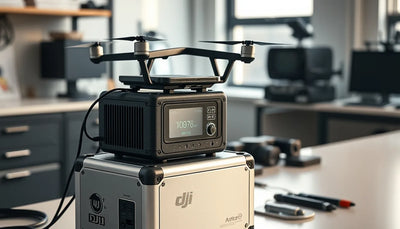
Keep DJI hardware available without overbuying new units.
Use defense and fleet news as a planning signal for repair support, inspected pre-owned aircraft, and replacement timing.

More importantly, the USAF’s approach suggests a long-term view of asset lifecycle management. The B-21 fleet will be expected to operate for decades, and the production deal accounts for future replenishment and upgrade slots. This stands in contrast to the common commercial practice of buying drones one at a time as project budgets permit, which often leads to fleet inconsistency and higher per-unit costs over time.
What this means for drone buyers
For the drone buyer—whether a surveying company expanding from a single Phantom to a mixed fleet of Matrice and Mavic models, or an energy utility managing two dozen enterprise drones—the USAF’s deal provides a mental model for procurement that can reduce both financial and operational risk.
First, negotiate scale from the start. Many commercial drone dealers offer tiered pricing or fleet discounts, but those deals are rarely locked in for more than a few units. If you anticipate needing 10 to 20 drones over the next 18 months, ask for a volume contract with fixed pricing and defined delivery windows. This gives you the same optionality that the B-21 contract provides—you are not forced to buy everything upfront, but you have guaranteed pricing if demand materializes.
Second, tie aftermarket support into the initial purchase. The B-21 deal likely includes provisions for sustainment and spare parts. In the drone world, that translates to a bundled package of genuine OEM spare parts and a commitment to professional DJI repair services at fixed rates. Operators who buy a fleet without negotiating repair pricing often face surprise costs when a gimbal sensor fails or a battery swells.
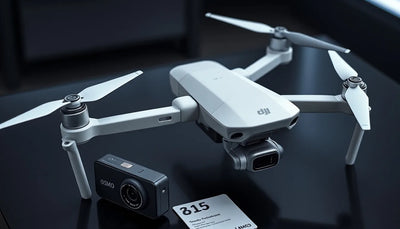
Third, factor in the pre-owned market as a scaling lever. If your budget can’t absorb a block purchase of new drones, consider supplementing the fleet with pre-owned DJI drones that have been inspected and graded. The USAF sometimes uses a “silver bullet” approach—mixing new and existing assets. The pre-owned market offers a similar mix without sacrificing reliability, provided you source from a seller that documents flight hours, crash history, and part authenticity.
The key takeaway for a drone buyer or fleet manager: treat every purchase as a potential first step in a multi-year relationship with a supplier. Ask about contract flexibility, bulk pricing, and repair-service SLAs before you place the first order, not after you are already locked into a fragmented buying pattern.
Parallels in commercial UAV procurement
The drone market, especially the DJI ecosystem, has matured to the point where operators can adopt institutional procurement practices. While the USAF has decades of procurement experience, commercial drone operators can catch up by borrowing specific tactics.
- Multi‑year agreements (MYAs): Just as the B-21 deal was structured to cover multiple years, a drone operator can sign a MYA with an OEM-authorized distributor that locks in prices for new units, spare batteries, propellers, and payloads. This insulates the fleet from inflation and supply-chain disruptions. The same agreement can include priority access to software updates and firmware support.
- Upgrade and trade‑in pathways: The USAF’s expansion options implicitly include a plan to retire earlier aircraft. For drone operators, having a drone trade-in guide and a known trade-in value for current models allows for predictable fleet refresh cycles. Instead of holding onto aging airframes until they fail, you can trade them in before residual value drops to zero and redirect that equity into newer sensors or longer‑flight‑time platforms.
- Centralized repair vs. spot repairs: The USAF maintains a depot system for major repairs. In the drone world, using a centralized, OEM-certified repair facility—rather than sending each drone to a different shop—ensures consistent quality, authentic parts, and documented service history. That service history directly affects resale value when you eventually rotate the drone into the pre-owned market.
The commercial UAV industry is still relatively young, but the B-21 example shows that even the most specialized military acquisition can offer transferable lessons about patience, contractual clarity, and the value of optionality.
Preparing for supply chain volatility and upgrade cycles
One reason the B-21 production ramp-up deal likely includes expansion options is that defense planners know that aircraft production rates can be throttled by supply-chain bottlenecks, labor shortages, or geopolitical events. Commercial drone buyers face the same reality. Since 2022, DJI has periodically experienced component shortages, and new model releases have sometimes been delayed. Operators who rely on a single model or a single supplier risk grounding their fleet if a critical component—like a flight controller or obstacle‑avoidance sensor—becomes unavailable.
Diversification is one answer, but the B-21 deal suggests another: build contractual slack into your supply chain. If you are a large fleet operator, consider negotiating a “buffer stock” clause with your spare-parts supplier, so that you hold an agreed minimum inventory of common failure items (e.g., propellers, motor arms, gimbal cables). This does not require more warehousing space if you use a just‑in‑time arrangement with a repair partner that stocks genuine OEM spare parts on consignment.
Upgrade cycles are another area where the military mindset applies. The B-21 was designed with an open-architecture avionics suite to allow future capability insertions without replacing the entire airframe. DJI’s enterprise drones, such as the Matrice 350 or Mavic 3E series, similarly support modular payload swaps. When you build a fleet, prioritize models that accept different cameras, LiDAR units, or RTK modules. This extends the useful life of the airframe and delays the need for a full replacement. When you do finally upgrade, the retired drone—if kept in good repair—has strong residual value in the pre-owned DJI market.
How does the B-21 deal affect my drone purchase timing?
The B-21 deal is not a direct market signal for drone pricing. However, its structure encourages you to think in time horizons longer than a single project. If you are planning a fleet expansion in the next six months, consider negotiating a contract that gives you price protection for one year rather than buying spot.
Should I consider a fleet contract similar to the USAF’s?
Yes, if you purchase five or more drones per year. Ask your distributor for a multi-unit agreement with fixed pricing, repair-service rates, and optional add-on units at the same per-unit price. Even a simple letter of intent can lock in terms that protect against market volatility.
What role does the pre-owned drone market play in scalable operations?
The pre-owned drone market allows you to fill fleet gaps at lower cost without sacrificing reliability. Inspected pre-owned DJI drones from a reputable source come with flight logs and genuine parts, making them ideal for scaling quickly or for backup airframes when primary units are in repair.
Sources consulted
- AFA Warfare Symposium 2026 | The War Zone - primary source
- B-21 | The War Zone - primary reporting source
- The War Zone - primary reporting source
Reboot Hub Editorial adds buyer, repair, resale, and operational analysis for drone owners. If you spot an error, contact us for correction review through our editorial policy.