US Service Member Killed in Controlled Detonation: Drone Safety Lessons
A US service member was killed Saturday during a controlled detonation of unexploded ordnance in northern Iraq. This tragic incident underscores why drone operators and fleet managers must prioritize remote operations for hazardous tasks.

A U.S. service member was killed on Saturday, July 19, during a controlled detonation of unexploded ordnance in northern Iraq, according to U.S. Central Command. The incident, reported by Defense News, occurred as personnel carried out a routine but inherently dangerous disposal procedure. While CENTCOM has not released the service member’s identity or specific circumstances, the event serves as a sobering reminder of the risks associated with manual explosive ordnance disposal (EOD). For the commercial and defense drone communities, this tragedy reinforces the operational rationale for integrating unmanned aerial vehicles into high-risk tasks—and raises practical considerations for buyers, fleet operators, and repair services.
The unspoken value of remote operations
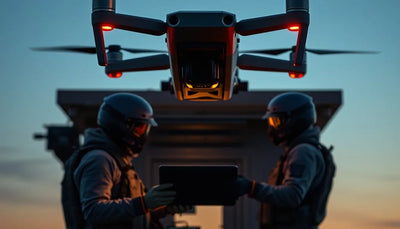
Controlled detonations require personnel to approach, assess, and neutralize live explosives. Despite rigorous training and equipment, the unpredictability of aging ordnance poses a constant threat. Drones equipped with cameras, thermal sensors, and small payload release mechanisms are already used by military and civilian EOD teams to inspect and sometimes trigger detonations from a safe distance. The CENTCOM announcement, though sparse on operational detail, highlights a persistent danger that remote platforms are designed to mitigate.
For fleet operators managing surveillance or inspection drones, the takeaway is not limited to military use. Any mission involving hazardous materials, unstable environments, or reconnaissance near threat zones benefits from keeping human operators at a safe remove. The tragedy in northern Iraq underscores the fundamental goal: reducing human exposure to lethal conditions. Drone buyers evaluating systems for public safety, construction, or energy site inspections should consider payload versatility—such as the ability to mount thermal cameras or manipulator arms—as a key factor in their purchase decisions. Even if a particular mission does not involve explosives, the same principle of remote risk reduction applies to confined space entry, chemical spill assessment, or post-disaster structural evaluation.
Fleet readiness
Keep DJI hardware available without overbuying new units.
Use defense and fleet news as a planning signal for repair support, inspected pre-owned aircraft, and replacement timing.

What this means for drone buyers
For commercial drone buyers, especially those supplying public safety agencies or defense contractors, this incident reinforces the need for robust, reliable platforms that can operate in challenging environments. The second-hand market for pre-owned DJI drones offers cost-effective entry points for organizations building EOD-capable fleets without incurring full retail expense. Units that have been inspected and serviced with OEM-pulled parts can deliver the same operational reliability at a lower capital cost, freeing budget for specialized payloads.
Fleet managers should also reassess their maintenance protocols. A drone deployed for EOD support must have zero tolerance for component failure. Regular inspections, genuine OEM spare parts, and professional DJI repair services become non-negotiable when human safety depends on the aircraft’s performance. The CENTCOM incident, while not drone-related, serves as a powerful reminder that mission readiness saves lives. For buyers, this means prioritizing sellers who offer documented maintenance histories and certified repairs. Our professional DJI repair services cater to operators who demand the highest reliability standards—whether their aircraft are used for search and rescue, infrastructure inspection, or tactical support.
Furthermore, the tragedy may accelerate defense and homeland security procurement of integrated drone systems for EOD. This could tighten supply for certain used enterprise models, potentially affecting pricing on the pre-owned market. Buyers who act early to acquire inspected pre-owned units may secure better deals before heightened demand raises prices. A drone trade-in guide can help operators upgrade their fleets while offsetting costs through trade credits, a practical step for organizations expanding their remote capabilities.
Fleet planning and the pre-owned DJI market
The relationship between military-civilian operational needs and second-hand drone inventory is often overlooked. When defense forces deploy new, hardened EOD drone systems, they may offload older but serviceable platforms used for training or secondary roles. These units enter the pre-owned DJI market, offering value to commercial operators willing to invest in thorough inspections and genuine parts replacements. The CENTCOM fatality may prompt more military units to fast-track replacements and increase the volume of certified pre-owned drones available.
Operators considering such purchases should verify the provenance of the drone—its flight hours, crash history, and component wear. Buying from a reputable source that strips and rebuilds drones with OEM-pulled parts ensures that the aircraft meets original performance standards. The pre-owned DJI drones we offer undergo rigorous testing and are fitted with genuine components, providing a reliable alternative to brand-new units for organizations on a budget. For repair customers, using genuine parts is critical when the drone’s deployment may involve high-consequence missions. Substandard replacements risk failures that could endanger personnel.
In the broader market, this incident may also influence insurance underwriting for drones used in hazardous operations. Insurers could require documented use of OEM parts and certified repair histories before covering EOD or disaster response flights. Fleet managers should begin documenting their repair and upgrade records now, as this will become a competitive advantage when seeking coverage or government contracts.
Practical steps for operators and repair customers
What should a buyer, pilot, or fleet manager do differently after reading this? First, evaluate your current drone’s suitability for remote high-risk tasks. If your missions involve any element of danger, consider adding forward-looking infrared (FLIR) payloads or mechanical grippers that allow the aircraft to manipulate objects from a distance. While no drone can eliminate all risk, moving the operator to a control station hundreds of meters away is a proven risk-reduction measure.
Second, tighten your maintenance schedule. The service member’s death occurred during a routine operation—a reminder that routine does not mean safe. For drone operators, routine pre-flight checks must include careful inspection of motors, propellers, battery health, and gimbal integrity. Any sign of fatigue or damage should prompt immediate replacement with genuine parts. Our repair facility uses only OEM-sourced components, ensuring that repaired aircraft return to flight with original reliability.
Third, train your teams in emergency procedures that cover not only flight contingencies but also ground-level safety when handling payloads or performing field maintenance. Drones used for EOD are often in the vicinity of hazardous materials; crew members should be familiar with basic ordnance awareness if their work brings them near active disposal sites.
Fourth, consider the resale and upgrade cycle of your fleet. The pre-owned market for DJI drones is active and offers a sustainable way to rotate out older models while maintaining a capable fleet. Using a structured trade-in program can make upgrades more affordable and ensure that decommissioned units are properly restored for their next owner, rather than ending up in unsafe hands.
Could this incident affect drone regulations or certifications?
While no immediate regulatory changes have been announced, high-profile military accidents often prompt reviews of equipment safety standards. In the U.S., the Department of Defense may tighten requirements for EOD robotic systems, including drones. Commercial operators who contract with defense or public safety clients should monitor updates to MIL-STD or FAA guidelines that might impose additional payload or maintenance recordkeeping requirements.
Are second-hand drones suitable for hazardous EOD-type missions?
Yes, but only if they have been fully inspected, repaired with genuine OEM parts, and tested to meet original flight performance. A pre-owned DJI drone purchased from a trusted source that provides a documented maintenance history can be as reliable as a new unit. However, operators must verify that airframe, electronic speed controllers, and batteries are within service life limits. Professional DJI repair services that use OEM-pulled components are essential for mission-critical deployments.
What should an operator do if they already own a drone used for risk-adjacent tasks?
Immediately schedule a comprehensive health check that includes motor and propeller balance inspection, gimbal calibration, battery cycle analysis, and firmware updates. Consider adding redundant systems such as parachute recovery or secondary GPS if the drone will operate over populated areas. Keep a logbook of all repairs and upgrades. If the drone has been in service for more than two years or has experienced any crash, have it professionally assessed. When in doubt, source a inspected pre-owned unit with known history from a reputable reseller.
Sources consulted
- Airstrike killed senior ISIS commander in Syria, CENTCOM says - primary source
- Defense News - primary reporting source
- FAA UAS official guidance - official regulator source
- Defense.gov official source - official government source
Reboot Hub Editorial adds buyer, repair, resale, and operational analysis for drone owners. If you spot an error, contact us for correction review through our editorial policy.