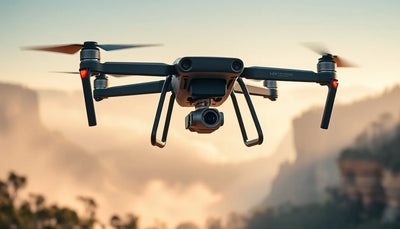
US Pilots Could Command Australian MQ-28 Ghost Bat Fighter Drones
New reports indicate U.S. pilots may be able to directly command Australia’s MQ-28 Ghost Bat drones during joint combat operations, signaling a deeper shift in collaborative airpower and autonomous drone integration.

A new report from The War Zone reveals that the U.S. and Australia are exploring the ability for American pilots to directly command the Royal Australian Air Force’s MQ-28 Ghost Bat fighter drones during joint operations. This concept, if realized, would allow seamless sharing of Collaborative Combat Aircraft (CCA) between allied forces in high-tempo scenarios—a capability that could reshape how military drone assets are deployed, controlled, and even procured. For drone buyers, fleet operators, and industry watchers, the news is more than a defense headline; it signals a maturing vision for unmanned systems that could eventually ripple into commercial and pre-owned drone markets.
The MQ-28 Ghost Bat, developed by Boeing Australia, is a jet-powered, autonomous drone designed to team with crewed fighters. While still in development and flight-testing, the platform has already drawn attention for its modular design and AI-driven autonomy. The potential for U.S. pilots to take command mid-mission highlights a deeper trend toward interoperability and networked warfare—where the drone itself becomes a shared platform rather than a siloed national asset.
The Collaborative Combat Aircraft Model
The core source detail from The War Zone is that the U.S. and Australia are working on command-sharing concepts that would let U.S. pilots—likely in F-35s or future Next Generation Air Dominance platforms—control Ghost Bats as if they were organic wingmen. This goes beyond simple data-link relay; it implies full mission-level command, including dynamic re-tasking and weapons release authority.
Fleet readiness
Keep DJI hardware available without overbuying new units.
Use defense and fleet news as a planning signal for repair support, inspected pre-owned aircraft, and replacement timing.

For defense planners, the ability to freely hand off CCA control in a contested environment is a huge operational advantage. It reduces the need for dedicated ground control stations and eliminates the friction of coalition coordination when every second counts. This year’s Air Warfare Symposium discussions have repeatedly stressed that future air combat will rely on massed, affordable unmanned "attritable" aircraft—and the Ghost Bat is one of the first programs to embody that philosophy.
For commercial drone operators accustomed to closed ecosystems, this interoperability push is a notable contrast. Most enterprise drone platforms today rely on single-vendor controllers and proprietary communication protocols. The MQ-28 concept suggests that multi-vendor, multi-nation command architectures are not just possible but necessary at scale. This could eventually influence how manufacturers design commercial flight controllers and ground control software—especially for large-scale industrial inspection, agriculture, and logistics fleets.
Implications for Autonomous Drone Development
Beyond command-sharing, the Ghost Bat’s autonomy is a key focus. The drone is designed to operate with "full mission autonomy" using artificial intelligence, meaning it can plan routes, sense threats, and execute maneuvers without constant human input. The U.S.-Australia collaboration on command authority implies that this AI must be capable of interpreting high-level orders from a foreign pilot, switching tactical priorities in flight, and executing lethal or non-lethal actions based on mission rules of engagement.
This level of independence, coupled with secure cross-border command, represents a significant step beyond current commercial autonomy. Most DJI and enterprise autopilots today handle waypoint navigation, obstacle avoidance, and return-to-home, but they do not accept dynamic retasking from a third-party operator mid-mission without manual intervention. The MQ-28 program may push vendors to develop more open, API-driven control systems that can receive commands from multiple authorized sources—an architecture that could eventually appear in high-end commercial platforms used for public safety and critical infrastructure.
For the pre-owned DJI market, this development reinforces the value of platforms that support robust SDK access and third-party integration. Older drones with limited customization may see reduced demand as fleet operators prioritize upgradability and network compatibility. Fleet managers should already be evaluating how their current hardware could be adapted to future collaborative or multi-operator scenarios—even if those scenarios are years away for civil operations.
What this means for drone buyers
At first glance, a military combat drone program in Australia has little to do with buying a used Mavic 3 or repairing a Matrice 300. But the Ghost Bat story is actually rich with signals for commercial drone buyers and fleet operators.
1. The value of autonomous capabilities is rising. The MQ-28’s autonomy is its main cost-saving feature—reducing pilot workload and allowing single operators to manage multiple drones. In the commercial world, autonomous features like AI-based detect-and-avoid, automated payload switching, and multi-drone orchestration are becoming must-haves for serious enterprises. Buyers looking at pre-owned DJI drones should prioritize models that support these functions via SDK or aftermarket add-ons. Older drones without such capabilities may depreciate faster as operators upgrade to autonomous-ready platforms.
2. Interoperability will become a procurement criterion. The CCA model demonstrates that the ability to hand over control to another party—whether another operator, a command center, or a different brand’s ground station—adds strategic value. Commercial fleet operators should consider how easily their drones can be integrated into larger systems. Proprietary locks that prevent cross-platform operation could become a resale liability. When buying used equipment, check for unlocked firmware, available SDK documentation, and compatibility with common third-party controllers.
3. Repair and sustainment models will adapt. Military programs like Ghost Bat emphasize commonality and field-level repair to keep attritable aircraft combat-ready. Commercial operators, especially those managing large fleets, are already moving toward similar models using professional DJI repair services and genuine OEM spare parts. The ability to quickly swap modules—rather than replace entire airframes—keeps costs down and reduces downtime. If you are a repair customer or second-hand market participant, focus on platforms that have strong parts support and a robust ecosystem of third-party maintenance providers.
For individual buyers considering a pre-owned DJI drone, the Ghost Bat news is a reminder that the market is shifting toward machines that can think and collaborate. While you may never need to hand off control to a U.S. pilot, the underlying trends in autonomy, interoperability, and modular repair will affect the lifecycle value of every drone you purchase.
Broader Market Trends in Military Drone Procurement
The U.S.-Australia Ghost Bat collaboration fits into a larger global shift in unmanned procurement. Several allied nations are now developing or acquiring "loyal wingman" type drones—aircraft that are cheaper than crewed fighters but packed with sensors and capable of absorbing the first hit. The business model for these systems is not high-cost, low-volume bespoke platforms; it’s high-volume, medium-cost, and attritable. This changes how defense ministries think about total cost of ownership, refurbishment cycles, and the second-hand market for military drones.
Reboot Hub analysis: For the aftermarket and repair sectors, this could create a new category of government-surplus autonomous aircraft that eventually enter the civil sector after demilitarization—though that is years away. More immediately, the investment in AI-driven drone control is driving down costs for components like thermal cameras, LiDAR, and secure datalinks. These technologies trickle down into enterprise and prosumer drones, directly affecting the features available on new and pre-owned DJI models.
Fleet operators and repair customers should monitor how military programs standardize modular payload interfaces and common avionics buses. If the Ghost Bat or similar programs adopt an open architecture—as the U.S. Air Force’s CCA effort intends—it could accelerate the availability of interoperable components in the wider drone ecosystem. That means more options for repairing or upgrading pre-owned drones with genuine OEM spare parts rather than proprietary modules.
Finally, the very concept of "commandability" is a market differentiator. Buyers in the second-hand market often overlook the importance of secure pairing and user authorization systems. As military drones adopt advanced IFF and command authentication, commercial users may see similar features become standard—potentially complicating the resale of older drones that lack them. The Ghost Bat report is a useful lens for understanding where the industry is headed.
Will MQ-28 technology trickle down to commercial drones?
Yes, but not directly. The AI autonomy, secure command-passing, and interoperability standards developed for the Ghost Bat will eventually influence the commercial sector through component supply chains and open architecture requirements. Operators can expect future enterprise drones to offer more flexible multi-operator control and API-level integration.
What does this mean for US and Australian drone industry collaboration?
It reinforces a trend of deeper defense-industrial ties, which often lead to shared technology standards. For commercial buyers, this may result in an increased availability of dual-use hardware and software in both countries. Fleet operators should watch for new export controls or compliance requirements that could affect used drone imports or repairs.
When will MQ-28 enter service and become relevant to buyers?
The MQ-28 Ghost Bat remains in development. No official in-service date has been publicly confirmed. The program’s relevance to buyers today lies in the strategic signals it sends about autonomy, interoperability, and sustainment—factors that already inform smart purchasing decisions in the pre-owned and repair markets.
Sources consulted
- MQ-28 Ghost Bats Controlled From E-7 Wedgetail In Loyal Wingman Test - primary source
- MQ-28 Ghost Bat Drone Debuts In Large-Force Combat Exercise In The Pacific - primary reporting source
- The War Zone - primary reporting source
Reboot Hub Editorial adds buyer, repair, resale, and operational analysis for drone owners. If you spot an error, contact us for correction review through our editorial policy.