Unauthorized Drone Flights Over Spokane Wildfires Trigger Counter-UAS Response
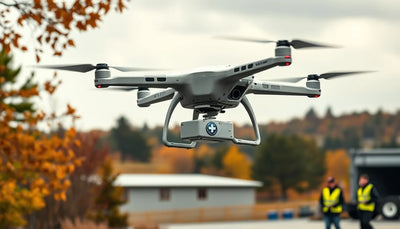
Federal and local officials in eastern Washington deployed a multi-agency counter-UAS task force after unauthorized drones forced a temporary grounding of firefighting aircraft. The incident shows how quickly recreational overflights can disrupt emergency operations and trigger enforcement action against pilots.

Quick answer
Unauthorized drone flights over wildfires in eastern Washington state temporarily grounded firefighting aircraft, prompting a multi-agency counter-UAS task force to detect the drones, locate the pilots, and work to keep firefighting operations airborne.
- Dozens of unauthorized drones were detected over Spokane-area wildfires
- Firefighting aircraft were temporarily grounded due to drone overflights
- FBI and local officials deployed a multi-agency counter-UAS task force
- Pilots were located by the task force during the response
Evidence: DRONELIFE · FAA UAS official guidance
Fleet readiness
Keep DJI hardware available without overbuying new units.
Use defense and fleet news as a planning signal for repair support, inspected pre-owned aircraft, and replacement timing.

A series of unauthorized drone flights over active wildfires in eastern Washington state forced a temporary grounding of firefighting aircraft and drew a coordinated counter-UAS response from federal and local agencies, according to reporting by DRONELIFE Features Editor Jim Magill. The incident, centered on wildfire zones near Spokane, highlights the operational risk that even a single recreational or commercial drone flight poses to aerial firefighting efforts and the growing enforcement posture around temporary flight restriction violations.
Federal Bureau of Investigation personnel and local officials described how a multi-agency task force detected dozens of unauthorized drones operating in the vicinity of the fires. The task force worked to locate the pilots responsible while maintaining airspace safety for firefighting aircraft. The temporary grounding of firefighting aircraft, even for a short window, can allow wildfire behavior to shift and complicate containment efforts, which is why agencies treat these overflights as an urgent public safety issue rather than a routine airspace violation.
The counter-UAS response in eastern Washington
According to the DRONELIFE report, the response involved a multi-agency task force that combined federal and local resources to detect unauthorized drone activity and identify the individuals operating those aircraft. The task force's stated goal was to keep firefighting aircraft flying while addressing the immediate airspace incursions. The detection of dozens of unauthorized drones suggests that the problem was not limited to a single isolated pilot but reflected a broader pattern of operators failing to recognize or respect active temporary flight restrictions.
For commercial operators and fleet managers, the response is a clear signal that enforcement around wildfire airspace is becoming more coordinated and more capable. Counter-UAS detection tools are no longer limited to military or high-security environments. Local agencies and federal partners are now deploying these systems in emergency response scenarios, which means the likelihood of being identified and located after an unauthorized flight is higher than many pilots assume. The practical takeaway is straightforward: a drone flight near a wildfire is not anonymous, and the consequences can extend well beyond a warning.
Why wildfire airspace violations carry outsized risk
The temporary grounding of firefighting aircraft is the most consequential outcome described in the source reporting. When firefighting aircraft cannot operate, water and retardant drops stop, aerial observation pauses, and ground crews lose a critical layer of support. Wildfires move quickly, and even a short grounding window can change the trajectory of a fire. This is why the Federal Aviation Administration and public safety agencies consistently emphasize that drone pilots must check temporary flight restrictions before flying anywhere near active fire operations.
From a market perspective, incidents like this reinforce the importance of airspace awareness tools and geofencing compliance for both consumer and enterprise drone platforms. Operators who fly in rural or semi-rural areas may assume that wildfire airspace restrictions do not apply to them, but temporary flight restrictions are dynamic and can be issued with little notice. A pre-flight check that was valid in the morning may be outdated by the afternoon. Fleet managers should treat airspace authorization as a live operational requirement, not a one-time checklist item.
What this means for drone owners and the market
The Spokane incident is a reminder that regulatory enforcement around drone operations is maturing alongside the technology itself. For individual drone owners, the risk of flying near emergency operations is no longer theoretical. Multi-agency task forces are actively detecting and locating pilots, and the consequences of interfering with firefighting operations can include civil penalties, criminal referral, and equipment seizure. The source reporting does not specify the penalties applied in this case, but the involvement of the FBI indicates that federal enforcement is on the table.
For buyers evaluating pre-owned DJI drones or building a fleet, the incident underscores the value of platforms with reliable geofencing and airspace awareness features. Operators who purchase used equipment should verify that firmware is current and that geofencing behavior is functioning as expected before flying in complex airspace. Repair customers should also be aware that a drone returned from service may have outdated firmware or reset settings, which can affect airspace compliance features. A quick review of the Drone Wiki can help operators understand what to check before returning a repaired or pre-owned aircraft to active duty. For owners evaluating service and lifecycle risk, Drone Wiki explains the relevant repair, parts, resale, or operational path.
The broader commercial drone market may see increased demand for airspace intelligence tools, remote identification compliance, and training programs that emphasize temporary flight restriction awareness. Enterprise fleet operators who contract for infrastructure inspection, agricultural survey, or public safety support should expect clients to ask more questions about airspace compliance protocols after high-profile incidents like this one. The reputational risk of being associated with a wildfire airspace violation can be as damaging as the regulatory risk.
Operator discipline and the path forward
The most actionable lesson from the Spokane overflights is that pre-flight airspace checks must become a non-negotiable habit. The FAA's temporary flight restriction system is publicly accessible, and many drone platforms integrate airspace data directly into their flight planning tools. Operators should check for temporary flight restrictions on the day of every flight, not just when flying near obvious emergency scenes. Wildfire smoke can be visible from miles away, and a fire that seems distant may still fall within a restricted airspace boundary.
For repair customers and second-hand buyers, the incident is also a reminder that compliance features are only as good as the firmware and settings that support them. A drone purchased from a private seller may have been modified, reset, or left with outdated software that affects geofencing behavior. Professional inspection and firmware verification should be part of any pre-owned purchase or post-repair workflow. The goal is not to discourage ownership but to ensure that every aircraft entering the airspace is configured for safe and lawful operation.
The Spokane wildfire overflights will likely prompt renewed discussion among regulators, public safety agencies, and industry groups about how to improve pilot education and enforcement. For now, the message to operators is clear: emergency airspace is not optional, detection is real, and the consequences of a bad decision can ripple far beyond a single flight.
FAQ
Frequently asked questions
What happened with drones over the Spokane wildfires?
According to DRONELIFE reporting, dozens of unauthorized drones were detected flying over wildfire zones in eastern Washington state, temporarily grounding firefighting aircraft and prompting a multi-agency counter-UAS task force response involving the FBI and local officials.
Can authorities actually find drone pilots who fly near wildfires?
Yes. The Spokane incident involved a multi-agency task force that detected unauthorized drones and worked to locate the pilots responsible. Counter-UAS detection tools are increasingly available to federal and local agencies, making it more likely that unauthorized pilots will be identified.
What should drone operators do before flying near wildfire areas?
Operators should check temporary flight restrictions on the day of every flight, verify that their drone's firmware and geofencing features are current, and avoid flying anywhere near active fire operations or firefighting aircraft. A pre-flight airspace check should be treated as a mandatory step, not an optional precaution.
Which sources support this update?
The visible evidence links identify DRONELIFE and FAA UAS official guidance; each source is used only for the claim it directly supports.
What remains subject to change?
Retail pricing, availability, product bundles and regulatory timelines can change. Readers should verify the latest terms with the named retailer, manufacturer or regulator before acting.
How should buyers or operators use this analysis?
Use the verified facts as a starting point, then compare mission fit, lifecycle support, maintenance needs and current procurement terms before making a purchase or fleet decision.
Sources consulted
- DRONELIFE - primary source
- FAA UAS official guidance - official regulator source
Reboot Hub Editorial adds buyer, repair, resale, and operational analysis for drone owners. If you spot an error, contact us for correction review through our editorial policy.