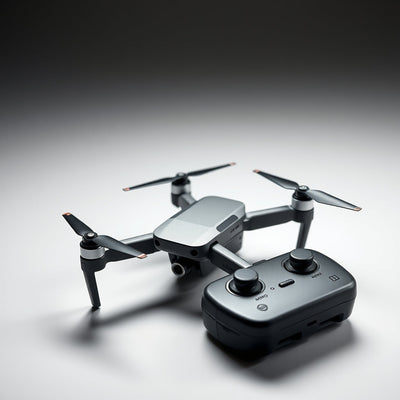
UHT Unmanned Technology Outlines Three-Pronged Drone Strategy
UHT Unmanned Technology has unveiled a three-pronged drone strategy built around a mission ecosystem targeting defense and commercial opportunities. The announcement signals how platform developers are positioning for procurement cycles, service contracts, and long-term support demand.

Quick answer
UHT Unmanned Technology announced a three-pronged drone strategy built around a mission ecosystem to target defense and commercial opportunities, according to a report carried by Google News.
- The strategy is structured around three distinct pillars, though the source summary does not specify their exact names or technical details.
- The company is positioning its platform for both defense procurement and commercial applications.
- The announcement reflects a broader industry pattern of vendors building integrated mission ecosystems rather than standalone aircraft.
- Reboot Hub analysis: ecosystem-based vendor strategies can influence long-term parts availability, service networks, and pre-owned market stability.
Evidence: Defense.gov official source
Fleet readiness
Keep DJI hardware available without overbuying new units.
Use defense and fleet news as a planning signal for repair support, inspected pre-owned aircraft, and replacement timing.

UHT Unmanned Technology has introduced a three-pronged drone strategy centered on building a mission ecosystem, with the company explicitly targeting both defense and commercial opportunities, according to a report carried by Google News. The announcement, summarized in a finance and market news feed, positions the company alongside a growing group of platform developers that are moving beyond single-aircraft sales toward integrated operational systems.
The report does not specify the technical makeup of the three strategic pillars, nor does it detail specific airframes, payloads, or contract values. What is clear is the direction: UHT Unmanned Technology is signaling that its future growth will depend on linking hardware, mission software, and support infrastructure into a broader ecosystem. That framing matters for commercial operators, fleet buyers, and repair customers because ecosystem strategies tend to shape how vendors approach parts, service, training, and upgrade cycles over time.
Reading the strategy through a procurement lens
The central reported development is that UHT Unmanned Technology has structured its drone business around three strategic pillars and is using that structure to pursue defense and commercial opportunities. The source summary from Google News does not identify the pillars by name, but the phrase "mission ecosystem" suggests an effort to combine aircraft platforms with mission-specific software, data handling, and operational support. This is a familiar pattern in defense robotics and enterprise drone markets, where buyers increasingly evaluate total cost of ownership rather than airframe price alone.
For procurement teams, the implication is straightforward. When a vendor builds a mission ecosystem, the purchasing decision becomes less about a single drone model and more about compatibility with a broader operational stack. That can create switching costs, but it can also improve support consistency if the vendor maintains a stable service network. Reboot Hub analysis suggests that operators evaluating UHT Unmanned Technology or similar ecosystem-based vendors should ask early questions about parts availability, repair turnaround, and whether the ecosystem locks them into proprietary components.
Defense and commercial overlap in the drone market
UHT Unmanned Technology is not the first company to pursue defense and commercial demand through a single platform strategy. The source report indicates that the company sees both markets as addressable through its mission ecosystem approach. Defense buyers typically prioritize reliability, security, and supply chain traceability, while commercial operators focus on cost, training burden, and maintenance predictability. A vendor attempting to serve both must balance those requirements carefully.
The practical consequence for commercial drone buyers is that platforms developed with defense influence may carry different maintenance expectations than consumer or prosumer aircraft. Components may be more modular, service documentation may be more rigorous, and repair channels may be more structured. At the same time, defense-oriented supply chains can sometimes be less transparent for civilian buyers, particularly when export controls or restricted parts are involved. Operators should monitor whether UHT Unmanned Technology clarifies its commercial support path separately from its defense pipeline.
What this means for drone owners and the market
Reboot Hub analysis: The UHT Unmanned Technology announcement is a market signal more than a product launch. It tells fleet managers and procurement officers that ecosystem-based vendor strategies are becoming the norm in the defense-adjacent commercial drone space. For owners of existing aircraft, the relevant question is whether their current vendor is investing in a similar support structure or leaving service and parts as an afterthought. A vendor that commits to a mission ecosystem is more likely to maintain long-term parts inventory and service documentation, which directly affects resale value and repair feasibility. For owners evaluating service and lifecycle risk, Drone Wiki explains the relevant repair, parts, resale, or operational path.
For pre-owned DJI drone buyers and operators managing mixed fleets, the announcement is a reminder that the broader drone market is splitting into two service models: consumer-grade platforms with fast product cycles and enterprise or defense-oriented platforms with longer support horizons. Pre-owned DJI drones remain attractive because of their large installed base and accessible parts channels, while newer ecosystem-based platforms may take years to develop comparable secondary market liquidity. Buyers who need predictable repair costs should consider whether a platform has a mature service ecosystem before committing to a fleet purchase. For readers tracking repair and parts availability across drone models, the Drone Wiki provides a useful reference point for understanding how different platforms and support models compare.
The market implication is also financial. Vendors that successfully build mission ecosystems tend to generate recurring revenue from software, training, and service contracts rather than one-time hardware sales. That can stabilize the vendor and improve long-term support, but it can also raise operating costs for buyers who are locked into subscription-based tools. Commercial operators should model those recurring costs before assuming that a lower upfront airframe price equals a lower total cost of ownership.
What operators should watch next
The source report leaves several important questions unanswered. It does not specify which geographic markets UHT Unmanned Technology is prioritizing, whether the three-pronged strategy includes a specific aircraft family, or how the company plans to structure its commercial service network. Those details will determine whether the announcement translates into practical options for civilian operators or remains primarily a defense positioning statement.
Fleet managers and repair customers should watch for follow-on announcements that clarify parts availability, authorized service channels, and whether the mission ecosystem includes third-party maintenance options. In the drone industry, a vendor's service strategy often matters more than its airframe specifications because downtime costs can exceed hardware costs over a multi-year fleet lifecycle. Reboot Hub analysis suggests that the most useful signal will be whether UHT Unmanned Technology publishes concrete support commitments rather than broad ecosystem language.
FAQ
Frequently asked questions
What did UHT Unmanned Technology announce?
UHT Unmanned Technology unveiled a three-pronged drone strategy built around a mission ecosystem, targeting defense and commercial opportunities, according to a report carried by Google News.
Does the announcement include specific drone models or technical details?
No. The source summary does not specify airframe names, payloads, performance figures, or contract values. The announcement is strategic in nature rather than a product launch.
How should commercial drone buyers respond to ecosystem-based vendor strategies?
Buyers should evaluate total cost of ownership, parts availability, repair channels, and whether the ecosystem locks them into proprietary components before committing to a fleet purchase.
Which sources support this update?
The visible evidence links identify Defense.gov official source; each source is used only for the claim it directly supports.
What remains subject to change?
Retail pricing, availability, product bundles and regulatory timelines can change. Readers should verify the latest terms with the named retailer, manufacturer or regulator before acting.
How should buyers or operators use this analysis?
Use the verified facts as a starting point, then compare mission fit, lifecycle support, maintenance needs and current procurement terms before making a purchase or fleet decision.
Sources consulted
Additional official documentation was not available at publication time.
Reboot Hub Editorial adds buyer, repair, resale, and operational analysis for drone owners. If you spot an error, contact us for correction review through our editorial policy.