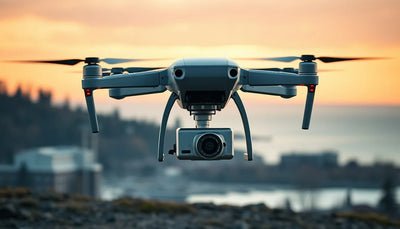
Twelve drone start-ups secure funding as investors chase DJI rivals
A new wave of investment has landed across twelve drone start-ups, signaling that capital is actively hunting for alternatives to DJI. For commercial operators and buyers, the funding shift could reshape pricing, service networks, and the pre-owned equipment market over the next few quarters.

Quick answer
Twelve drone start-ups received investment as capital increasingly chases alternatives to DJI, according to a report from Beluga Whale Out to Sea.
- The report names twelve start-ups that secured funding in the latest cycle.
- Investor interest is framed as a search for credible DJI alternatives.
- The development may influence hardware pricing and service competition.
- Commercial operators should monitor how new entrants affect parts and support ecosystems.
Evidence: DIU Blue UAS
Purchase timing
Use market shifts to buy, sell, repair, or wait with more context.
Compare trade-in timing, pre-owned DJI pricing, and repair economics before committing new capital.

A fresh funding cycle has put twelve drone start-ups in front of investors, according to a report from Beluga Whale Out to Sea, a China-based industry source. The reporting frames the activity as a direct response to DJI's dominance, with capital moving toward companies that could eventually challenge the market leader in commercial and enterprise segments. While the report does not disclose individual round sizes, valuations, or investor names, the headline signal is clear: money is actively searching for credible alternatives to the world's largest consumer and commercial drone maker.
For fleet operators, repair customers, and buyers tracking the pre-owned DJI market, this is more than a venture capital headline. The flow of capital into competing hardware and service platforms can gradually shift how the broader ecosystem prices spare parts, supports legacy aircraft, and positions second-hand equipment. Reboot Hub analysis suggests that while DJI's installed base remains the practical default for many commercial teams, a better-funded field of challengers could change procurement assumptions over the next two to three years.
What the funding wave signals about the competitive landscape
The Beluga Whale Out to Sea report identifies twelve start-ups as recipients of investment, but it does not provide a detailed breakdown of their product categories, target markets, or geographic footprints. That lack of granularity is itself a useful data point. Investors often move into a sector in clusters when they believe the incumbent's market share creates room for specialized challengers, particularly in enterprise inspection, agriculture, logistics, and public safety workflows.
For commercial buyers, the practical question is whether any of these newly funded companies can build the service infrastructure that DJI operators already take for granted. A drone is only as useful as its repair network, parts availability, firmware support, and resale liquidity. Start-ups can win pilot projects with aggressive pricing, but long-term fleet decisions depend on whether a manufacturer can keep aircraft flying through multiple maintenance cycles. That is why the pre-owned DJI market remains relevant even as investors fund rivals: operators still need predictable access to genuine OEM spare parts and professional repair capacity for the aircraft they already own.
Why capital is chasing DJI alternatives now
The report frames the investment activity as capital "rushing" toward the DJI ecosystem's edges, a phrase that reflects both opportunity and frustration. DJI's product cadence, vertical integration, and pricing power leave limited room for new entrants to compete on identical hardware. Investors appear to be betting on companies that attack adjacent problems: regulatory compliance tools, specialized payloads, autonomous inspection software, or regional service models that DJI does not prioritize.
That strategy has implications for operators who run mixed fleets. If start-ups focus on software and services rather than airframes, the hardware layer may remain DJI-heavy even as the operational layer diversifies. A fleet manager could adopt a new inspection platform from a funded start-up while still relying on DJI aircraft underneath. In that scenario, the demand for inspected pre-owned DJI drones and OEM-pulled parts would stay strong, because the underlying airframes would still need to be maintained, repaired, and eventually replaced.
What this means for drone owners and the market
The most immediate consequence for drone owners is uncertainty about where to place long-term bets. A surge in start-up funding does not immediately change which aircraft are available, which parts are in stock, or which repair shops have the expertise to service a given model. But it does suggest that the competitive map will look different in the medium term. Buyers who are evaluating new hardware should ask harder questions about a manufacturer's service network, parts pipeline, and resale path before committing to a platform that may not survive its next funding round. For owners evaluating service and lifecycle risk, Drone Wiki explains the relevant repair, parts, resale, or operational path.
For operators holding DJI equipment, the calculus is more stable. The installed base is large, the secondary market is active, and professional repair channels are established. As new entrants absorb investor capital and attempt to scale, the practical value of a well-maintained DJI aircraft may actually hold steady, because it remains the safest default for teams that cannot afford downtime. Readers who want to understand how repair, parts sourcing, and pre-owned buying decisions fit together can review the Drone Wiki for plain-language guidance on maintaining DJI hardware through changing market conditions.
One operator-facing takeaway is to avoid overreacting to funding headlines. A start-up raising capital is not the same as a start-up shipping reliable hardware, stocking parts, or honoring warranty claims. Fleet managers should continue to prioritize aircraft with proven service histories and accessible repair paths. If a new entrant gains traction, the transition should be gradual and tested on a small subset of the fleet before any broader commitment.
The pre-owned DJI market under a more competitive future
Reboot Hub analysis: If the funded start-ups succeed, the most visible change could appear in pricing pressure on new hardware. Competition tends to compress margins on mid-range commercial platforms, which in turn affects how buyers value used equipment. A lower-priced new drone from a credible challenger can pull down the resale value of comparable pre-owned DJI models, at least in segments where specifications overlap closely.
Reboot Hub analysis: However, resale value is not driven by hardware specs alone. It also depends on parts availability, repair documentation, insurance acceptance, and the confidence that a buyer can keep the aircraft operational for years. DJI's mature ecosystem provides that confidence. New entrants will need to build equivalent support infrastructure before they can meaningfully disrupt the pre-owned market. Until then, pristine pre-owned DJI drones and genuine OEM spare parts are likely to remain the most liquid assets in the commercial secondary market.
The Beluga Whale Out to Sea report does not provide enough detail to predict which of the twelve start-ups will survive, pivot, or consolidate. But the direction of capital is itself a market signal. When investors fund a dozen companies in a single cycle, they are signaling that they expect the drone market to support more than one dominant hardware brand. For commercial operators, that is a reason to stay informed, not a reason to abandon proven equipment.
FAQ
Frequently asked questions
What exactly did the source report say?
The source, Beluga Whale Out to Sea, reported that twelve drone start-ups received investment and that capital is increasingly pursuing alternatives to DJI. The report did not disclose specific funding amounts, investor identities, or detailed product information for the start-ups.
Should commercial operators switch away from DJI because of this funding news?
Not immediately. Funding announcements do not guarantee that a start-up will ship reliable hardware, build a repair network, or maintain parts availability. Operators should continue to prioritize aircraft with proven service histories and only test new platforms on a limited basis before committing fleet-wide.
How could this affect pre-owned DJI drone values?
If funded challengers eventually launch competitive hardware at lower prices, resale values for comparable pre-owned DJI models could face pressure in overlapping segments. However, DJI's mature parts, repair, and resale ecosystem may continue to support stronger liquidity than newer platforms with less established service infrastructure.
Which sources support this update?
The visible evidence links identify DIU Blue UAS; each source is used only for the claim it directly supports.
What remains subject to change?
Retail pricing, availability, product bundles and regulatory timelines can change. Readers should verify the latest terms with the named retailer, manufacturer or regulator before acting.
How should buyers or operators use this analysis?
Use the verified facts as a starting point, then compare mission fit, lifecycle support, maintenance needs and current procurement terms before making a purchase or fleet decision.
Sources consulted
Additional official documentation was not available at publication time.
Reboot Hub Editorial adds buyer, repair, resale, and operational analysis for drone owners. If you spot an error, contact us for correction review through our editorial policy.
This article is market commentary for drone operators and buyers, not investment advice. Reboot Hub does not provide financial advice or recommend securities transactions.