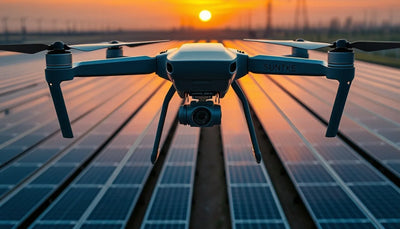
Tulsa Positions Itself as a Global Drone Industry Hub
Tulsa is making a coordinated push to become a recognized global drone industry center, according to a new Dronelife report. The development signals fresh regional competition for commercial UAV investment, testing infrastructure, and operator talent that could reshape fleet planning and service demand.

Quick answer
Tulsa is publicly positioning itself as a future global drone industry hub, according to a Dronelife report, signaling a new regional push for commercial UAV investment and infrastructure.
- Tulsa is actively courting drone industry investment and recognition
- The city aims to become a major commercial UAV testing and operations center
- Regional competition for drone talent and infrastructure is increasing
- Fleet operators may see new service and testing opportunities in the Tulsa area
Evidence: FAA UAS official guidance
Market context
Turn market news into a buy, repair, or trade-in decision.
Compare pre-owned availability, resale timing, and repair economics before the market moves again.

According to a recent Dronelife report, Tulsa, Oklahoma is making a deliberate and public push to position itself as what the city hopes will become "the drone capital of the world." The announcement, covered by Dronelife as part of its ongoing industry coverage, frames Tulsa's ambition as a long-term economic development strategy rather than a single event or ribbon-cutting. For commercial UAV operators, fleet managers, and drone service providers, the development matters because it signals where regional infrastructure, testing access, and industry talent may concentrate in the coming years.
The Dronelife report is the primary source for this development, and it describes Tulsa's positioning as an aspirational target backed by local economic development interests. While the source does not detail specific funding amounts, regulatory approvals, or corporate commitments, the very existence of a coordinated municipal branding effort around commercial drones is itself a market signal. Cities do not typically pursue "drone capital" status without believing that UAV-related investment, jobs, and testing activity can produce measurable economic returns.
Why Tulsa is making this move now
The Dronelife report frames Tulsa's ambition within a broader pattern of mid-sized American cities competing for emerging technology sectors. Commercial drone activity has matured beyond hobbyist use, and municipalities now see UAV testing corridors, inspection services, logistics pilots, and public safety programs as economic development assets. Tulsa's geographic position, airspace characteristics, and existing industrial base are the kinds of factors that economic development officials typically highlight when courting drone companies, though the Dronelife report does not provide a detailed breakdown of these advantages.
For operators and buyers, the timing is notable. The commercial UAV market has been consolidating around a smaller number of serious enterprise platforms, and regional testing infrastructure is becoming a differentiator. A city that can offer predictable airspace access, streamlined permitting, and a willing local customer base for inspection, mapping, and delivery services becomes more attractive to drone service companies deciding where to base operations. Reboot Hub analysis suggests that regional hub announcements like Tulsa's can influence where independent operators choose to register businesses, hire pilots, and invest in equipment.
What this means for drone owners and the market
The practical implication for commercial drone owners is that regional infrastructure competition can lower operating friction. Cities competing for drone business often invest in designated testing areas, public-private partnerships, and workforce training programs that benefit local operators. If Tulsa follows through on its stated ambition, pilots and service providers in the region could see improved access to controlled testing environments and a denser network of potential enterprise clients. The Dronelife report does not confirm specific infrastructure commitments, so operators should treat the announcement as directional rather than operational.
For fleet managers and buyers evaluating where to expand or relocate operations, the Tulsa development is a reminder that municipal support for commercial UAV activity is uneven across the United States. A city actively courting drone companies may offer faster permitting, more receptive local agencies, and a growing pool of trained pilots. That can reduce downtime and administrative overhead compared with operating in jurisdictions that treat commercial drones with caution. Buyers considering pre-owned DJI platforms for inspection or mapping work may find that regional demand patterns shift as hubs like Tulsa attract service contracts, which can affect resale values and parts availability in those markets. Reboot Hub's Drone Wiki provides additional context on platform selection and maintenance considerations for operators evaluating regional expansion. For owners evaluating service and lifecycle risk, Drone Wiki explains the relevant repair, parts, resale, or operational path.
Regional competition and the broader commercial UAV landscape
Tulsa is not operating in a vacuum. Multiple regions across the United States and internationally have made similar claims about becoming drone industry centers, and the Dronelife report presents Tulsa's effort as part of that competitive landscape. The commercial UAV sector has seen significant investment in drone delivery trials, infrastructure inspection programs, and agricultural applications, and cities that can attract a share of that activity stand to benefit from job creation and technology sector growth. For operators, this competition can create a buyer's market for municipal support and incentives.
The source does not identify specific companies that have committed to Tulsa operations, nor does it detail regulatory milestones or funding figures. That absence of concrete commitments is worth noting. Municipal branding campaigns sometimes outpace actual infrastructure investment, and operators should evaluate any regional hub claim based on observable factors: active testing sites, published permitting processes, local enterprise adoption, and the presence of established drone service companies. The Dronelife report provides a useful signal of intent, but commercial decision-making should rely on verifiable local conditions.
What operators should watch next
The most useful next step for drone buyers, pilots, and fleet managers is to monitor whether Tulsa's ambition translates into concrete programs. Specific indicators include the announcement of designated drone testing corridors, partnerships with UAV manufacturers or service providers, workforce development initiatives tied to Part 107 training, and local government procurement of drone services. Any of these would represent a meaningful step beyond branding and toward operational reality.
For repair and maintenance planning, regional hub development can affect parts availability and service turnaround times. If Tulsa attracts a concentration of commercial operators, the local market for OEM spare parts, battery replacement, and professional DJI repair services could deepen. That would benefit operators in the region by reducing shipping times and downtime for critical platforms. The Dronelife report does not address these downstream effects, but they follow logically from any successful regional clustering of commercial UAV activity.
Operators outside Oklahoma should also pay attention. If Tulsa's model proves successful, other mid-sized cities may accelerate their own drone industry recruitment efforts, expanding the map of viable operating locations. That could influence where fleet managers choose to base aircraft, where repair and maintenance vendors establish facilities, and where pre-owned DJI inventory flows to meet demand. The commercial UAV market remains young enough that regional policy decisions can still meaningfully shape operator economics.
FAQ
Frequently asked questions
What did Tulsa announce about becoming a drone hub?
According to a Dronelife report, Tulsa is publicly positioning itself to become a recognized global drone industry center. The report frames the effort as an economic development strategy, though it does not detail specific funding, regulatory approvals, or corporate commitments.
How could Tulsa's drone hub ambition affect commercial operators?
If Tulsa follows through with testing infrastructure, streamlined permitting, and workforce programs, local operators could benefit from lower operating friction and a denser client network. Operators should monitor whether the branding effort translates into concrete programs before making location decisions.
Should drone buyers or fleet managers change anything now?
No immediate operational change is warranted based on the Dronelife report alone. Fleet managers and buyers should track Tulsa for signs of concrete infrastructure investment, enterprise adoption, and service provider concentration, then evaluate regional opportunities as verifiable details emerge.
Which sources support this update?
The visible evidence links identify FAA UAS official guidance; each source is used only for the claim it directly supports.
What remains subject to change?
Retail pricing, availability, product bundles and regulatory timelines can change. Readers should verify the latest terms with the named retailer, manufacturer or regulator before acting.
How should buyers or operators use this analysis?
Use the verified facts as a starting point, then compare mission fit, lifecycle support, maintenance needs and current procurement terms before making a purchase or fleet decision.
Sources consulted
- FAA UAS official guidance - official regulator source
Additional official documentation was not available at publication time.
Reboot Hub Editorial adds buyer, repair, resale, and operational analysis for drone owners. If you spot an error, contact us for correction review through our editorial policy.