Survey Shows Construction Fleets Still Run Almost Entirely on DJI
A new DRONELIFE survey shows nearly all drone-using construction respondents rely primarily on DJI platforms. As U.S. policy tightens around foreign manufacturers, operators face rising costs, supply uncertainty, and harder fleet planning decisions.

Quick answer
A DRONELIFE survey found that nearly all drone-using construction industry respondents rely primarily on DJI platforms, highlighting how difficult a shift to alternative manufacturers would be.
- The survey was reported by DRONELIFE Features Editor Jim Magil on August 24, 2026.
- Nearly all drone-using construction respondents said they rely primarily on DJI.
- U.S. government pressure on foreign drone manufacturers is expected to raise costs for construction drone users.
- The finding underscores limited near-term alternatives for commercial construction fleets.
Evidence: DRONELIFE
DJI buying context
Match product news to hardware you can actually deploy.
Check inspected DJI aircraft, repair support, and trade-in timing before deciding whether to upgrade, repair, or wait.

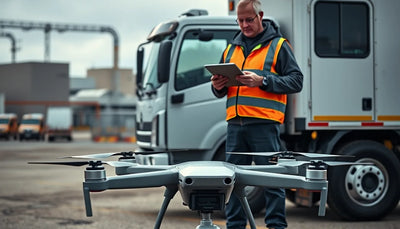
Construction drone operations in the United States remain overwhelmingly dependent on DJI hardware, according to a new survey reported by DRONELIFE Features Editor Jim Magil. The finding lands at a difficult moment for commercial operators, as federal policy continues to tighten around foreign drone manufacturers and the supply chain that supports them.
The survey, published by DRONELIFE on August 24, 2026, found that nearly all drone-using respondents in the construction industry rely primarily on DJI platforms. That concentration is not a surprise to anyone working on active job sites, but it does sharpen the commercial question facing fleet managers: what happens when policy pressure, import restrictions, or parts availability make the default platform harder to sustain?
What the survey actually shows
According to the DRONELIFE report, the survey data points to a construction sector that has built its aerial workflows around a single manufacturer. Nearly all respondents who use drones said DJI is their primary platform. That includes the everyday mapping, progress documentation, and site inspection work that has become standard on larger commercial projects.
The practical implication is straightforward. Construction firms have invested in pilot training, flight workflows, data pipelines, and spare battery inventories around one ecosystem. A forced shift to alternative platforms would not be a simple hardware swap. It would touch procurement budgets, repair relationships, insurance documentation, and the institutional knowledge of the crews flying the equipment.
Reboot Hub analysis: the survey does not provide a detailed breakdown of specific DJI models in use, so any claims about which airframes dominate construction fleets would be speculative. What the data does support is the concentration risk itself. When an entire industry segment leans on one supplier, even modest policy changes can produce outsized operational consequences.
Why policy pressure changes the cost picture
Reboot Hub analysis: The DRONELIFE report frames the survey against a backdrop of U.S. government action aimed at foreign drone manufacturers. While the source does not enumerate specific new penalties, bans, or enforcement dates, it does state clearly that the squeeze on foreign manufacturers is likely to significantly increase costs for drone users in the construction industry.
For commercial operators, that cost pressure tends to show up in predictable places. Replacement airframes become harder to source. Genuine OEM spare parts take longer to arrive. Repair turnaround times stretch. Insurance carriers ask more questions about fleet continuity. Procurement teams start weighing whether to stockpile batteries, propellers, and gimbal components before prices move again.
The survey does not claim that construction firms are abandoning drones. The opposite is more likely. Drones have become embedded in construction project management, and firms will absorb higher operating costs before they give up the efficiency gains. The question is how those higher costs get distributed across the fleet, the parts shelf, and the repair budget.
What this means for drone owners and the market
For individual drone owners and smaller construction contractors, the survey reinforces a practical reality: the DJI ecosystem remains the default because alternatives have not yet matched the combination of reliability, camera quality, and workflow integration that commercial users expect. That does not make the platform immune to policy risk. It means operators should think about their equipment strategy in terms of continuity rather than replacement.
A buyer or fleet manager reading this survey should consider whether their current inventory of airframes, batteries, and spare parts is sufficient to ride out a supply disruption. That is not a call to panic. It is a reminder that the pre-owned DJI market and genuine OEM spare parts channels become more strategically important when new-unit availability is uncertain. Operators who maintain a working spare airframe and a small stock of high-wear components are better positioned than those running a single unit with no backup. For those evaluating options, the Drone Wiki offers a practical reference point for understanding platform continuity and repair considerations. For owners evaluating service and lifecycle risk, Drone Wiki explains the relevant repair, parts, resale, or operational path.
Reboot Hub analysis: The pre-owned DJI market is likely to feel this dynamic in two ways. First, demand for inspected pre-owned units may rise as operators look for cost-effective backup airframes without waiting on new inventory. Second, the value of well-maintained existing fleets becomes clearer, since a working DJI platform in hand is worth more when replacement timelines are uncertain. None of this is stated in the survey, but it follows directly from the cost and supply pressure the report describes.
The longer-term fleet planning question
The survey does not suggest that construction firms are actively migrating to alternative drone platforms. It suggests the opposite: the industry is deeply embedded with DJI, and the challenge of shifting is real. That has consequences for how fleet managers think about the next 12 to 24 months.
Reboot Hub analysis: One reasonable response is to formalize the fleet continuity plan. That means documenting which airframes are mission-critical, which repairs can be handled in-house, and which components are most likely to fail under daily construction site use. It also means understanding where genuine OEM spare parts can be sourced reliably, since third-party components can introduce their own reliability and warranty complications.
For repair customers, the survey is a reminder that professional DJI repair capacity is not a luxury. When a primary airframe goes down and replacements are not immediately available, the speed and quality of repair work determines whether a project schedule slips. Operators who have already identified a repair path before a failure occurs are in a much stronger position than those scrambling after a crash.
The construction industry's dependence on DJI is not new. What is new is the growing recognition that this dependence carries a cost when policy and supply conditions shift. The DRONELIFE survey gives that recognition a concrete data point, and it gives commercial operators a reason to treat fleet continuity as a core planning function rather than an afterthought.
FAQ
Frequently asked questions
Does the survey name specific DJI models used in construction?
No. The DRONELIFE report describes the overall dependence on DJI as a primary platform but does not provide a model-by-model breakdown in the source data available for this analysis.
What should a construction drone operator do after reading this survey?
Review current fleet continuity. Confirm that spare airframes, batteries, and high-wear components are adequate, and identify a professional repair path before a failure occurs. A working backup unit reduces schedule risk when replacement timelines are uncertain.
Why does the pre-owned DJI market matter in this context?
When new-unit availability is uncertain or costs rise, inspected pre-owned DJI units become a practical way to add backup capacity without waiting on new inventory. Well-maintained existing fleets also hold value more clearly under supply pressure.
Which sources support this update?
The visible evidence links identify DRONELIFE; each source is used only for the claim it directly supports.
What remains subject to change?
Retail pricing, availability, product bundles and regulatory timelines can change. Readers should verify the latest terms with the named retailer, manufacturer or regulator before acting.
How should buyers or operators use this analysis?
Use the verified facts as a starting point, then compare mission fit, lifecycle support, maintenance needs and current procurement terms before making a purchase or fleet decision.
Sources consulted
- DRONELIFE - primary source
Additional official documentation was not available at publication time.
Reboot Hub Editorial adds buyer, repair, resale, and operational analysis for drone owners. If you spot an error, contact us for correction review through our editorial policy.