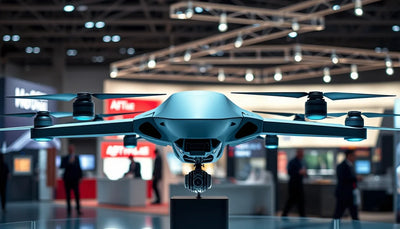
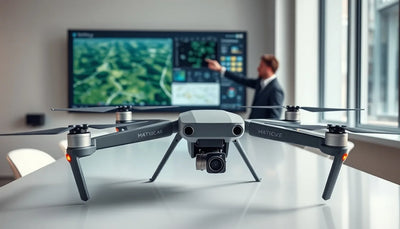
SmallRig Builds First Aerospace "Image Box" for DJI Innovations
SmallRig has reportedly delivered the first aerospace "image box" customized for DJI Innovations. The development signals a new tier of protective imaging hardware aimed at commercial drone operators, fleet buyers, and repair-focused owners evaluating long-term equipment durability and transport safety.

Quick answer
SmallRig has reportedly customized the first aerospace 'image box' as an exclusive imaging 'space suit' for DJI Innovations, according to Yibang Power Network.
- SmallRig is named as the developer of the aerospace image box
- The product is described as exclusive imaging protection for DJI Innovations
- The report frames it as the first aerospace-grade imaging enclosure
- Source coverage is limited to Yibang Power Network reporting
The commercial drone accessory market has taken a notable step toward aerospace-grade protection. According to reporting from Yibang Power Network, SmallRig has delivered what it describes as the first aerospace "image box," customized as an exclusive imaging "space suit" for DJI Innovations. The announcement, as covered by the Chinese power industry outlet, positions the development as a specialized protective solution rather than a standard consumer case.
DJI buying context
Match product news to hardware you can actually deploy.
Check inspected DJI aircraft, repair support, and trade-in timing before deciding whether to upgrade, repair, or wait.

For commercial drone buyers, fleet operators, and repair customers, the report matters less for its product naming and more for what it signals about the direction of premium DJI accessory engineering. Protective enclosures for imaging payloads, sensors, and aircraft bodies have traditionally been treated as aftermarket commodities. A dedicated aerospace-positioned enclosure from a recognized imaging accessory maker suggests that transport protection is now being treated as a first-tier hardware category.
The source report is limited in operational detail. Yibang Power Network does not provide technical specifications, compatibility lists, pricing, release timing, or distribution channels in the material reviewed for this analysis. Reboot Hub has not independently verified the product's materials, certification status, or availability. Readers should treat the development as an early signal rather than a confirmed commercial release with defined market terms.
What the source actually reports
Yibang Power Network frames the SmallRig development as a milestone for aerospace imaging protection. The outlet describes the product as an exclusive customization for DJI Innovations, using the "space suit" analogy to emphasize enclosure-grade protection rather than cosmetic branding. SmallRig is identified as the developer behind the image box, positioning the company's accessory expertise within a more demanding aerospace context.
The practical implication for operators is straightforward: premium protective hardware is becoming a differentiated product category. Fleet managers who currently rely on generic foam cases or soft bags may soon face a clearer choice between commodity transport solutions and purpose-built enclosures marketed around aerospace positioning. Even without confirmed specifications, the existence of such a product category matters for procurement planning.
Reboot Hub analysis suggests the development should be watched by anyone managing high-value DJI imaging payloads, including thermal sensors, multispectral cameras, and cinema-grade gimbals. If SmallRig's aerospace positioning translates into measurable improvements in shock isolation, environmental sealing, or long-term storage stability, the value proposition for commercial operators would extend beyond simple transport convenience.
Why protective hardware is a repair and resale issue
Protective enclosures are not merely accessories. They directly influence repair frequency, component longevity, and resale value. Drones that travel in fitted, high-tolerance cases tend to experience fewer impact-related failures, less connector wear, and reduced contamination from dust or moisture. For operators who cycle equipment through demanding field environments, the quality of transport protection can be the difference between scheduled maintenance and unplanned downtime.
In the pre-owned DJI market, documented transport and storage practices increasingly matter to informed buyers. A drone that has spent its service life in a purpose-built enclosure often presents with cleaner gimbal assemblies, fewer micro-abrasions on sensor housings, and more stable battery contacts. Sellers who can demonstrate disciplined protective storage may command stronger pricing than those offering equipment with visible handling wear.
Repair customers should also pay attention. Many gimbal and camera module failures originate from transport vibration rather than flight incidents. If aerospace-positioned enclosures become more common in commercial fleets, repair shops may see a shift in failure patterns, with fewer impact-related imaging faults and a greater share of routine wear items. That shift would affect parts demand, diagnostic workflows, and service pricing over time. For owners evaluating service and lifecycle risk, Drone Wiki explains the relevant repair, parts, resale, or operational path.
What this means for drone owners and the market
The SmallRig report suggests that accessory makers are now competing on protection engineering, not just fit and finish. For individual drone owners, the practical takeaway is to evaluate transport cases with the same scrutiny applied to batteries, propellers, and firmware. A case that fits is not necessarily a case that protects. Operators should ask whether their current enclosure provides meaningful shock isolation, secure gimbal immobilization, and resistance to environmental ingress.
For fleet managers, the development reinforces the value of standardizing protective equipment across aircraft and payload types. Mixed fleets with inconsistent case quality often show uneven wear patterns, complicating maintenance scheduling and resale planning. As purpose-built options like the reported SmallRig image box enter the conversation, operators can consult resources such as the Drone Wiki to compare maintenance and ownership considerations before committing to new protective hardware.
The pre-owned DJI market may also feel the effect over a longer horizon. Equipment that has been consistently stored and transported in high-grade enclosures tends to retain better cosmetic and functional condition. Buyers evaluating inspected pre-owned DJI drones should consider asking sellers about storage and transport history, not just flight hours and battery cycles. Protective hardware choices are becoming a visible marker of how seriously an operator managed the asset.
Reboot Hub analysis cautions against overreading the current report. The source does not confirm pricing, availability, or performance data. The "aerospace" label may reflect marketing positioning as much as engineering substance. Until independent testing or official specifications emerge, operators should treat the SmallRig image box as an early indicator of accessory market direction rather than a proven procurement target.
What operators should watch next
Several commercial questions remain open. First, will SmallRig or DJI publish compatibility details for specific aircraft and payload configurations? Second, will the enclosure carry any recognized certification or testing standard that supports the aerospace positioning? Third, will pricing align with premium protective cases already used in cinema and industrial imaging markets?
Fleet buyers should monitor accessory announcements from established imaging hardware makers, especially those with existing DJI ecosystem experience. If aerospace-positioned protection becomes a repeatable product category rather than a one-off marketing moment, procurement teams may need to update their accessory standards and vendor lists. Repair operators should watch for shifts in failure patterns as better enclosures reach field use.
For now, the responsible operator response is measured. Review current transport and storage practices. Identify high-value imaging payloads that would benefit from improved protection. Track SmallRig and DJI channels for specification releases. And when evaluating pre-owned equipment, treat protective history as a legitimate part of the asset's condition story.
FAQ
Frequently asked questions
What is the SmallRig aerospace image box for DJI?
According to Yibang Power Network, SmallRig has developed the first aerospace "image box" as an exclusive imaging "space suit" customized for DJI Innovations. The report describes it as a protective enclosure positioned for aerospace-grade imaging hardware.
Has SmallRig confirmed pricing or availability for the image box?
No. The source report reviewed for this analysis does not provide pricing, release timing, compatibility details, or distribution information. Operators should treat the development as an early signal until official specifications are published.
Should drone owners change their protective cases based on this report?
Not immediately. The report does not include verified performance data. However, operators can use the news as a prompt to review whether current cases provide adequate shock isolation, gimbal immobilization, and environmental protection for high-value imaging payloads.
Which sources support this update?
The article distinguishes reported information from analysis and does not present an unverified source as official confirmation.
What remains subject to change?
Retail pricing, availability, product bundles and regulatory timelines can change. Readers should verify the latest terms with the named retailer, manufacturer or regulator before acting.
How should buyers or operators use this analysis?
Use the verified facts as a starting point, then compare mission fit, lifecycle support, maintenance needs and current procurement terms before making a purchase or fleet decision.
Sources consulted
- DIU Blue UAS - official government source
Additional official documentation was not available at publication time.
Reboot Hub Editorial adds buyer, repair, resale, and operational analysis for drone owners. If you spot an error, contact us for correction review through our editorial policy.