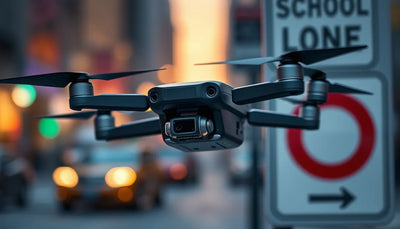
Skydio Whole Lineup Gets Blue UAS Clearance, Grants Follow
Skydio's X10, Dock for X10, and R10 join the X10D on the Blue UAS Cleared List, unlocking federal grant eligibility. The move widens Skydio's lead in government-eligible drones and pressures the pre-owned DJI market.

On July 23, 2026, Skydio announced that its entire current drone lineup—including the X10, the Dock for X10, and the R10—has been added to the Blue UAS Cleared List. The X10D had already achieved cleared status earlier. With this expanded clearance, every production Skydio drone is now eligible for federal grant funding, a milestone that immediately alters the competitive landscape for public-sector drone procurement. For fleet operators, repair customers, and buyers navigating the pre-owned DJI market, the implications are direct and commercial.
The Blue UAS Cleared List is the Department of Defense’s trusted vendor roster for small unmanned aircraft systems. Inclusion unlocks access to federal grants administered by agencies such as the Department of Homeland Security, Department of the Interior, and numerous state-level homeland security programs. Until now, that financial pipeline was available only to a narrow set of platforms—chiefly the X10D and a handful of other cleared systems. Skydio’s decision to push its full lineup through the rigorous review process is a strategic bet that grant money will drive fleet purchasing at a scale beyond what single-model approvals could deliver.
Blue UAS Cleared List expands – what changed
The specific models added are the Skydio X10, the Skydio Dock for X10, and the Skydio R10. These join the X10D, which had already been cleared in a prior batch. The Dock for X10 is a remote deployment station that enables persistent, untended operations—the type of capability that grant-funded agencies increasingly demand for perimeter monitoring, search and rescue, and infrastructure inspection. The R10 is a ruggedized variant built for extended field operations. Together, the four items give grant applicants a complete ecosystem: airframe, dock, and specialized variant.
Market context
Turn market news into a buy, repair, or trade-in decision.
Compare pre-owned availability, resale timing, and repair economics before the market moves again.

This is not merely an administrative update. The practical effect is that an agency applying for a $250,000 grant can now budget for a Skydio system that includes a dock, multiple X10 airframes, and the R10, all without running into a compliance wall. Previously, only the X10D was eligible, limiting procurement to a single model line. Rivals—including those from DJI and other non-U.S. manufacturers—remain locked out of the cleared list entirely, meaning their products cannot be purchased with grant dollars regardless of performance or price.
The timing is important. Federal fiscal year 2027 planning is already underway in many agencies. Budget officers who were forced to consider only X10D or legacy cleared systems now have a wider palette of Skydio hardware. That could accelerate grant applications and shift purchase orders toward Skydio’s higher-margin dock-and-fleet bundles.
What this means for drone buyers
For any buyer whose operation touches federal money—direct grants, pass-through state funds, or cooperative agreements—the decision tree just got simpler. If you need a drone that can be bought with grant dollars, Skydio is now the only vendor offering a full product family on the cleared list. That reduces procurement risk and eliminates the need to maintain separate fleets for grant and non-grant missions.
For fleet operators who have been running mixed DJI-Skydio operations, the natural next step is to evaluate whether grant-eligible missions can be consolidated onto Skydio platforms. If so, surplus DJI Enterprise drones from those fleets may enter the secondary market sooner than planned. That is significant for the pre-owned DJI market. An injection of ex-government Matrice and M300 series units could depress resale prices in the short term, especially for models that lack a clear grant-eligible advantage. Buyers looking for cost-effective workhorses for non-grant applications may find bargains, while sellers should be prepared for slightly softer demand on certain enterprise models.
We recommend that any operator currently holding DJI Enterprise equipment and considering a government contract examine their fleet mix now. If a portion of your missions can be funded through grants, the calculus may favor adding Skydio hardware and downsizing the DJI side. For those who do not rely on federal money, the existing DJI fleet remains as capable as ever, and the secondary market may offer attractive entry points for acquiring used DJI drones.
For the repair ecosystem, this development is neutral to positive. Skydio’s expanded fleet will eventually require maintenance and parts support. However, the installed base of DJI drones remains enormous, and professional DJI repair services will continue to be in strong demand for years. The key is that repair shops serving public-safety accounts may need to also invest in Skydio training and spare parts to capture grant-funded service work.
Impact on the pre-owned DJI drone market
The most underappreciated effect of Skydio’s Blue UAS sweep may be on used DJI pricing and availability. Government agencies and contractors that previously relied on DJI enterprise drones for grant-adjacent work have had limited options. Now that a credible, grant-eligible alternative exists with full product line support, some of those organizations will begin migrating. When they do, their used DJI equipment will be divested—either through trade-in programs or direct sales.
That influx of inspected pre-owned DJI drones, particularly Matrice 300 RTK and M30 series units, could increase supply in the secondary market. For budget-conscious commercial operators, agricultural survey firms, and training schools, this is an opportunity. A pristine pre-owned DJI Matrice 300 that served a police department for two years might soon be available at a discount, with its software already updated and flight logs clean. For buyers who do not require NDAA compliance or grant eligibility, that is an exceptionally good value.
However, the premium for grant-eligible drones may rise. Skydio models that are now on the cleared list could command higher prices in the new-equipment market because they carry a compliance advantage. That dynamic may widen the price gap between new Skydio units and used DJI units, making the pre-owned DJI option even more attractive for price-sensitive buyers.
For those considering selling a DJI fleet to fund a Skydio transition, we recommend acting sooner rather than later. The initial wave of divestitures will likely hit the pre-owned market within six to twelve months, and the best trade-in values may be available now. Reboot Hub’s drone trade-in guide can help you evaluate your current equipment’s residual value and timing, whether you are upgrading to Skydio or consolidating your DJI fleet.
Strategic implications for fleet managers and repair services
Fleet managers should run a full audit of their mission profiles. Identify which tasks are eligible for federal grant funding—typically public safety, infrastructure inspection, environmental monitoring, and disaster response. If those tasks constitute a significant share of your flight hours, it now makes financial sense to allocate grant dollars to Skydio hardware and reserve your DJI equipment for commercial-only work. Dual-fleet operations are administratively heavier, but the grant recovery can offset the overhead.
For repair businesses, the expansion of Skydio’s cleared fleet presents both a challenge and an opportunity. Skydio’s repair ecosystem is still relatively tight, with fewer independent service centers than DJI. Repair shops that obtain Skydio certification can capture grant-funded repair contracts, which typically have more predictable volumes and better payment terms than ad-hoc commercial work. At the same time, the massive installed base of DJI drones ensures that professional DJI repair services will remain a steady revenue stream for the foreseeable future. Do not reduce DJI repair capacity—instead, consider adding a Skydio line.
Reboot Hub analysis: We also note that the Blue UAS Cleared List status does not prevent agencies from buying non-cleared drones with their own unrestricted funds. But the presence of a full product line on the list will steer the large pool of grant money toward Skydio. Over time, that may create a training-and-support ecosystem effect: pilots certified on Skydio through grant-funded programs may prefer Skydio for future non-grant purchases as well. Fleet managers should keep that behavioral drift in mind when planning workforce development.
What is the Blue UAS Cleared List?
The Blue UAS Cleared List is a Department of Defense approved list of unmanned aircraft systems that meet cybersecurity, supply chain, and operational security standards. Inclusion allows federal agencies and state recipients of federal grants to purchase the listed drones with grant funds.
Which Skydio models are now on the cleared list?
The Skydio X10, Skydio Dock for X10, Skydio R10, and the previously cleared X10D are all on the Blue UAS Cleared List as of July 23, 2026. This marks the first time a manufacturer has its entire current production lineup listed simultaneously.
How does this affect the resale value of used DJI enterprise drones?
Increased supply of used DJI drones from grant-seeking organizations migrating to Skydio may soften resale prices for certain enterprise models, particularly the Matrice 300 series. This creates buying opportunities for non-grant operators who do not require Blue UAS clearance.
Sources consulted
- DroneXL.co - primary source
- Defense.gov official source - official government source
- DIU Blue UAS - official government source
Reboot Hub Editorial adds buyer, repair, resale, and operational analysis for drone owners. If you spot an error, contact us for correction review through our editorial policy.