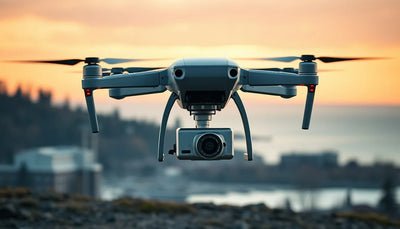
Shadowstone and DJI launch panoramic cameras the same day with split AI paths
Two panoramic cameras arrived on the same day from Shadowstone and DJI, but the underlying imaging and AI approaches differ. For commercial operators, repair customers, and pre-owned drone buyers, the split signals a more fragmented accessory market and new questions about compatibility, servicing, and resale value.

Quick answer
Shadowstone and DJI released new panoramic cameras on the same day, with the two companies taking different paths on AI processing and imaging architecture, according to a Tiger Sniff industry report.
- Shadowstone and DJI launched panoramic cameras on the same day.
- The two companies are pursuing differentiated AI and imaging base paths.
- The split could affect accessory compatibility and repair decisions for drone operators.
- Pre-owned DJI market buyers may see new questions around camera ecosystem longevity.
Verified facts
DJI buying context
Match product news to hardware you can actually deploy.
Check inspected DJI aircraft, repair support, and trade-in timing before deciding whether to upgrade, repair, or wait.

What the available evidence confirms
| Company | Reported launch focus | Reported differentiation |
|---|---|---|
| Shadowstone | Panoramic camera | Distinct AI and imaging base path |
| DJI | Panoramic camera | Differentiated AI and imaging base path |
Two panoramic camera announcements landed on the same day, one from Shadowstone and one from DJI, and the timing is less interesting than the technical direction each company appears to be taking. According to a Tiger Sniff industry report, the launches are not a simple case of two rivals shipping the same product. Instead, the report frames the releases as a split between different AI and imaging base paths, a distinction that matters for anyone trying to understand where drone-adjacent camera hardware is heading.
For commercial drone operators, fleet managers, repair customers, and buyers in the pre-owned DJI market, a same-day launch from two serious hardware players is a signal worth reading carefully. Panoramic cameras sit close to drone workflows: they are used for inspection documentation, mapping support, real estate capture, and creative production. When two manufacturers diverge on core architecture at the same moment, the downstream effects tend to show up later in accessory compatibility, service costs, and how long a given camera ecosystem remains viable.
The same-day launch and what the source actually says
Tiger Sniff reported that Shadowstone and DJI released new panoramic cameras on the same day. The central observation in the source is that the two companies are pursuing differentiated paths on AI and imaging base architecture. That is a meaningful distinction because it suggests the products are not direct clones competing only on price or branding. Instead, each company appears to have made a different bet on how much processing should happen in the camera, how the imaging pipeline should be structured, and what role AI should play in the final output.
The source does not provide detailed sensor specifications, pricing, firmware features, or compatibility lists. Reboot Hub analysis should therefore treat this as an early market signal rather than a complete product comparison. What can be said with confidence is that two established hardware names chose the same day to push panoramic imaging forward, and they did so with visibly different technical philosophies. For buyers, that means the accessory landscape around drone cameras may become more fragmented before it becomes clearer.
The practical implication is straightforward: operators should not assume that every new panoramic camera will slot cleanly into an existing drone or post-production workflow. When AI processing moves deeper into the camera itself, the camera becomes less of a passive sensor and more of a software-dependent device. That can raise the stakes for firmware support, repair access, and long-term serviceability.
AI and imaging architecture as a repair and ownership question
When a camera relies heavily on onboard AI processing, the repair conversation changes. A traditional imaging module can often be diagnosed by looking at optics, sensor output, and mechanical alignment. A camera with a heavier AI layer adds software state, calibration data, and processing pipelines that may not be visible to a third-party technician. For fleet operators and repair customers, that means the cost of keeping a camera in service may depend more on the manufacturer's willingness to provide diagnostics, firmware, and spare modules.
The Tiger Sniff report does not state which company is leaning more heavily on AI or which imaging base path each product uses. That uncertainty is itself a useful data point. Buyers who are evaluating panoramic cameras for commercial use should ask direct questions about repair access, spare part availability, and whether the camera can be serviced independently of the manufacturer's cloud or software tools.
For the pre-owned DJI market, the same-day launch adds a new variable. DJI accessories and cameras tend to hold value well when they remain compatible across multiple drone generations and when repair paths are understood. If DJI's panoramic camera introduces a new imaging architecture, early adopters will be watching to see whether that architecture becomes a durable standard or a short-lived branch. Pre-owned buyers should be cautious about paying a premium for a camera whose long-term support path is still unproven.
What this means for drone owners and the market
The most immediate consequence for drone owners is that panoramic camera choice is no longer a simple default. A buyer who previously assumed that the leading drone brand's camera was the only serious option now has a credible same-day alternative from Shadowstone. That is good for competition, but it also means procurement decisions require more scrutiny. A fleet manager evaluating panoramic cameras should compare not just image quality and price, but the full ownership picture: firmware update history, repair network, spare module availability, and how the camera integrates with existing drone and software stacks.
For operators and buyers trying to make sense of this shift, the Reboot Hub Drone Wiki provides a useful reference point for understanding how drone hardware ecosystems and repair considerations fit together. The key takeaway is that a camera is no longer just a camera when AI and imaging architecture diverge; it becomes a platform decision with long-term service and resale implications. For owners evaluating service and lifecycle risk, Drone Wiki explains the relevant repair, parts, resale, or operational path.
The pre-owned DJI market may feel this indirectly. If DJI's panoramic camera establishes a new imaging base path that later flows into drone gimbals or enterprise payloads, older accessories could see a shift in perceived value. Conversely, if the new architecture remains isolated to one product line, the impact on existing pre-owned drones and cameras may be minimal. The source does not provide enough detail to resolve that question, but the mere possibility should make resellers and buyers more attentive to how DJI positions the new camera relative to its broader ecosystem.
Repair shops should also take note. Panoramic cameras with differentiated AI paths may require different diagnostic approaches, calibration tools, and spare parts. A shop that invests early in understanding both architectures will be better positioned to serve customers as these products reach the field. Shops that wait for a clear market winner may find themselves playing catch-up on one side of the split.
A fragmented accessory market is the realistic near-term outlook
The same-day launch from Shadowstone and DJI suggests that panoramic camera development is entering a more competitive phase. When two manufacturers ship on the same day with different technical foundations, the market is signaling that there is no single agreed-upon approach yet. That can be healthy for innovation, but it creates friction for buyers who want stable, predictable accessory ecosystems.
For commercial operators, the sensible response is to avoid overcommitting to a panoramic camera architecture before its support path is clear. Ask about repair access, spare parts, firmware policy, and compatibility with existing drone platforms. For pre-owned DJI buyers, the new launch is a reminder that accessory value depends on ecosystem longevity, not just brand strength. For repair customers, the split means service knowledge will become more specialized, and choosing a repair provider with exposure to multiple camera architectures may matter more than it did when panoramic cameras were a niche category.
The Tiger Sniff report gives the market an early map of a divergence. The details will arrive later, but the strategic picture is already visible: panoramic imaging is moving in at least two directions at once, and the choices made now by Shadowstone and DJI will shape accessory compatibility, repair economics, and resale value for months to come.
FAQ
Frequently asked questions
What did Shadowstone and DJI announce?
According to a Tiger Sniff industry report, Shadowstone and DJI released new panoramic cameras on the same day, with the two companies taking differentiated paths on AI and imaging base architecture.
Does the source provide detailed specifications for either camera?
No. The Tiger Sniff report focuses on the same-day launch and the split in AI and imaging base paths, but it does not include detailed sensor specifications, pricing, firmware features, or compatibility lists in the source data available to Reboot Hub.
How should drone owners respond to this launch news?
Drone owners and fleet managers should treat panoramic camera selection as a platform decision rather than a simple accessory purchase, and should ask about repair access, spare parts, firmware support, and ecosystem compatibility before committing to either architecture.
Which sources support this update?
The article distinguishes reported information from analysis and does not present an unverified source as official confirmation.
What remains subject to change?
Retail pricing, availability, product bundles and regulatory timelines can change. Readers should verify the latest terms with the named retailer, manufacturer or regulator before acting.
How should buyers or operators use this analysis?
Use the verified facts as a starting point, then compare mission fit, lifecycle support, maintenance needs and current procurement terms before making a purchase or fleet decision.
Sources consulted
Additional official documentation was not available at publication time.
Reboot Hub Editorial adds buyer, repair, resale, and operational analysis for drone owners. If you spot an error, contact us for correction review through our editorial policy.