Reno Police Drone Tracks Armed Suspect, Ends in Quiet Arrest
A Reno police drone followed an armed suspect from a distance, allowing officers to arrest him without confrontation. The event highlights how UAVs reduce risk during criminal incidents—relevant for fleet operators considering public safety contracts.

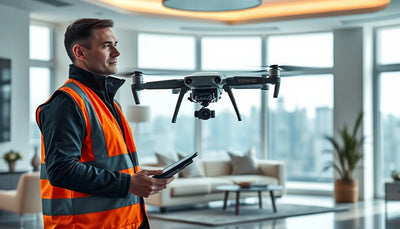
Law enforcement drone use continues to prove its value in high-stakes scenarios. A recent incident in Reno, Nevada, saw police deploy a drone to follow an armed suspect discreetly, culminating in an arrest without confrontation or escalation. The quiet resolution underscores a growing trend: drones are shifting from reactive tools to proactive surveillance platforms that de-escalate tense situations. For commercial drone buyers, fleet operators, and repair service customers, this case carries clear implications about the reliability required in public safety operations and the expanding market for pre-owned DJI drones as agencies adopt UAVs.
How the Reno police drone operation unfolded
According to the DroneXL report, officers in Reno used a drone to track an individual who was believed to be armed. The aircraft maintained continuous visual contact from a distance, feeding real-time positional data to ground teams. This allowed officers to plan a quiet approach and execute the arrest without a high-risk confrontation. No details were released about the specific drone model or camera payload used, but the operation relied on persistent aerial observation—likely with thermal or night vision capabilities given the time of day and need for discreet tracking.
The key operational insight is that the drone enabled "quiet arrest." In traditional chases or armed confrontations, the risk of injury to suspects, officers, and bystanders is high. By using an unmanned system as a tracking node, the Reno Police Department avoided a foot pursuit or tactical breach. For commercial fleet managers who work alongside law enforcement or bid on security contracts, this incident validates the idea that aerial surveillance can replace risky ground maneuvers. It also underscores the importance of reliable connectivity and long flight endurance—features that buyers should prioritize when evaluating pre-owned DJI drones for such mission profiles.
Fleet readiness
Keep DJI hardware available without overbuying new units.
Use defense and fleet news as a planning signal for repair support, inspected pre-owned aircraft, and replacement timing.

What this means for drone buyers
For anyone purchasing a drone—whether new or pre-owned—the Reno operation reinforces that reliability and low-noise operation are critical. A drone used for tracking must stay aloft for extended periods, maintain a stable video link, and operate without drawing attention. Buyers looking at the second-hand market for law enforcement surplus or previous-generation enterprise platforms should verify that battery condition, gimbal health, and transmission modules meet the standards of persistent surveillance. Many police departments later upgrade their fleets, putting used units with solid flight logs into the market. These can be excellent candidates for security firms or agricultural operators who need proven airframes at a lower cost.
Additionally, the quiet arrest scenario highlights the value of thermal imaging. While the source did not confirm a specific sensor, the ability to track a person at night or through brush is a differentiating feature. Commercial buyers, especially those in search and rescue, infrastructure inspection, or perimeter security, should consider that thermal-equipped drones command a premium on the used market but offer a distinct operational edge. Inspecting the thermal sensor's calibration and lens condition is crucial when acquiring a pre-owned DJI drone from auction or trade-in.
Fleet operators planning to expand into public safety contracts should also note that agencies like the Reno PD are setting a precedent. When they require interchangeable spare parts or fast repair turnarounds, the market for genuine OEM spare parts and professional DJI repair services will grow. Buyers should partner with repair centers that stock common components for police-fleet drones—such as arm modules, gimbal ribbons, and battery boards—to minimize downtime.
Pre-owned DJI market implications from law enforcement adoption
As law enforcement agencies nationwide integrate drones, they often refresh hardware every two to three years, cycling older units into the pre-owned channel. The Reno operation involved a drone that was presumably capable of night tracking—likely a mid-range enterprise model. For second-hand buyers, this means a steady supply of airframes that were maintained in accordance with department standards and have known maintenance histories. However, it also means that buyers must be careful: police-use drones may have higher flight hours, exposure to electromagnetic interference, or modified firmware.
The quiet arrest case also indirectly boosts the credibility of the pre-owned DJI market. When a department successfully completes an operation like this, it validates the platform's endurance and reliability. That same proven technology becomes available at a lower cost for commercial operators who cannot afford a new flagship model. Buyers should request flight logs and maintenance records from sellers, especially when acquiring ex-government stock. A pristine pre-owned unit with documented service history can be just as effective as a new one for many commercial applications.
From a repair perspective, law enforcement drones tend to suffer from hard landings, gimbal impacts, and outdoor exposure. Professional DJI repair services should be equipped to handle such wear—replacing cracked shells, recalibrating compass modules, and testing radio range. The increasing police fleet size means that the spare parts supply chain must be robust. Buyers of pre-owned units should inquire about parts availability before purchase, especially for models like the Matrice series, which are common in public safety.
Practical operator takeaways from the Reno quiet arrest
What should a buyer, pilot, or fleet manager do differently after reading this report? First, evaluate your own operations for scenarios where discreet aerial tracking could reduce risk. Whether you run a private security firm or manage a corporate drone program, this incident shows that drones are not just for recording evidence—they are tools for preventing escalation. Consider adding thermal capability to your fleet if you work in low-light environments.
Second, calibrate your maintenance and preflight checks to the demands of extended surveillance missions. Battery endurance, gimbal stabilization, and video latency are critical for tracking moving persons. Regularly inspect these components and consider using a drone trade-in guide to upgrade older units if your current fleet cannot sustain 30+ minute flights with a payload.
Third, for those purchasing pre-owned equipment, look for listings that include original accessories, hard cases, and recent battery health reports. A pre-owned DJI drone from a department that upgraded to a newer model can serve your business well—if you confirm its airframe has no hidden damage. Work with reputable resellers who offer warranties or return policies, and factor the cost of a professional DJI repair service into your budget at the time of purchase.
FAQ
Are police drones different from commercial drones in terms of hardware?
Many police drones are the same enterprise-level models available to commercial buyers, such as the DJI Matrice series. They may come with upgraded payloads like thermal cameras or loudspeakers. The core airframe and flight control systems are identical, so pre-owned police drones can be a cost-effective entry point for commercial operators.
Is it safe to buy a second-hand drone that was used by law enforcement?
Yes, if proper due diligence is performed. Request flight logs, maintenance records, and inspect the drone for physical damage. Many police drones are well-maintained but may have high flight hours. A professional inspection and repair service can verify airworthiness before purchase.
Can commercial operators use drones for discreet person tracking like the Reno police did?
Yes, subject to local regulations on surveillance and privacy. Commercial operators should always obtain consent or operate in legally permissible contexts, such as search and rescue operations with explicit authorization. The technology and techniques demonstrated by Reno PD are transferable, but legal compliance must be verified case by case.
Sources consulted
- Reno Police Drone Tracked official specifications - primary source
- Wildberries - primary reporting source
Reboot Hub Editorial adds buyer, repair, resale, and operational analysis for drone owners. If you spot an error, contact us for correction review through our editorial policy.