Red Cat Stock’s 7x Run Meets Valuation Reality Check
Red Cat Holdings has delivered a 7x return to shareholders in three years, but current valuation signals caution. Drone buyers should consider what defense demand growth and market pricing mean for fleet investment and pre-owned DJI prices.

Red Cat Holdings (NASDAQ: RCAT) has rewarded shareholders with a roughly 7x return over the past three years—a figure that would catch the attention of any investor. But as the company prepares for its Hellcat platform launch and positions itself in the growing unmanned defense market, the current stock price is drawing scrutiny. A source analysis from Yahoo Finance notes that while the past performance is impressive, the valuation today leans expensive, creating a clear tension for anyone considering an entry point. For commercial drone buyers and fleet operators, the question isn’t just about stock performance—it’s about what Red Cat’s market momentum means for the broader drone hardware and second-hand equipment landscape.
What the 7x return implies for future expectations
The source data explicitly states that Red Cat has delivered a return of “roughly 7x” over three years and that “its current valuation checks lean expensive.” This combination sets a high bar: the stock price already reflects strong optimism about future growth, particularly in defense contracts. For investors, this could mean that even if the company executes well, the stock may not deliver similar multiples going forward. For drone operators who follow public companies as a proxy for industry health, a stretched valuation at Red Cat may signal that the equity market is pricing in aggressive assumptions about unmanned defense adoption—assumptions that might not materialize at the expected pace.
Practically, this suggests that any new capital flowing into Red Cat from institutional buyers may be more measured, which could affect the company’s ability to invest in commercial spin-offs or secondary market supply. That, in turn, may keep the pre-owned DJI ecosystem relatively stable, as Red Cat’s success doesn’t directly cannibalize DJI’s commercial install base—at least not yet.
Purchase timing
Use market shifts to buy, sell, repair, or wait with more context.
Compare trade-in timing, pre-owned DJI pricing, and repair economics before committing new capital.

Defense demand and the Hellcat launch: commercial implications
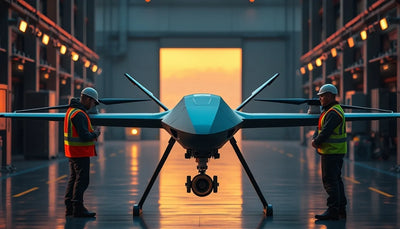
The source describes “growing demand for unmanned defense” as a key driver behind investor expectations for Red Cat. The Hellcat launch is the company’s near-term catalyst, though no specifics on the platform’s technical specifications are provided in the source. What is clear is that defense procurement cycles are long, lumpy, and often classified. For a commercial drone operator who doesn’t work on military contracts, a Red Cat win in the defense sector likely won’t translate directly to more affordable hardware on the consumer market.
However, there is an indirect effect. If Red Cat successfully scales production for defense customers, the resulting supply chain efficiencies could eventually lower costs for similar commercial-grade platforms. Conversely, if the valuation tension leads to a stock pullback, it might reduce Red Cat’s ability to fund R&D for dual-use products. Fleet managers watching the space should monitor Red Cat’s quarterly earnings for any pivot toward commercial offerings—but until then, the safe bet remains the mature, deeply inventoried ecosystem of pre-owned DJI drones.
What this means for drone buyers
For a buyer evaluating a new fleet or upgrading existing hardware, the Red Cat story reinforces a core principle: public market enthusiasm for drone defense stocks does not automatically change the value proposition of commercial platforms. The pre-owned DJI market, which offers price-to-performance ratios that are well understood and backed by a global service network, remains the most liquid option for most operators. If Red Cat’s valuation premium deters new institutional capital, it could slow down the release of competing platforms—meaning DJI will likely retain its dominant position in the commercial and pre-owned segments.
One concrete action a buyer can take today is to lock in pricing on inspected pre-owned DJI hardware before any potential disruption from a defense-driven market shift. The drone trade-in guide and professional DJI repair services available through established channels provide a cost-effective path that hedges against the uncertainty surrounding pure-play defense stocks. If a buyer is considering Red Cat equipment, they should demand clear roadmaps for commercial support—something the source does not provide. Without verified specs or confirmed commercial pricing, treating pre-owned DJI drones as a baseline reference for value is a prudent strategy.
Operational implications for fleet planning and repair
Fleet operators who rely on OEM spare parts and predictable repair timelines should take note: Red Cat’s valuation tension may limit its ability to invest in rapid field service or spare parts inventory for non-military customers. The source offers no details on Red Cat’s own repair network or parts availability, so any operator considering a mixed fleet should weigh the risk of longer downtime against a platform that already has mature repair infrastructure. Professional DJI repair services, using genuine OEM spare parts, are widely available and independent of stock market cycles.
Additionally, the defense-focused demand mentioned in the source could tighten supply for certain components that are shared between military and commercial drones—like sensors or autopilots. Smart fleet managers will stock critical spares for their existing DJI fleet now, before any potential procurement surge for the Hellcat platform creates supply bottlenecks. In short, the Red Cat valuation story is a reminder that public market narratives and operational readiness don’t always align. The most resilient fleet is one built on readily serviceable hardware with a deep second-hand market—exactly what the pre-owned DJI ecosystem provides.
FAQ: Red Cat stock and the drone market
Is Red Cat’s stock too expensive to buy right now?
According to the source, the stock’s valuation “leans expensive” after a 7x three-year gain, suggesting that future upside may be limited relative to current price. Buyers should weigh the defense growth thesis against the possibility that expectations are already priced in.
Will the Hellcat launch affect commercial drone prices?
The source does not provide commercial pricing or spec details for the Hellcat. Its primary driver is defense demand, so any impact on commercial pricing is indirect and speculative. For now, the pre-owned DJI market remains unaffected by Red Cat’s launch timeline.
How should I adjust my fleet strategy given this news?
Focus on proven platforms with transparent second-hand valuations and accessible repair networks. The stock market’s read on Red Cat does not change the fundamentals of the DJI ecosystem. Consider building a spare parts buffer and exploring the drone trade-in guide to optimize your fleet’s cost structure.