Perceptual Robotics Raises £4M for Wind Turbine Drone Inspections
Bristol-based Perceptual Robotics secured £4M from Innovate UK and three venture funds to scale its wind turbine inspection platform. The investment signals growing demand for autonomous drone inspections in renewable energy, with implications for fleet operators and the second-hand drone market.

On July 24, 2026, Perceptual Robotics announced it has secured more than £4 million (approximately $5.3 million) in funding during 2026 to scale its wind turbine inspection platform. The Bristol-based company’s latest round includes backing from Innovate UK and Investing for Purpose, with follow-on participation from Loggerhead Ventures and One Planet Capital. The investment marks a significant vote of confidence in drone-based asset inspection for the renewable energy sector.
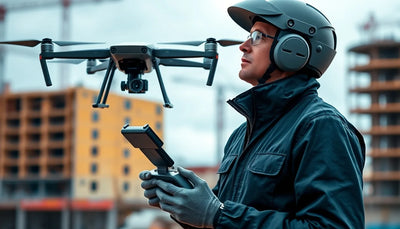
For commercial drone operators, fleet managers, and buyers active in the industrial inspection space, this funding highlights a broader shift: purpose-built drone platforms are becoming essential tools for critical infrastructure maintenance. Wind farm operators are moving beyond pilot-led visual checks toward autonomous, data-rich inspection workflows. Perceptual Robotics’ platform aims to deliver that capability, and the fresh capital will support expanded deployment across wind farms in the UK and beyond.
The funding round and its strategic context
The £4 million figure represents total funding raised by Perceptual Robotics in 2026 so far. The company’s investor mix is instructive. Innovate UK, the UK’s innovation agency, often backs projects with clear commercial scalability and national infrastructure benefit. Investing for Purpose, Loggerhead Ventures, and One Planet Capital are all venture funds with a focus on sustainability and cleantech. Taken together, the round signals that wind turbine inspection drones are viewed not as experimental toys but as mature industrial tools with measurable return on investment.
Market context
Turn market news into a buy, repair, or trade-in decision.
Compare pre-owned availability, resale timing, and repair economics before the market moves again.

Perceptual Robotics was founded to automate wind turbine blade inspections using drones equipped with high-resolution cameras and machine learning software. Instead of requiring a ground crew to visually inspect each blade or using slow climbing robots, the company’s drones capture detailed imagery that is then analyzed to detect cracks, erosion, lightning damage, or leading-edge wear. The software platform quantifies defect severity and generates repair recommendations, streamlining maintenance workflows for operators.
The company has not disclosed specific technical specifications of its drone platform, but the core value proposition is clear: faster, safer, and more consistent inspections compared to manual methods. With this new funding, Perceptual Robotics plans to grow its team, increase deployment capacity, and improve its analytics engine. For fleet operators considering similar investments, the development validates that specialized inspection drones are becoming bankable assets, not just pilot projects.
What this means for enterprise operators
Enterprise operators evaluating drone procurement for wind energy or other critical infrastructure should take note of Perceptual Robotics’ trajectory. The funding round suggests that the market for turnkey inspection platforms is expanding, and operators may soon face a choice between building custom drone workflows with off-the-shelf hardware or adopting integrated solutions like Perceptual Robotics’ offering.
For wind farm asset owners, the business case for drone inspections has strengthened. Drones reduce the need for rope-access technicians, minimize turbine downtime by allowing faster inspections, and provide consistent, repeatable data over time. Perceptual Robotics’ platform likely handles hundreds of inspections per month, and the new capital will allow it to serve larger scales. For fleet operators considering whether to invest in a dedicated inspection fleet or contract out the work, the decision hinges on inspection volume, geographic spread, and desired level of data granularity.
However, not every operator needs a brand-new, purpose-built platform. Many small and mid-size inspection firms still rely on high-end general-purpose drones fitted with specialized payloads. The pre-owned DJI drones market offers a cost-effective entry point for building a capable inspection fleet without the upfront capital of a fully integrated system. For example, a Matrice 300 RTK or M350 equipped with a high-resolution gimbal camera can perform many of the same tasks as a proprietary platform, provided the data pipeline is managed effectively.
When brand-new industrial drone procurement is a practical next step, it tends to come down to mission fit, configuration complexity, quantity, and lifecycle support. For an operator running a single small wind farm, leasing a turnkey service might make more sense than purchasing. For a large asset manager with dozens of sites, owning a dedicated platform that integrates with an existing asset management system could deliver better long-term value. Perceptual Robotics’ growth suggests the integrated approach is winning early adopters, but the market is still young enough that multiple paths remain viable.
Implications for the pre-owned DJI drone and repair market
As specialized drone inspection platforms scale, the ripple effects are felt in the broader drone ecosystem. The professional DJI repair services market, in particular, stands to benefit. When inspection drones are flown frequently in demanding environments — near turbine blades, in coastal wind farms, or at altitude — wear and tear accelerate. Operators who choose to build their own inspection fleets around pre-owned DJI drones will need reliable repair and spare parts to keep aircraft airworthy.
Furthermore, the rise of inspection-as-a-service models may drive more used drones into the market. As Perceptual Robotics and similar firms deploy dedicated fleets, they may rotate older units or upgrade sensors, creating a supply of inspected, flight-time-limited drones that can find second lives with smaller operators. The drone trade-in guide provides a framework for evaluating when to upgrade versus continue operating a proven airframe.
For operators who want to replicate Perceptual Robotics’ capability without the capital raise, a combination of pre-owned DJI drones, third-party payloads, and open-source inspection software can be assembled at a fraction of the cost. The trade-off is integration time and ongoing maintenance. But with access to OEM-pulled parts and professional repair services, the total cost of ownership can remain competitive. The investment in Perceptual Robotics does not make that path obsolete; it simply validates that the inspection application is now mature enough to attract serious funding.
One concrete takeaway for buyers and repair customers: if you are currently flying inspection missions with a high-end DJI platform, consider upgrading or augmenting with a second pre-owned unit to maintain coverage during downtime. Having a backup airframe, supported by speedy repair options, can prevent revenue loss when a primary drone goes down for sensor calibration or structural repairs.
Broader trends in industrial drone inspection
Perceptual Robotics is not alone in the wind inspection space, but its funding round is one of the larger dedicated rounds in 2026 for drone-enabled asset inspection in Europe. The involvement of Innovate UK points to a government-level belief that drone-based maintenance can improve the lifespan and efficiency of renewable energy infrastructure. With the UK aiming for net-zero emissions, every efficiency gain in wind farm operations matters.
The trend toward autonomous, data-driven inspections is not limited to wind turbines. Solar farms, cell towers, bridges, and power lines are all being inspected by drones at an accelerating rate. As the technology matures, the demand for reliable, high-uptime drones increases. This, in turn, supports the secondary market for well-maintained pre-owned aircraft and the repair ecosystem that keeps them flying.
For fleet operators, the strategic question is no longer whether drones can replace manual inspections, but how to integrate them into existing maintenance workflows and data systems. Perceptual Robotics’ platform approach — combining hardware, software, and analytics — points toward a future where inspection data is automatically fed into Computerized Maintenance Management Systems (CMMS). Operators who wait too long to invest in such capabilities may find themselves at a competitive disadvantage as asset owners demand faster, cheaper, and more accurate reports.
Meanwhile, the second-hand drone market offers a bridge for operators who want to start now without committing to a full proprietary suite. A well-maintained DJI Matrice 300 RTK from the pre-owned market can be paired with a high-resolution payload and third-party inspection software to deliver results that rival integrated systems for many use cases. The key is to ensure proper maintenance and access to genuine spare parts, which is where professional DJI repair services come in. Keeping inspection drones in peak condition directly impacts data quality and mission reliability.
What specific sensor payload does Perceptual Robotics use?
The source announcement did not disclose specific sensor models or technical specifications for Perceptual Robotics’ drone platform. The company states its drones capture high-resolution imagery for blade defect detection and analysis, but exact camera or LiDAR details are not part of the public funding release.
How will this funding affect pricing of inspection services?
Reboot Hub analysis: It is too early to predict direct pricing impacts. Perceptual Robotics aims to scale its platform, which could lead to lower per-turbine inspection costs over time as fixed costs are spread across more deployments. However, service pricing also depends on data processing complexity, travel distance to wind farms, and required reporting depth. Fleet operators should watch for pricing trends in 2027 as the company deploys the new capital.
Should I buy a pre-owned DJI drone for wind turbine inspections?
A pre-owned DJI Matrice or Inspire platform can be a cost-effective starting point for wind turbine inspection, especially for small to mid-sized operators. The decision depends on your inspection volume, data quality requirements, and budget for payloads and software. Ensure the airframe has documented flight hours and is backed by professional repair support to minimize downtime. The pre-owned DJI drones market offers many units that are ready for mission deployment.
Sources consulted
- DJI Matrice 300 official specifications - primary source
Additional official documentation was not available at publication time.
Reboot Hub Editorial adds buyer, repair, resale, and operational analysis for drone owners. If you spot an error, contact us for correction review through our editorial policy.