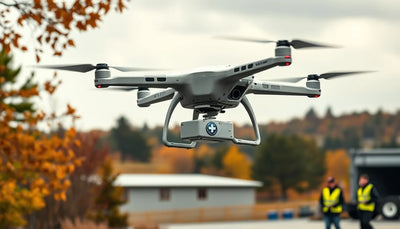
Ondas Stock Slips Despite Record Backlog and Raised 2026 Guidance
Ondas reported record quarterly and six-month sales and a $757 million backlog, yet shares fell 5.9%. The mixed signal matters for defense-adjacent drone operators watching procurement momentum, contract timing, and the durability of unmanned systems demand.

Quick answer
Ondas Inc. reported record Q2 and six-month results, a roughly $757 million backlog, and raised 2026 revenue guidance, but its stock still fell 5.9% in August 2026.
- Q2 sales reached $83.77 million and six-month sales reached $133.89 million
- The company posted a Q2 net loss of $88.25 million but six-month net income of $274.7 million
- Management cited new defense and unmanned systems contracts and recent acquisitions behind the raised guidance
- The share price decline suggests investors are weighing execution risk and backlog conversion timing
Evidence: Source material
Purchase timing
Use market shifts to buy, sell, repair, or wait with more context.
Compare trade-in timing, pre-owned DJI pricing, and repair economics before committing new capital.

Verified facts
What the available evidence confirms
| Metric | Reported figure |
|---|---|
| Q2 2026 sales | $83.77 million |
| Six-month sales | $133.89 million |
| Q2 net result | Net loss of $88.25 million |
| Six-month net result | Net income of $274.7 million |
| Backlog | About $757 million |
Ondas Holdings Inc. (ONDS) delivered what should have been a strong August 2026 update: record second-quarter and six-month revenue, an expanded backlog of roughly US$757 million, and raised full-year 2026 revenue guidance following recent acquisitions and new defense and unmanned systems contracts. Yet the stock fell 5.9% after the report, according to the primary reporting from Yahoo Finance. For commercial drone operators and fleet buyers, that disconnect between headline results and market reaction is worth understanding before treating defense-adjacent procurement momentum as a straight line.
The numbers themselves are striking. Sales rose to US$83.77 million for the quarter and US$133.89 million for the first six months of the year. The company posted a quarterly net loss of US$88.25 million but a six-month net income of US$274.7 million, a swing that points to the lumpy, acquisition-heavy accounting now shaping Ondas results. Management tied the improved outlook to integrating recent acquisitions and securing new defense and unmanned systems work. The source summary does not break out which specific programs or regions drove the backlog, so the operational picture remains source-limited.
Why the market sold the news
Investors often treat guidance raises as confirmation of momentum, but the 5.9% decline suggests the market is focusing on conversion risk rather than backlog size alone. A backlog of roughly US$757 million is meaningful, yet it only matters to cash flow if contracts convert into delivered systems, accepted milestones, and collected payments on schedule. Defense and unmanned systems programs frequently carry long procurement cycles, milestone-based revenue recognition, and integration complexity after acquisitions.
Reboot Hub analysis: the quarterly net loss, even alongside a profitable six-month period, may have reminded investors that Ondas is still absorbing acquired businesses and scaling operations. For commercial drone buyers, the lesson is not about Ondas specifically. It is that defense-adjacent demand can look enormous on paper while remaining uneven quarter to quarter. Fleet planners who assume a rising tide of government unmanned systems spending will lift all suppliers should watch how backlog converts into actual deliveries, not just how large the backlog grows.
What this means for drone owners and the market
For independent operators and small fleet managers, a defense contractor raising guidance is not directly a consumer signal. But the underlying trend matters. When companies like Ondas report expanding unmanned systems contracts, it indicates that government and enterprise buyers are still committing budget to drones, sensors, and the support infrastructure around them. That demand eventually shapes the broader commercial ecosystem, from component availability to the flow of used equipment into the secondary market.
The commercial bridge here is practical: if defense and enterprise procurement stays strong, operators holding pre-owned DJI drones and OEM-pulled parts may find repair and resale demand steadier, because healthy commercial activity supports the service economy around existing fleets. Readers tracking that dynamic can monitor the Drone Wiki for repair and ownership context. The caution is that a single quarterly report, even a record one, does not confirm that all backlog will convert smoothly. For owners evaluating service and lifecycle risk, Drone Wiki explains the relevant repair, parts, resale, or operational path.
Buyers weighing a pre-owned DJI platform should also note that defense momentum does not automatically translate into better consumer pricing or parts availability. Supply chains for enterprise and government programs can absorb engineering capacity, logistics bandwidth, and component supply in ways that occasionally tighten the commercial repair channel. The Ondas report is one data point among many, but it reinforces the value of watching procurement news alongside product-level market conditions.
Reading the backlog signal without overreacting
The source summary highlights three moving parts: record sales, a large backlog, and raised guidance after acquisitions and new contracts. Each carries a different risk profile. Record sales are backward-looking. The backlog is a promise of future work, but not a guarantee of margin or timing. Raised guidance is management's forward view, shaped by assumptions about integration, delivery schedules, and customer acceptance.
For a fleet manager, the same three-part lens applies to any supplier or platform decision. Past performance tells you what a vendor has delivered. Backlog tells you what customers have committed to buy. Guidance tells you what leadership expects. None of them alone confirms that a platform, a repair network, or a parts pipeline will remain reliable over the next 12 months. The Ondas stock reaction is a reminder that markets punish uncertainty even when the headline numbers look strong.
Operators evaluating equipment budgets should keep the distinction between contracted demand and realized revenue in mind. A large defense backlog can absorb supplier attention and create longer lead times for adjacent commercial products. If you are planning a fleet expansion or a major repair cycle, the practical move is to secure genuine OEM spare parts and inspected pre-owned platforms before a busy procurement cycle tightens availability, rather than assuming supply will remain loose because one company's guidance improved.
The broader defense and unmanned systems context
Ondas is one of several companies positioned around defense, industrial connectivity, and unmanned systems. The source data does not name competitors, specific contract values, or program details, so direct comparisons would be speculative. What the report does show is that investor expectations around defense-adjacent drone businesses remain sensitive to execution details, even when revenue and backlog reach record levels.
That sensitivity matters for the pre-owned DJI market. Defense and enterprise demand can influence the broader perception of drone technology as durable, mission-critical equipment rather than disposable consumer electronics. When institutional buyers treat unmanned systems as long-term capital assets, the secondary market for inspected pre-owned platforms and professional repair services tends to benefit, because more operators view maintenance and resale as normal parts of ownership.
The Ondas update should not change a buyer's decision on a specific DJI model or repair timeline by itself. But it adds to a picture of sustained, if uneven, institutional investment in unmanned systems. Operators who track both public company results and on-the-ground parts availability will be better positioned than those who react to a single stock move or a single headline.
FAQ
Frequently asked questions
Why did Ondas stock fall after record results?
The source reports a 5.9% decline despite record sales and raised guidance. The likely reason is investor concern about backlog conversion, quarterly loss volatility, and acquisition integration risk, though the source does not provide a detailed explanation of the sell-off.
What was Ondas' reported backlog in August 2026?
Management highlighted an expanded backlog of about US$757 million, alongside record second-quarter and six-month sales figures.
Should drone buyers change plans based on this report?
Not directly. The report is one signal of sustained defense and enterprise demand for unmanned systems. Buyers should watch how backlog converts into deliveries and whether procurement pressure tightens commercial parts and repair availability over time.
Which sources support this update?
The visible evidence links identify Source material; each source is used only for the claim it directly supports.
What remains subject to change?
Retail pricing, availability, product bundles and regulatory timelines can change. Readers should verify the latest terms with the named retailer, manufacturer or regulator before acting.
How should buyers or operators use this analysis?
Use the verified facts as a starting point, then compare mission fit, lifecycle support, maintenance needs and current procurement terms before making a purchase or fleet decision.
Sources consulted
- Yahoo Finance market report - primary source
- Ondas Holdings investor relations - company investor information
Reboot Hub Editorial adds buyer, repair, resale, and operational analysis for drone owners. If you spot an error, contact us for correction review through our editorial policy.
This article is market commentary for drone operators and buyers, not investment advice. Reboot Hub does not provide financial advice or recommend securities transactions.