Northwestern’s Phantom Twist Drone Turns Detection Upside Down
Northwestern University has revealed a prototype drone that twists its single motor to become roughly ten times harder to see in flight, turning the physics of persistence of vision into a real-world challenge for drone detection. Operators and buyers should consider how this technology could reshape fleet planning, counter-UAS strategies, and the value of existing pre-owned DJI drones.

A single-motor drone that twists its airframe in flight to become roughly ten times harder to see than a comparable quadcopter might sound like research-lab physics. But Northwestern University’s Phantom Twist prototype, reported by DroneXL.co on July 19, 2026, has turned persistence of vision from a classroom curiosity into a practical challenge for drone detection systems. For commercial operators, fleet planners, and buyers in the pre-owned DJI market, the implications extend far beyond academic interest.
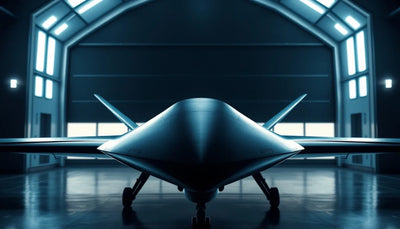
The Phantom Twist relies on a single motor and a twisted airframe that rotates continuously in flight. According to the original report, the design makes the drone “roughly ten times harder to see” than a traditional quadcopter of similar size. The mechanism exploits persistence of vision—the same optical phenomenon that makes fast-spinning fan blades appear solid—to blur the drone’s outline, reducing its visual signature dramatically. While the prototype remains a laboratory experiment, its core idea could migrate into future commercial drones or aftermarket modifications, altering how operators think about detection, visibility, and counter-UAS risk.
The science behind invisible flight
Northwestern University’s team built the Phantom Twist around a single electric motor, unlike conventional multi-rotor platforms that use four or more motors for stability and redundancy. The single motor drives both the propeller and the airframe’s rotation. As the entire airframe spins, the drone’s physical outline becomes a blur, making it far less distinguishable against the sky or background terrain.
Market context
Turn market news into a buy, repair, or trade-in decision.
Compare pre-owned availability, resale timing, and repair economics before the market moves again.

The report emphasizes that this is not stealth technology in the radio-frequency sense. The Phantom Twist does not reduce radar cross-section or infrared emission. It targets the visual detection layer—the human eye, optical sensors, and many camera-based detection systems that rely on edge recognition and shape identification. For drone operators who operate where visual observation is part of compliance (such as VLOS rules or no-fly zone monitoring), this design introduces new uncertainty. A drone that is ten times harder to see could slip past casual observers and some automated detection algorithms before an operator or security system reacts.
This matters for fleet managers who currently rely on visual spotting as a fallback for airspace awareness. If even a few production drones adopt similar twisting designs, existing counter-UAS tactics that depend on rapid visual identification may need re-evaluation.
What this means for drone detection
The persistence-of-vision approach represents a fundamentally different challenge from the drones that detection systems are optimized to see. Most counter-UAS solutions today use radar, radio-frequency (RF) scanners, or acoustic sensors to identify drones. While visual cameras are often used for classification, they are rarely the primary detection method. The Phantom Twist’s reduced visual signature may have less effect on RF or radar-based detectors, but it could complicate classification in systems that fuse camera data with other sensor inputs.
Another key takeaway from the report is that the twisting design does not require exotic materials or expensive electronics. It is mechanically simple. That simplicity means the concept could be replicated or adapted by third-party manufacturers, including those producing components for the pre-owned and aftermarket drone ecosystem. Operators who purchase older quadcopters or pre-owned DJI drones may find that their existing aircraft are more visually conspicuous than newer designs that incorporate even partial twisting airframe principles.
For drone buyers and fleet operators, the question becomes: Will detection systems trust visual identification less in two to three years? If so, reliance on camera-based counter-UAS for site security may need to be supplemented with other sensor modalities. The Phantom Twist, even as a prototype, signals that detection strategy must evolve in parallel with drone design innovation.
What this means for drone buyers
The Phantom Twist prototype is not yet available for commercial purchase, and Northwestern University has not announced licensing or production plans. However, the underlying concept could shape buyer expectations in two ways. First, fleet operators who currently purchase pre-owned DJI drones for quiet, low-visibility operations may need to consider whether their existing aircraft still offer adequate discretion compared to newer mechanically twisted designs. Second, the resale value of standard quadcopters could be affected if buyers begin to perceive traditional multi-rotor shapes as “easy to spot.”
Reboot Hub’s inventory of pre-owned DJI drones remains a practical choice for operators who need proven, reliable aircraft today. The Phantom Twist has not disrupted the market; it has introduced a new variable that buyers should monitor when planning fleet refresh cycles. A drone that is harder to see may appeal to cinematographers seeking reduced visual distraction, security operators wanting covert surveillance tools, or recreational pilots exploring new design possibilities. Until such drones become available, current quadcopters remain the reliable workhorses of the industry.
The commercial takeaway is straightforward: continue evaluating detection requirements for your operating environment. If your missions depend on staying visually unobtrusive, watch for prototypes that advance beyond the research stage. In the meantime, ensure your current drones are maintained and repaired with professional DJI repair services to preserve their performance and resale value.
Planning for a future with harder-to-detect drones
Commercial operators and repair customers should consider how the Phantom Twist concept might interact with routine operations. If future drones become significantly harder to see visually, the burden of detection will shift more heavily to radio-frequency and acoustic sensors. That could affect flight planning near airports, critical infrastructure, or event venues where visual detection by a security team is a required safeguard.
For the second-hand market, the appearance of any new visibility-changing technology tends to accelerate depreciation of older models. While the Phantom Twist is a prototype, similar designs from other universities or startups may reach the market in the coming years. Buyers who plan to eventually resell their drones may want to factor in that conventional quadcopters could lose a portion of their value if visual detectability becomes a differentiator. Using a drone trade-in guide can help you time your upgrade decision to maximize your investment.
Fleet managers should begin conversations with their counter-UAS vendors about sensor fusion strategies that do not depend solely on visual detection. The Northwestern report is a reminder that optical countermeasures are only one layer in a resilient detection system. Hardware and software updates for detection systems may be needed to handle drones that exploit persistence-of-vision effects. No commercial deployment is imminent, but early awareness allows operators to budget and plan.
Is the Phantom Twist drone available for purchase?
No. The Phantom Twist is a research prototype built at Northwestern University. It has not been commercialized, and no timeline for production has been announced in the source report.
Does the twist design affect radio-frequency or radar detection?
The source report does not address radar or RF signatures. The tenfold visibility reduction applies to visual detection only. Existing counter-UAS systems that rely on radio-frequency or radar methods should still detect the drone, though classification based on shape may be degraded.
Should I change my current drone purchase decisions because of this?
Not yet. The Phantom Twist represents an interesting research direction, but it does not change the practicality of current quadcopters. Buyers and fleet managers should monitor developments but continue to invest in reliable, supported aircraft. Pre-owned DJI drones remain a solid choice for performance and value.
Sources consulted
- DJI Phantom – DroneXL.co - primary source
- Drone industry news – DroneXL.co - primary reporting source
- DroneXL.co - primary reporting source
Reboot Hub Editorial adds buyer, repair, resale, and operational analysis for drone owners. If you spot an error, contact us for correction review through our editorial policy.