Nigeria’s House of Representatives Seeks Federal Funding to Boost Local Drone
The Nigerian House of Representatives is pressing for government funding to accelerate local drone manufacturing for national security. The move could reshape procurement, repair demand, and the pre-owned market in Africa’s largest economy.

On July 24, 2026, the Nigerian House of Representatives formally called on the federal government to allocate dedicated funding aimed at boosting the country’s local drone industry for national security applications. The development, reported by PRNigeria News, marks a significant policy push in Africa’s most populous nation and could reshape how commercial operators, fleet managers, and repair customers plan their equipment strategies in the region.
Lawmakers argued that a domestically nurtured drone manufacturing base would reduce reliance on imported unmanned aerial systems (UAS) and strengthen surveillance, border patrol, and critical infrastructure protection. While no specific budget figure or timeline was attached to the proposal, the move signals that defense and public safety procurement in Nigeria may increasingly favor locally assembled or produced platforms over foreign imports. For drone buyers and fleet operators serving government contracts, this creates both opportunity and uncertainty.
What the funding push means for Nigeria’s drone ecosystem
The House of Representatives’ request is rooted in a broader recognition that indigenous manufacturing capacity is essential for long-term national security autonomy. According to the source article, the legislative body is seeking federal funding specifically to “boost the local drone industry for national security.” The phrasing suggests an intent to channel resources toward research, assembly lines, and certification infrastructure rather than simply purchasing off-the-shelf hardware.
Fleet readiness
Keep DJI hardware available without overbuying new units.
Use defense and fleet news as a planning signal for repair support, inspected pre-owned aircraft, and replacement timing.

For years, Nigerian security agencies have relied heavily on imported drones, predominantly from Chinese manufacturer DJI, as well as smaller volumes from Israeli and European suppliers. A shift toward local production could introduce new models designed for African operating conditions—high ambient temperatures, dusty environments, and long-range border patrol missions. It may also impose new certification requirements that affect operators flying imported equipment on government contracts.
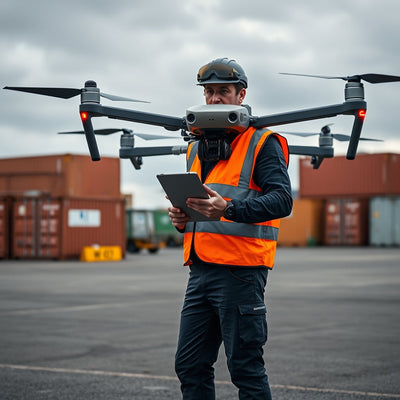
Commercial fleet operators who currently bid for Nigerian police, military, or infrastructure monitoring tenders should watch closely. If local content rules accompany the funding, imported drones could face procurement restrictions or higher duties. That would make pre-owned DJI drones—already in country and serviced by local repair shops—an attractive bridge between current inventory and future domestic platforms.
National security priorities and the defense supply chain
The direct linkage between drone manufacturing and national security is not new, but the Nigerian legislative push comes at a moment when many African governments are reassessing their defense supply chains. The source article explicitly frames the funding request under a “national security” rationale, which likely means initial emphasis on surveillance, reconnaissance, and counter-insurgency operations.
Import-dependent nations like Nigeria have experienced supply delays and geopolitical pressure tied to drone exports. A homegrown industry would allow Nigeria to bypass export controls and maintain operational continuity. The House of Representatives is effectively signaling that the country intends to build sovereign capability rather than remain a pure buyer of foreign technology.
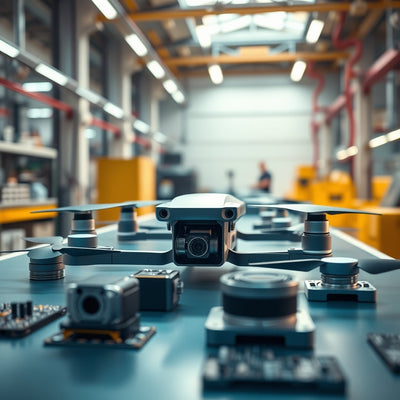
For repair businesses and spare parts suppliers serving Nigerian operators, a local manufacturing push could eventually expand the pool of OEM-pulled parts available domestically. If Nigerian-assembled drones use standard components, professional professional DJI repair services could integrate those parts into their workflows. Conversely, if the government mandates proprietary Nigerian designs, the repair ecosystem may need to invest in new tooling and training. The coming months will clarify which path the funding supports.
What this means for drone buyers
Drone buyers—especially those operating in or exporting to Nigeria—face an evolving procurement landscape. The immediate implication is that the federal government’s attention on local manufacturing could temporarily slow approval processes for imported drones used in security roles. Operators waiting on government contracts may see delays as agencies await policy direction.
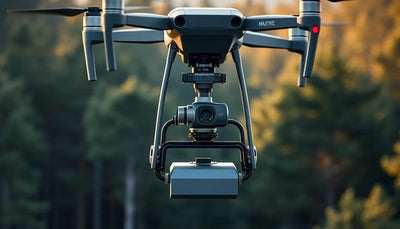
For fleet managers, the wisest near-term move is to diversify equipment sources while maintaining a focus on proven, serviceable platforms. The pre-owned market offers a hedge: buying inspected pre-owned DJI drones avoids exposure to new import tariffs that may arise if the funding bill becomes law with protectionist measures. An operator who acquires a used Matrice 300 or Mavic 3 Enterprise today can fly it immediately, knowing that professional repair services are well established in Nigeria’s major cities.
Second-hand drone sellers should expect increased inquiries from Nigerian buyers, particularly for enterprise-grade models suited to border monitoring and infrastructure inspection. The House’s push may accelerate the turnover of older DJI fleets as operators upgrade before any regulatory changes take effect. Using a drone trade-in guide to value existing equipment becomes especially useful when policy shifts are on the horizon.
Individual buyers—private surveyors, agricultural consultants, and media pilots—should keep their procurement cycles short. Avoid purchasing large quantities of imported drones until the federal government clarifies whether local content quotas will apply to private operators or only to government contracts. Cash in hand for a few pre-owned units now may be smarter than ordering a fleet of new imports that could face retroactive fees.
Outlook for the pre-owned DJI market and repair ecosystem
The Nigerian legislative development fits a global pattern: governments seeking drone sovereignty often create unintended opportunities for the second-hand market. When new imports become restricted or expensive, pre-owned DJI drones—which already have a deep support network in Africa—become the default choice for missions that cannot wait for domestic manufacturing to scale.
Reboot Hub analysis: Repair centres in Lagos, Abuja, and Port Harcourt are likely to see increased demand for service on older DJI airframes. Operators who formerly upgraded to the latest model every cycle may now hold on to their drones longer, investing in motor replacements, battery swaps, and camera recalibration. This trend favours repair shops that stock genuine OEM spare parts and offer transparent turnaround times.
The pre-owned DJI market, already strong in Africa due to cost sensitivity, could tighten as Nigerian buyers compete for available inventory. Sellers listing pre-owned DJI drones may find they command higher prices if the funding bill advances and duty rates climb. Fleet operators should consider locking in purchases now rather than after legislative momentum builds.
Ultimately, the House of Representatives’ funding request is a signal of intent rather than an enacted policy. But for drone professionals who plan ahead, it provides a clear data point: the Nigerian government sees drones as a strategic asset and is willing to spend public money to control the supply chain. That alone should prompt buyers, sellers, and repair providers to reassess their positioning in the region.
Will the funding bill require all government drones to be locally made?
Not yet. The House of Representatives has only requested funding to boost the local industry. No specific procurement mandate has been passed. However, lawmakers often use funding as the first step toward later legislation that enforces local content. Operators should monitor committee hearings for early signs of mandatory local sourcing language.
How will this affect the price of used DJI drones in Nigeria?
If the funding push leads to higher import duties or restrictions on foreign drone purchases, demand for pre-owned DJI units could increase, pushing up prices. Conversely, if the government funds large domestic production that floods the market with lower-cost units, pre-owned values may dip. The most likely near-term effect is moderate upward pressure on inspected pre-owned inventory as buyers front-run policy changes.
Should I delay buying a drone if I operate in Nigeria?
Unless you are bidding on a government contract specifically tied to the new funding, there is no reason to delay. For commercial operators, buying a proven pre-owned DJI model now avoids potential import friction and ensures you have a reliable aircraft while the policy landscape settles. If you plan to sell or trade in your drone later, investing in a model with strong repair support maintains its residual value.