India’s Drone Moment Arrives: What It Means for Buyers and Operators
India’s commercial drone sector has reached a long-anticipated inflection point. We break down the key trends, regulatory shifts, and what they mean for buyers, fleet operators, and the second-hand market.

India’s drone ecosystem has crossed a critical threshold. As reported by India Gazette, the country’s drone moment has arrived, signalling a structural shift in how commercial operators, government agencies, and logistics firms adopt unmanned aerial systems. This is not a speculative forecast or a tech-hype narrative—it is a market reality that drone buyers, fleet managers, and repair customers need to factor into their procurement and operational plans.
For years, India was seen as a high-potential but regulation-constrained market. The 2021 Drone Rules liberalised most commercial operations, and the Production-Linked Incentive scheme launched in 2022 gave domestic manufacturing a significant push. Now, with maturing supply chains, increased public-sector demand, and a growing base of certified pilots, the inflection point appears to have arrived. The question for commercial UAV professionals is no longer whether India will adopt drones at scale, but how to position their own fleets, budgets, and service strategies in response.
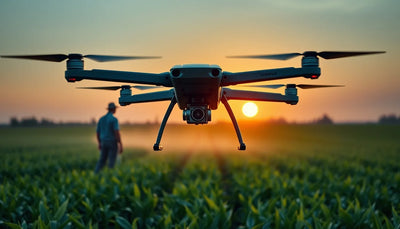
The Indian drone inflection point
What makes the current moment distinct is the convergence of policy certainty, manufacturing momentum, and end-user confidence. India’s Directorate General of Civil Aviation has streamlined the digital sky platform for remote pilot certification and flight permission. The government has also mandated drone use in select agricultural schemes and infrastructure surveying, creating a baseline demand that private industry is now amplifying.
Market context
Turn market news into a buy, repair, or trade-in decision.
Compare pre-owned availability, resale timing, and repair economics before the market moves again.

The source article from India Gazette underscores that the ecosystem has moved beyond pilot projects. Commercial drone startups are scaling delivery operations for healthcare and e-commerce, while enterprise-grade platforms like the DJI Matrice series are increasingly common on Indian construction sites and power line corridors. The second-hand market for these platforms is also growing, as early adopters upgrade fleets and experienced operators offload well-maintained airframes to new entrants.
For fleet operators, this inflection means that India is becoming a viable secondary market for pre-owned DJI drones. Units that were originally sold in the US or Europe can now be certified for operation in India under the updated import and registration rules, provided they meet the Remote ID and no-permission-no-takeoff standards.
Market drivers and commercial use cases
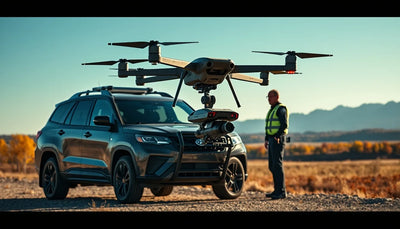
Three primary drivers are pushing India’s drone adoption from marginal to mainstream. First, government-backed initiatives such as the National Geospatial Policy and the Kisan Drone scheme are providing a steady pipeline of survey, mapping, and agricultural spraying contracts. These jobs are typically awarded to local service providers who need reliable hardware and fast turnaround repair support.
Second, the logistics sector has embraced beyond-visual-line-of-sight (BVLOS) trials for medical deliveries. Blood, vaccines, and emergency supplies are being transported by drones in states like Telangana and Uttar Pradesh, creating demand for resilient multi-rotor platforms and spare parts availability.
Third, India’s large mining, oil, and gas sectors are deploying drones for volumetric analysis, leak detection, and security patrolling. These operations require rugged airframes with thermal payloads, which drives interest in the pre-owned market for high-end platforms like the DJI Mavic 3 Thermal or Matrice 350 RTK.
The combination of these use cases means that repair services capable of handling OEM-level component swaps are in high demand. Rather than sending drones abroad for service, Indian operators increasingly rely on local professional DJI repair services that use genuine OEM spare parts to minimise downtime.
What this means for drone buyers
For anyone considering a drone purchase in the current Indian market, the calculus has changed. New units remain readily available through authorised distributors, but pricing has become more competitive as domestic assembly ramps up. However, the real opportunity lies in the growing pool of inspected pre-owned DJI drones entering the market from fleet upgrades and corporate liquidations.
Buyers should evaluate the total cost of ownership rather than just the upfront price. A pre-owned DJI drone that has undergone a thorough inspection and comes with a service history can offer comparable reliability at a 30–40% discount to retail. This is especially attractive for startups and small to midsize operators who need to deploy multiple units without stretching capital.
Fleet managers upgrading from older generations—for example, moving from a Matrice 210 to a Matrice 350—should consider the trade-in value of their existing hardware. Using a drone trade-in guide can help maximise residual value and simplify the transition. At the same time, buyers entering the market for the first time should prioritise platforms with strong local support infrastructure, including access to genuine OEM spare parts and certified repair technicians.
Another practical consideration is compliance. India’s digital sky platform requires drones to be registered and equipped with a unique identification number. Buyers of pre-owned units must ensure that the previous owner has deregistered the airframe and that the transfer of ownership is documented properly. Reputable pre-owned sellers typically handle this paperwork, but it remains a buyer responsibility.
Implications for the pre-owned and repair ecosystem
India’s drone moment is also reshaping the secondary hardware market. As more commercial operators enter the space, the demand for cost-effective, proven airframes rises. Pre-owned DJI drones from early fleet adopters are becoming available at prices that make sense for pilot training schools, agricultural spraying cooperatives, and surveying contractors.
This trend has a direct impact on repair services. Older platforms require more frequent motor and battery replacements, and the availability of OEM-pulled parts becomes critical. Repair centres that stock genuine DJi components and have experience with Matrice and Mavic platforms are best positioned to serve this growing base. For operators, it means shorter turnaround times and less likelihood of grounding due to parts shortages.
Furthermore, the Indian government’s push for domestic manufacturing under the PLI scheme has led to local assembly of some drone components. This could eventually reduce part costs and make maintenance more affordable. But for now, the bulk of high-end electronic modules—IMUs, gimbal assemblies, flight controllers—remain imported. Fleet operators should factor in potential customs delays when planning maintenance schedules.
For repair customers, the key takeaway is to seek service providers that guarantee genuine OEM parts and publish transparent pricing. Uncertified third-party repairs may void any remaining warranty and can compromise flight safety, especially for platforms used in BVLOS missions where reliability is paramount.
The overall message for the commercial UAV community is clear: India is no longer an emerging market for drones—it is a live, dynamic theatre where procurement, operations, and aftermarket support are evolving rapidly. Staying informed about local regulations and leveraging the pre-owned market can provide a competitive edge.
What regulatory changes triggered India’s drone moment?
India’s 2021 Drone Rules replaced the earlier restrictive framework with a liberalised regime that reduced paperwork, expanded allowed operations, and introduced the digital sky platform for remote pilot certification and flight permissions. The production-linked incentive scheme further boosted domestic manufacturing, making drones more accessible and affordable.
Is it safe to buy a used DJI drone in India?
Yes, provided the purchase is made through a reputable source that inspects the drone for airframe integrity, battery health, and firmware compliance. Buyers should verify that the drone’s serial number is not blacklisted and that the ownership transfer is completed through the digital sky platform. Pre-owned DJI drones from fleet upgrades often offer excellent value for new operators.
How can I find reliable drone repair services in India?
Look for service centres that use genuine OEM spare parts and have certified technicians with experience in DJI enterprise platforms. Many operators recommend using professional DJI repair services that offer documented repairs and transparent pricing. Local availability of OEM-pulled parts can significantly reduce downtime.
Sources consulted
- FAA UAS official guidance - official regulator source
Additional official documentation was not available at publication time.
Reboot Hub Editorial adds buyer, repair, resale, and operational analysis for drone owners. If you spot an error, contact us for correction review through our editorial policy.
This article is market commentary for drone operators and buyers, not investment advice. Reboot Hub does not provide financial advice or recommend securities transactions.