GA-ASI Adapts GCS to Fly MQ-9B: What It Means for Drone Buyers
General Atomics upgrades its ground control station to fly the MQ-9B, easing procurement for new and existing operators. We analyze what this means for drone buyers, fleet managers, and the second-hand market.

General Atomics Aeronautical Systems, a dominant force in unmanned aerial systems, has announced that it is adapting its ground control station (GCS) to fly the MQ-9B. The move, reported by SUAS News on June 26, 2026, is framed as an investment in upgrades that ease MQ-9B procurement for current and future users. While the announcement comes from the defense sector, its implications ripple across the entire drone industry—from fleet operators considering long-endurance platforms to buyers weighing the value of compatible ground infrastructure in the pre-owned market.
What the GCS adaptation means operationally
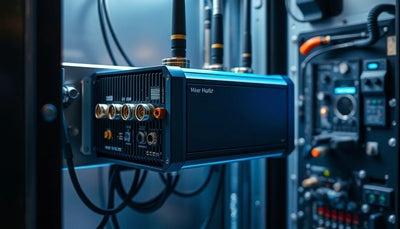
According to the source, General Atomics is modifying an established ground control station design to be compatible with the MQ-9B. This is not a minor software patch; it represents a deliberate architectural shift. By reusing an existing GCS footprint, GA-ASI reduces the need for bespoke control equipment when purchasing the MQ-9B. For international customers already operating earlier General Atomics platforms, this lowers the incremental cost of upgrading to the MQ-9B. For new entrants, it means a more standardized training pipeline and logistics chain. The practical implication for fleet managers: future-proofing your ground segment matters as much as the airframe itself. If you invest in a modular GCS today, you may avoid costly rip-and-replace cycles when adding new aircraft types tomorrow.
The source explicitly states that the upgrade "eases MQ-9B procurement." That phrasing suggests that the barrier to entry—both financial and operational—has been intentionally reduced. For commercial drone buyers accustomed to closed ecosystems where each drone requires its own controller, this defense-sector precedent reinforces the value of open architecture and backward compatibility. When a major prime like GA-ASI chooses to adapt rather than rebuild, it signals that interoperability is becoming a procurement priority.
Industrial drone procurement
Source a brand-new industrial drone for this mission.
Discuss mission fit, aircraft model, quantities, configuration, pickup, and lifecycle support with Reboot Hub.

What this means for drone buyers
For commercial drone purchasers, especially those operating at the enterprise level, the GA-ASI announcement offers a strategic lesson. When evaluating a new airframe, the cost of the ground control system is often as significant as the drone itself. A compatible GCS can mean thousands of dollars in savings on training, spare parts, and integration. Buyers in the used market should pay particular attention: a pre-owned drone that comes with a standardized GCS is more valuable than one tethered to a rare or discontinued controller. This is true whether you are looking at heavy-lift UAVs or more common platforms from DJI and others. The principle is the same—ground control interoperability reduces total cost of ownership.
Fleet operators should also consider how a modular GCS strategy can extend the life of their investment. If you currently own a control station that can be adapted to fly a newer aircraft, you may not need to purchase a new one. This is exactly the kind of upgrade path GA-ASI is offering its defense clients. While most commercial buyers do not operate on that scale, the logic applies at every level. When shopping for a drone, ask whether the controller or ground station can be updated to support future models. That question alone can save significant budget over a three- to five-year planning horizon.
Additionally, the news reinforces a broader trend: the second-hand market for drones is becoming more nuanced. Buyers who focus solely on airframe hours may miss the value of compatible ground infrastructure. A used drone paired with a versatile GCS is often a smarter purchase than a newer drone with a single-use controller. For those looking at pre-owned DJI drones, checking controller compatibility with future firmware updates and potential accessory integration is a practical step that mirrors the thinking behind GA-ASI's GCS adaptation.
Implications for fleet planning and repair services
If a major defense contractor prioritizes GCS commonality, it suggests that the aftermarket for drone repair and spare parts must adapt accordingly. A modular ground station means that a single unit can serve multiple airframes, but it also means that a failure in that shared component could ground multiple aircraft. Fleet operators should therefore plan for redundancy at the control segment level. Having a spare GCS or a backup controller that can be quickly swapped becomes a critical risk mitigation strategy.
For repair services, the shift toward adaptable GCS units implies a need for broader diagnostic expertise. Rather than specializing in one platform's controller, technicians must understand how the same base hardware interacts with different aircraft types. This is where professional DJI repair services that use genuine OEM parts already demonstrate this principle—they maintain capability across multiple models, ensuring that a single repair facility can handle a diverse fleet. As the industry moves toward standardized ground segments, repair providers that invest in cross-platform training will be better positioned to serve customers.
The source also hints at procurement simplification: customers can order the MQ-9B with confidence that their existing GCS infrastructure will work. For commercial operators trading up to a newer aircraft, this is a direct analogy. When you sell your old drone and buy a newer model, if the same controller can be used, you avoid the hassle of reselling or scrapping the old ground unit. This fluidity in the pre-owned market is already visible with DJI's ecosystem, where many controllers can be paired with multiple drone types via firmware updates. The GA-ASI move validates that approach at the highest level of UAS procurement.
Broader market trends: modularity and the second-hand ecosystem
The announcement is a clear signal that the drone industry—both military and commercial—is converging on modular, interoperable ground control. This trend is positive for the second-hand market. Drones that are part of a compatible hardware family will retain value better than orphaned models. Buyers of used heavy-lift UAVs or even smaller enterprise drones should prioritize those that can fly from a standardized controller. The same logic applies to spare parts: a common GCS reduces the variety of spares you need to stock, which is especially beneficial for repair shops and fleet operators managing multiple airframes.
For those considering a trade-in, understanding whether your ground equipment has resale value is crucial. A controller that works with multiple aircraft types is more marketable than a single-use unit. The drone trade-in guide often emphasizes the importance of complete kits; this news adds a new dimension—compatibility matters as much as completeness. A pre-owned DJI drone bundled with a controller that also flies newer models is worth more than one with a legacy, non-upgradable controller.
GA-ASI's investment is not simply a defense story. It is a validation of a product strategy that reduces friction for buyers, lowers total cost of ownership, and extends the useful life of ground infrastructure. Commercial operators watching this space should take note: the days of one drone, one controller are fading. The future belongs to systems that can grow with your fleet.
One operator-facing answer to the question "what should I do differently after reading this?" is straightforward: when evaluating any drone purchase, commercial or pre-owned, factor in the upgrade path and compatibility of the ground control equipment. If the controller can be adapted to fly multiple airframes, it is a strategic asset. If it is locked to one model, it is a disposable cost. That single lens will sharpen your procurement decisions whether you are buying new, selling used, or planning a fleet expansion.
Will this GCS adaptation affect non-General Atomics drone buyers?
Indirectly, yes. The move sets a market precedent for modular ground control that other manufacturers may follow. Commercial buyers who demand similar flexibility from their drone suppliers will accelerate that trend, making cross-platform compatibility a standard expectation rather than a niche feature.
How does this news relate to the pre-owned DJI drone market?
It reinforces the importance of controller compatibility. Pre-owned DJI drones that come with controllers capable of supporting multiple models or future firmware updates hold higher residual value. Buyers should verify controller upgradability before purchasing used equipment.
What practical step can a fleet manager take based on this update?
Audit your current ground control inventory to determine which controllers are single-purpose and which can be reused across different airframes. Prioritize replacement of single-use units with adaptable alternatives, even if it means a slightly higher upfront cost, to reduce long-term procurement and training expenses.