Flytrex Claims Airspace Overlap Solved for Drone Delivery Scale
Flytrex announces a solution for multiple companies sharing the same delivery airspace. The development could unlock scalable suburban drone delivery. Operators and buyers should watch for new fleet management implications.

The question of how multiple drone delivery companies can operate in the same suburban airspace without collisions has long been a theoretical bottleneck. Flytrex, a drone delivery operator with real-world services in the United States and Israel, says it has now demonstrated a practical answer. The implications for drone buyers, fleet operators, and the broader commercial UAV industry could be significant.
According to a report from DroneDJ dated June 25, 2026, Flytrex has shared results from real-world testing that show how its system manages overlapping delivery routes from different companies. While specific technical details were not disclosed, the core claim is that the system allows multiple drone delivery operators to use the same airspace simultaneously, without requiring a single centralized traffic management authority. This could remove one of the largest operational hurdles to scaling drone delivery across American suburbs and similar environments globally.
Why airspace overlap matters for drone delivery
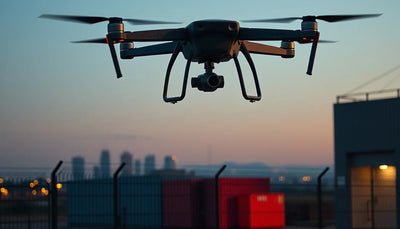
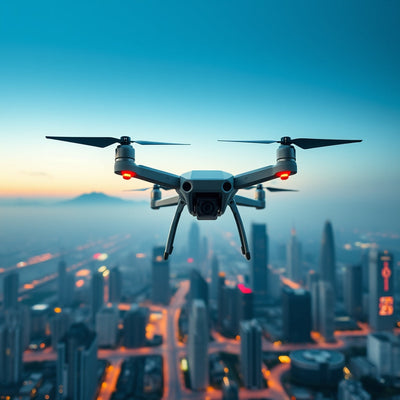
For years, the drone delivery industry has focused on individual aircraft performance, battery life, payload capacity, and regulatory approvals. Yet the operational reality is that suburbs are finite in area, and as more companies launch delivery services, the risk of airspace conflicts grows. A single town might see drones from Wing, Flytrex, Amazon Prime Air, and others all flying low-altitude routes over residential streets. Without coordination, the risk of mid-air collisions or ground safety incidents increases, and public acceptance may erode.
Industrial drone procurement
Source a brand-new industrial drone for this mission.
Discuss mission fit, aircraft model, quantities, configuration, pickup, and lifecycle support with Reboot Hub.

The Flytrex solution, as described in the source article, appears to rely on a software-based deconfliction method that does not require all operators to use the same hardware or flight management platform. This is a critical distinction, because previous proposals often assumed a universal traffic management system, which has proven slow to develop and implement. By demonstrating that airspace can be shared without a single central authority, Flytrex has shown a path that respects existing investments by different operators.
For commercial drone buyers and fleet operators, this development has immediate relevance. If airspace sharing becomes feasible, the number of viable delivery routes and operating zones may increase, potentially driving greater demand for delivery drones. Fleets that are already operating in suburban environments may see new opportunities to expand service areas, but also new competition for the same airspace. Understanding how Flytrex's system works, and whether it becomes an industry standard, will be important for anyone planning a drone delivery fleet.
What this means for drone buyers
Drone buyers who are considering entry into the delivery market, or who already operate mid-mile or last-mile delivery drones from DJI, Wingcopter, or other manufacturers, should pay close attention to airspace coordination solutions. The Flytrex announcement suggests that the days of single-operator airspace are numbered. In a multi-operator environment, buyers will need to ensure their drones are compatible with open deconfliction protocols or at least able to integrate with third-party airspace management systems.
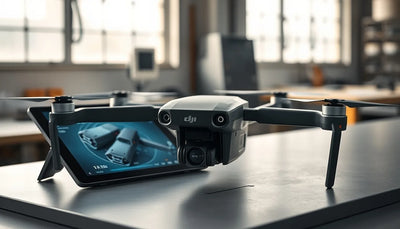
For buyers of pre-owned DJI drones, the news is nuanced. Pre-owned DJI platforms such as the Matrice 300/350 series or the M30/M30T are popular for delivery trials because of their reliability and payload flexibility. If airspace coordination systems become mandatory, older drones that lack standard communication modules might need retrofitting or upgraded flight controllers. Buyers in the pre-owned market should verify whether a specific unit supports remote identification and any future deconfliction protocols. At Reboot Hub, our drone trade-in guide can help you evaluate whether upgrading or trading in an older model makes sense in light of emerging airspace requirements.
Fleet managers should also consider the software side. If Flytrex's approach involves a cloud-based service, operators may need to subscribe to that or a similar service. That means recurring operational costs beyond hardware. Buyers planning a new fleet should factor in not just drone acquisition costs, but also ongoing airspace management fees. This is a shift from the current model where most drone delivery operations fly in segregated or low-density airspace.
Additionally, the used drone market could see increased demand for drone models that are known to be compatible with common airspace management APIs. While no specific compatibility list was provided in the source, the market trend will likely favor drones with open SDKs and robust remote ID capabilities. If you own a DJI Mavic 3 Enterprise or similar, it may already meet emerging requirements, but staying informed is key.
Practical implications for fleet operations and repair services
If multiple companies begin sharing suburban airspace, the operational tempo for individual drones may increase. Routes may become more dynamic, with real-time adjustments to avoid other aircraft. This means drone components will experience different wear patterns. More frequent braking, rerouting, and altitude changes could put additional stress on motors, propellers, and gimbals. For fleet operators, proactive maintenance becomes even more critical.
Repair services will need to be capable of handling not just crash damage, but also wear from high-cycle operations. Operators using DJI platforms may want to establish a relationship with a repair service that uses genuine OEM parts to ensure reliability after repairs. Professional DJI repair services that use OEM-pulled parts can help maintain airworthiness as drones accumulate flight hours in congested skies.
Furthermore, if airspace coordination requires specific firmware versions or software modules, drones that are sent for repair may need to have their software updated or reset. Repair customers should confirm that the repair facility can handle software configuration and compliance checks. As the industry moves toward shared airspace, a repaired drone that is not fully compliant may be grounded until updated. This adds another layer of complexity to fleet management.
Market outlook: what this means for the second-hand drone market
The Flytrex development could accelerate the adoption of drone delivery services, which in turn may increase the overall turnover of delivery drones. As operators expand fleets, they may offload older units to the second-hand market. For buyers of pre-owned DJI drones, this could mean better availability and lower prices for models that are still capable of delivery tasks but not necessarily the latest generation. However, caution is warranted: older drones that cannot be updated to meet future airspace coordination requirements may become less valuable.
Conversely, if the Flytrex system or similar solutions become industry standards, drones that are already equipped with appropriate communication hardware and open APIs may retain value better. The pre-owned market may begin to differentiate between "airspace-ready" drones and those that are not. Sellers should document firmware versions and any retrofit history. Buyers should ask about software compatibility before purchasing a used delivery drone.
The broader trend is that airspace coordination is no longer a theoretical problem. Real-world solutions are emerging, and they will shape the commercial drone landscape for years. Whether you are a fleet operator, a repair customer, or a buyer of pre-owned DJI drones, staying informed about these developments will help you make smarter purchasing and maintenance decisions.
What exactly did Flytrex announce?
Flytrex announced that it has demonstrated a real-world solution for multiple drone delivery companies to use the same suburban airspace simultaneously without a central traffic management system. The results were reported by DroneDJ on June 25, 2026.
Does this affect DJI drone owners?
Indirectly, yes. If airspace coordination becomes a requirement for delivery operations, DJI drone owners may need to ensure their drones are compatible with open deconfliction protocols or have the necessary software and hardware. Pre-owned DJI buyers should check for compatibility before purchasing.
Should I buy a used drone for delivery now or wait?
If you are planning a delivery fleet, consider waiting until the specific airspace coordination requirements are clearer. Alternatively, buy a pre-owned DJI drone that is known for strong SDK support and remote ID compliance, and be prepared to invest in software integration later. Use our drone trade-in guide to evaluate your options.