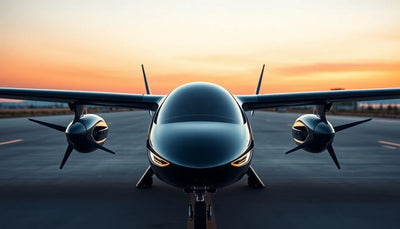
DJI Integrates Parachutes Into Drones for Hardware and People Protection
DJI has integrated a parachute system directly into drone frames to protect the hardware and reduce injury risk. We analyze what this means for commercial operators, fleet managers, repair decisions, and the pre-owned DJI drone market.

A recent design report indicates that DJI has built a parachute directly into certain drone models, aiming to protect both the hardware during a malfunction and people on the ground. The concept moves safety from an add-on accessory to an integrated structural feature. For commercial operators, this shift could redefine how they evaluate risk, plan fleet upgrades, and manage repair costs.
The source describes the parachute as being built into the drone's frame, not attached externally. That design choice suggests DJI is treating parachute deployment as a standard safety layer rather than an optional extra. While details on which specific models carry the system or how deployment is triggered remain limited, the implication is clear: DJI sees in-flight failure mitigation as a core part of drone engineering going forward.
For fleet operators, repair customers, and buyers in the pre-owned DJI market, this development raises several practical questions. Below we break down what the parachute integration means for maintenance, purchasing decisions, and overall operational planning.
DJI buying context
Match product news to hardware you can actually deploy.
Check inspected DJI aircraft, repair support, and trade-in timing before deciding whether to upgrade, repair, or wait.

How the built-in parachute changes risk management
DJI's parachute integration signals a shift in how manufacturers approach hardware protection. Traditional parachute solutions for drones are aftermarket kits that add weight, require separate mounting, and can interfere with gimbal or payload space. By building the parachute into the frame, DJI eliminates those trade-offs while ensuring the system is always present and properly calibrated.
For operators, this reduces the financial impact of a flyaway or sudden power loss. Instead of writing off a complete airframe after a crash, the parachute may preserve the drone's core electronics, camera, and batteries. That directly lowers total cost of ownership and reduces downtime. For a fleet manager running multiple drones, even a few avoided write-offs can justify upgrading to parachute-equipped units.
The report also emphasizes head protection, meaning DJI is prioritizing liability reduction. A falling drone can cause injury or property damage. While regulations already require safety measures in some regions, an integrated parachute could become a competitive differentiator for operators bidding on contracts that demand higher safety standards.
From a maintenance perspective, parachute-equipped drones introduce new serviceable components. The parachute housing, release mechanism, and deployment sensors will need periodic inspection and possible replacement. Operators should plan for these additional checks in their maintenance schedules. Repair shops that service these models will need to stock OEM-pulled parts for the parachute assembly, adding a new category to spare parts inventory.
What this means for drone buyers
If you are evaluating a new or pre-owned DJI drone purchase, the parachute feature should influence your decision criteria. For commercial buyers who fly over people or near infrastructure, an integrated parachute may reduce insurance premiums and simplify regulatory compliance. It also improves public perception, showing that your operation takes safety seriously.
For buyers considering pre-owned DJI drones, models without the built-in parachute may lose value over time as the market shifts toward safer designs. However, early adopters of parachute-equipped models may see higher resale values because the feature is scarce and desirable. Buyers should ask whether the drone they are purchasing has the parachute system and, if so, whether it has been inspected or serviced recently.
Fleet operators planning a phased upgrade should consider starting with one parachute-equipped unit for high-risk missions, then evaluate performance before committing to a full fleet conversion. For repair customers, if your current DJI drone suffers a crash that leaves the frame intact but damages the parachute system, the repair cost may be lower than replacing the entire drone. Always request a repair estimate that includes checking the parachute assembly.
Ultimately, the parachute integration makes DJI drones more resilient. For buyers, that means fewer total losses and a smoother path to long-term ownership.
Repair implications and spare parts planning
An integrated parachute system adds complexity to repair workflows. Unlike a simple shell replacement, working on a parachute-equipped drone requires knowledge of the deployment mechanism, sensor calibration, and safety arming procedures. Professional repair shops must train technicians on these systems and acquire the necessary diagnostic tools.
For owners, this means not every repair facility will be capable of servicing the parachute component. Relying on professional DJI repair services with certified technicians becomes more important. Using non-OEM parts for parachute repairs could compromise deployment reliability, leading to serious safety consequences. Genuine OEM spare parts are essential for maintaining the integrity of the system.
The pre-owned market will also be affected. Drones with a documented parachute service history will command a premium, while those with missing or tampered parachute components may be viewed as higher risk. Sellers should disclose parachute status clearly, and buyers should factor that into their inspection process. A drone trade-in or resale value may hinge on whether the parachute system is present and functional.
For repair customers, the parachute integration is a net positive. It reduces the chance of catastrophic frame damage, meaning more repairs will be economical. A drone that would have been a complete loss may now be restorable with a parachute repack and a few new components. That extends the useful life of the aircraft and lowers long-term fleet costs.
Broader industry trends in drone safety integration
DJI embedding a parachute into the drone frame fits a larger pattern of manufacturers building safety directly into hardware. We have seen similar moves with obstacle avoidance sensors, ADS-B receivers, and redundant flight controllers. The parachute is the latest example of passive safety becoming a standard design element rather than an aftermarket bolt-on.
Competitors may feel pressure to offer comparable integrated systems. That could drive innovation in lightweight parachute materials, deployment algorithms, and repackable designs. For the repair industry, this creates a new service category: parachute system maintenance. Shops that invest in training and tooling now will be ahead when these drones become common in fleets.
The source's focus on head protection also aligns with regulatory trends in several countries where flying over people is becoming more permissible but requires demonstrated safety mechanisms. An integrated parachute may help operators obtain waivers or permissions more easily. For buyers of pre-owned DJI drones through trade-in programs, confirming parachute functionality will become part of standard due diligence.
Operationally, the parachute does not eliminate the need for careful piloting and pre-flight checks. But it adds a backstop that can save thousands of dollars in equipment and prevent accidents. Fleet managers should update their risk assessment documents to account for the parachute's presence and keep logs of its service history.
Will the parachute add weight or reduce flight time?
Reboot Hub analysis: The source does not provide specific weight or flight time figures. However, integrating the parachute into the frame rather than adding an external kit is likely to minimize the weight penalty. Operators can expect a small reduction in flight time, but the trade-off for crash protection is generally acceptable for commercial missions. We recommend checking technical specifications from DJI for the specific model you are considering.
Can I retrofit a parachute system on an older DJI drone?
Retrofitting may be possible with aftermarket kits, but DJI's integrated design is built into the frame during production. Aftermarket kits typically attach externally and may affect gimbal operation or payload capacity. For maximum safety and compatibility, upgrading to a newer model with the built-in parachute is the most reliable path.
How often does the parachute need to be serviced or repacked?
Service intervals depend on the parachute manufacturer's recommendation and DJI's maintenance guidelines. Generally, parachutes should be inspected after any deployment or hard landing, and repacked according to a schedule based on time and exposure to moisture or heat. Operators should consult their drone's maintenance manual and work with authorized repair centers to keep the system in proper condition.
Sources consulted
- DJI built a parachute into their drones to protect the hardware… and people’s heads - Yank - primary source
Additional official documentation was not available at publication time.
Reboot Hub Editorial adds buyer, repair, resale, and operational analysis for drone owners. If you spot an error, contact us for correction review through our editorial policy.