Could the DJI Lito X1 Reshape the Beginner Drone Market?
A new review introduces the DJI Lito X1 as a beginner drone that delivers professional-grade footage. We examine what this means for buyers, fleet operators, and the pre-owned drone market.

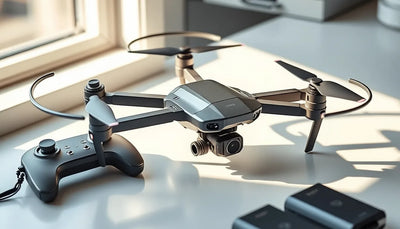
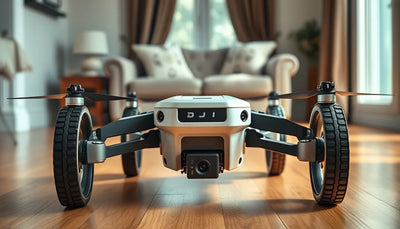
A recent review from techAU.com.au has introduced the DJI Lito X1, describing it as a beginner drone that “shoots like a pro.” While full specifications and pricing remain unconfirmed in the public domain at this time, the review’s headline alone signals an important market trend: drone manufacturers are increasingly merging simplicity with professional-grade image output. For commercial operators, fleet managers, and second-hand drone buyers, this convergence raises practical questions about equipment lifecycles, upgrade paths, and the value of pre-owned inventory.
This analysis explores what the arrival of a beginner‑oriented model with pro‑level imaging could mean for procurement decisions, repair planning, and the broader DJI pre-owned ecosystem — even as we await official product details. The following sections break down the implications for different segments of the drone community.
What the DJI Lito X1 review actually tells us
The techAU article positions the Lito X1 squarely at the intersection of ease of use and high‑quality capture. That is a meaningful departure from the traditional trade‑off where entry‑level drones sacrificed camera fidelity for affordability and simplified controls. According to the review, the Lito X1 aims to remove that compromise, giving beginners access to footage that previously required a more advanced platform.
Market context
Turn market news into a buy, repair, or trade-in decision.
Compare pre-owned availability, resale timing, and repair economics before the market moves again.

For the market, this suggests that DJI — the dominant manufacturer cited in the source — is responding to a growing demand from hobbyists, content creators, and even small business operators who want professional results without the learning curve of a Matrice or Inspire series. The review’s framing implies that the Lito X1 could become a gateway device, drawing new users into the ecosystem while potentially reducing the appeal of older “prosumer” models on the second-hand market.
One immediate implication for fleet operators is that a truly beginner‑friendly yet pro‑capable drone could lower the barrier to entry for staff training. If the Lito X1 delivers on the review’s promise, it may become a viable tool for site inspection, real estate marketing, or agricultural monitoring in scenarios where a lightweight, portable unit suffices. Operators who have been relying on older, heavier beginner drones may find the Lito X1 offers a more efficient workflow without sacrificing output quality.
What this means for drone buyers
For anyone evaluating a first purchase or an upgrade from an older entry‑level model, the Lito X1 review introduces a new variable. The traditional advice has been to buy a used professional drone to get better image quality at a lower price. If the Lito X1 genuinely bridges the gap, buyers may reconsider. A new drone with modern sensors, warranty coverage, and simplified controls could be more attractive than a pre-owned mid‑range model from two generations ago.
Buyers should also consider total cost of ownership. A beginner‑focused drone that shoots professional footage may reduce the need for post‑processing software upgrades or external ND filters, depending on final specs. The review does not detail battery life, transmission range, or obstacle avoidance, so cautious buyers will want to verify those figures when official data emerges. Until then, the headline alone should prompt a comparison between pre-owned options and the Lito X1 as a potential new entry point.
Another practical takeaway: if the Lito X1 succeeds, it could accelerate the depreciation of earlier “prosumer” drones such as the Mavic 2 Pro or Phantom 4 Pro. For buyers who prioritize budget, waiting for those price drops may still be a smart move. However, the convenience of a modern beginner drone with comparable image quality might justify the premium for new equipment, especially for operators who value reliability over absolute lowest cost.
Implications for the pre‑owned DJI market and repair services
The introduction of a drone that blurs the line between beginner and professional inevitably affects the resale value of existing inventory. Models that were once considered “pro‑level” simply because of camera capability may lose their premium status if a lighter, easier‑to‑fly alternative offers similar results. Owners of older pre‑owned DJI drones should pay attention to these market dynamics when planning their next upgrade or trade‑in.
For sellers, the window to trade in earlier models at favorable prices could narrow once the Lito X1 becomes widely available. Buyers shopping for pre-owned DJI drones will likely see increased supply of units like the Mavic Air 2 or Mini 2 as owners migrate to the new platform. That oversupply can benefit cost‑conscious buyers but may reduce the trade‑in value current owners can expect.
Repair considerations also evolve. A new drone model brings its own parts ecosystem. Older models may become harder to service if manufacturers shift focus. Operators planning to keep a drone for several years should evaluate the availability of genuine spare parts. The Lito X1’s release suggests DJI continues to expand its product lines, which can mean more SKUs for repair centers to stock. Fleet managers who rely on professional DJI repair services will need to confirm that their chosen repair partner can handle the new model before adding it to their fleet.
How operators should approach this new segment
Until official specifications are published, the smartest move is to treat the Lito X1 as an unconfirmed but promising signal of where the market is heading. Fleet operators can start by auditing their current camera requirements: do all operations need the full dynamic range and raw capabilities of a professional cine drone, or would a capable beginner model suffice for routine tasks? If the answer is the latter, the Lito X1 could become a cost‑effective addition to a mixed fleet.
Repair customers and parts buyers should watch for tear‑down reports and parts lists once the drone ships. If the Lito X1 uses modular components similar to the DJI Mini series, spare availability should be robust. If it uses proprietary, sealed assemblies — common in ultra‑compact designs — repair costs may be higher, making a drone trade-in guide valuable for owners considering an upgrade before wear sets in.
Finally, the pre‑owned market may see a temporary dip in prices for older beginner models, presenting an opportunity for buyers who do not need the latest image quality. Operators who can wait six to twelve months after the Lito X1 launch will have a clearer picture of its real‑world performance and can make better‑informed fleet decisions. For now, the review from techAU.com.au serves as a reminder that the line between “beginner” and “pro” continues to blur — and that the smartest drone purchases are those made with long‑term fleet strategy in mind.
How does the DJI Lito X1 compare to existing beginner drones?
The review describes it as a beginner drone that shoots like a pro, suggesting it outperforms typical entry‑level models in image quality. However, without official specs, a direct comparison is not possible. Buyers should wait for detailed reviews and trusted source data before making purchase decisions.
Will the Lito X1 affect the resale value of my current DJI drone?
It could. If the Lito X1 delivers professional‑level imaging at a beginner price point, older prosumer models may depreciate faster. Owners considering an upgrade may want to evaluate trade‑in options before the market adjusts to the new product.
Should I buy the Lito X1 or a pre-owned professional drone?
That depends on your priorities. A new Lito X1 would offer warranty, modern features, and ease of use. A pre‑owned professional drone might still provide higher dynamic range and raw image flexibility at a lower cost. Compare your specific workflow needs against the final specifications when they become available.